LENNY'S TOUR DIARY ARCHIVE
Return to Current Tour Diary
December 29 - 31, 2011 BOWERY BALLROOM, NEW YORK CITY
We've always liked to spend New Years Eve and its holidaze environs on stage, closing out the old and welcoming the next annum. That the week after Christmas also celebrates my and Patti's birthdays, down to the same year, marks this final few days of the calendar as even more star-crossed. Fourteen orbits of the sun ago, we came to the Bowery Ballroom for what would prove to be a Tradition, and now, like the Augustan year itself, the coming of the full circle is at hand. We've learned the Stones' "The Last Time" and will sing it proudly on this final go-round.
There is a trajectory to these shows, a pattern that usually reveals itself as first night ("ooh, does that chord go there?"), second night (professional be us), and third night (as Adam said to Eve, pass the champagne!). This year we get the professional night out of the way first, allowing Patti's birthday to be rife with unexpected tangents and roller coasting, making way for Michael Stipe to come on stage at midnight on the cusp of the newest year and sing "Wichita Lineman."
I'm going to miss this annual get-together, a treat for our front row fans and ourselves, me literally walking to work and back again, ruminating as I make my way through the East Village of where I've been over the year, the many blessings bestowed, reflections - in the words of Bob Marley - of old friends we've lost and new friends we've gained, and the passage of time that provides an archeological layer of memory for each show.
Next year? We'll see where these twelve months of twelve take us, but hopefully I'll see you there. Raised glass in hand.
November 21 - 22, 2011 PARIS, FRANCE
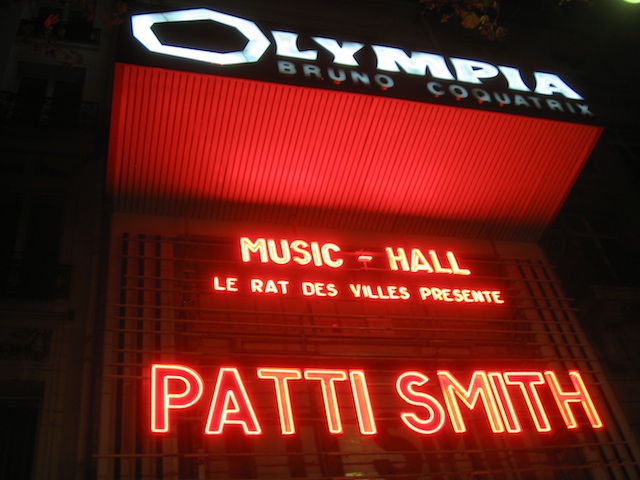
The Olympia is one of the world's premier venues, with a stage that has hosted Edith Piaf, Johnny Hallyday, Jimi Hendrix and the Rolling Stones. While I'm in first-time-in-Paris reminiscence mode, I was in the balcony witnessing the Jackson Five and Alice Cooper then; and though we have played the Olympia several times before this, it is always a thrill to see one's band heralded in the glowing red lights of the fabled marquee.
The shows go well, high-pointed on the first night by a fragile duet between Zaza's accordion and Patti's "Closed Eyes." But further memorable moments are in store. After soundcheck on our second night, Patti requests the band and crew to meet her at the nearby apartment of Coco Chanel, which has been reserved for a special ceremonial. I suspect it will be a champagne toast to a tour well accomplished, but then Patti begins to read:
On this date, November 22, which was for my generation one of the saddest days of our young lives, we gather for a happy occasion. To honor one's own.
Only God can bestow grace but man may recognize, in his fashion, and reward even an aspect of grace in his fellow man.
In the words in Rock and Roll Nigger I have said a 1,000 times over, Outside of Society, that's where you'll find me, and if you want me, that's where you'll find Lenny.
Forever on the left, loyal and faithful Comrade, who dropped his net and came with me.
Forever remembered with this cherished merit.
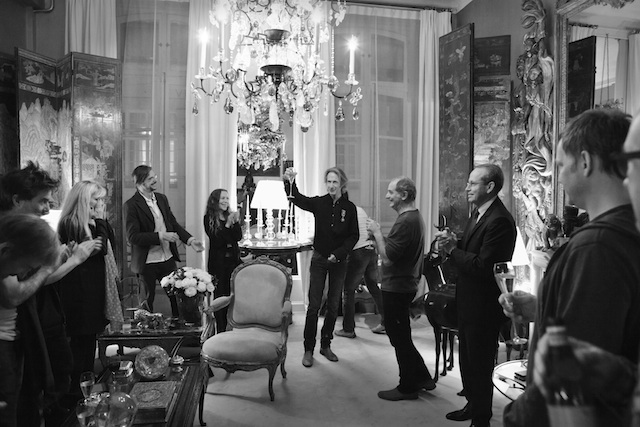
And then, to my astonished surprise, the Republique Francaise in the person of the Le Ministre de la Culture et de la Communication pins upon my chest, over the heart, the medal that signifies knighthood, a Chevalier de L'Ordre des Arts et des Lettres.
I am humbled and honored. Les gardiens de l'histoire seront un jour ou l'autre recompenses par l'histoire elle-meme. The guardians of history are soon rewarded with history themselves.
November 20, 2011 PARIS, FRANCE
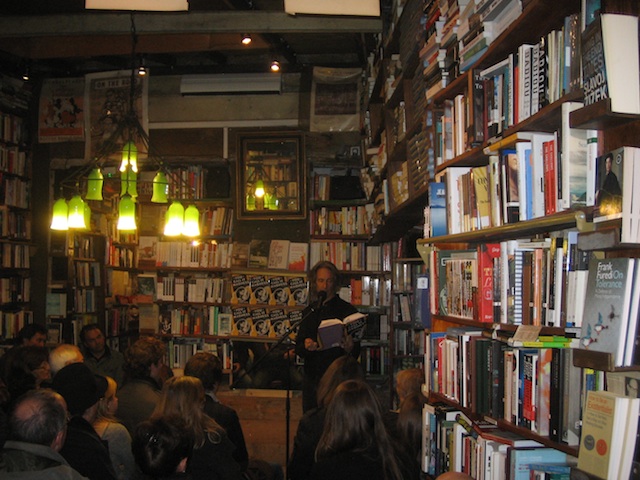
I first came to the City of Lights in a chill November of 1972, and stayed at the small Hotel Esmeralda across from Notre Dame on the Left Bank. Around the corner was a venerable bookstore, Shakespeare and Company, founded by George Whitman in 1951 and named after Sylvia Beach's original gathering spot for Lost Generation writers. Its location on the Rue de la Bucherie encompasses a literary tradition that includes Lawrence Durrell, Henry Miller, and those who took haven in the "Beat Hotel" located on nearby Rue Git Le Coeur. Tonight I am privileged to join this hallowed lineage with a reading from You Call It Madness, organized by Aaron Budnik of Red Snapper Books in London, George's daughter Sylvia, and the store's events coordinator, Jemma Birrell. Merci!
The audience overflows into the street, where speakers have been set up outside the store, and inside, surrounded by volumes of magnificent wordplay and lingual, I relive the days when crooning was a whisper in the ear and a gateway to the soul. I illustrate each passage with song, including the titular "You Call It Madness," "Where the Blue of the Night (Meets the Gold of the Day), and a moon medley where, when asked, the crowd supplies their own favorite moon croon (I wonder who has that angelic voice from the back singing "It's Only A Paper Moon").
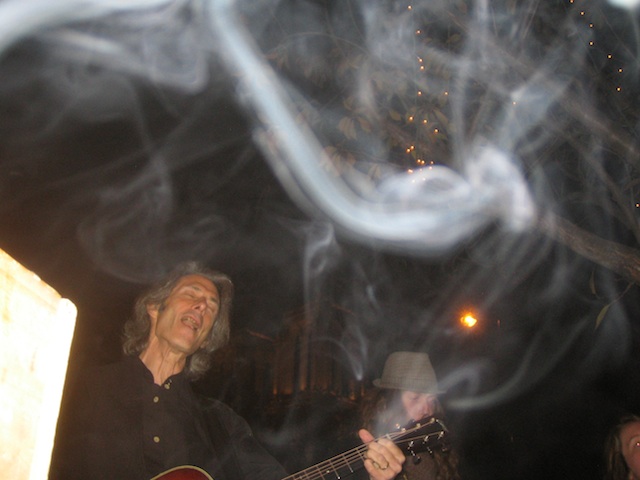
After the signing, I go out to the street, where I find the busking duo Hanami entertaining the post-reading crowd. We first happened on Bopper and Wilson playing outside our gig in Lille, and were so taken by their sunny optimism and harmony that we invited them to see us in Paris. And Bordeaux. And Rouen. And now they're here, in front of Shakespeare and Co. What else can I do but join them in song, with the Seine flowing behind us and Notre Dame providing a breathtaking backdrop.
November 17 - 19, 2011 TOULOUSE / BORDEAUX / ROUEN, FRANCE
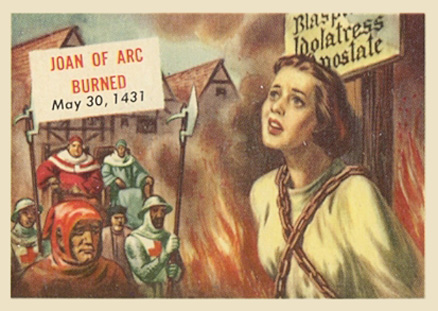
I have been fascinated with the story of Joan of Arc since early childhood, when an encounter with Scoop #87, a 1954 set of bubble gum cards which featured headlines of the past, showed our heroine engulfed in flames whilst gazing Heavenward. It led to numerous schoolyard games where I, in the guise of Kid Crimefighter, rescued the Maid of Orleans and rode her off into the sunset. And now pilgrimage is underway.
On the road to Rouen, we pass through Toulouse, where Monsieur Lautrec is from. A day off in wander mode brings me into narrow winding streets where unaccountably I discover a host of record shops proferring vinyl temptation. The French in particular have lovely 45 picture sleeves, and though albums prove too bulky to cart around on tour, I can't resist the seven inch lure: old jazz issues of Charlie Parker and Art Tatum; four EPs of the Spotnicks, Scandinavia's answer to the Ventures; and a couple of vintage Algerian singles. Yes, I never learn, and highly recommend Armadillo Disques at 32 rue Pharaon.
The boys and I have been working on a medley of Nuggets-inspired classics throughout the tour, and tonight, in honor of the town, we segue into the Heartbreakers' "Born To Lose." But it's win-win, or rather win-vin, and the next night, in Cenon, right outside Bordeaux, the promoter fine wines us with some examples of the local plonk.
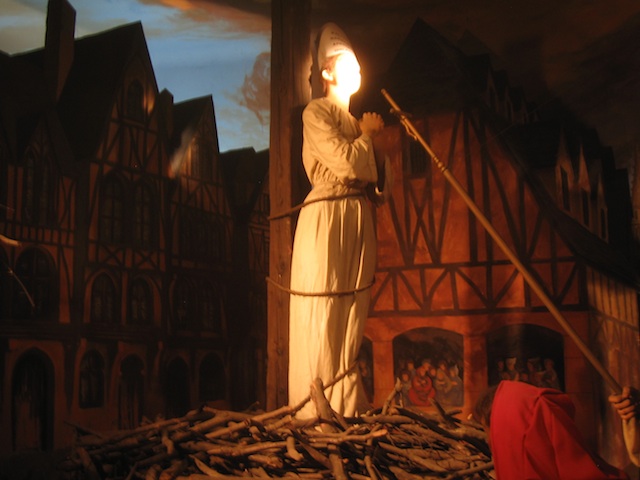
Finally, to Rouen. We eat lunch alongside the square where Joan met her fate in a restaurant called La Courrone, which has signed photos of Haile Selassie and Sophia Loren on its walls, and was an inn at the time of her demise. It is slightly surreal to be eating le agneau not a hundred yards from the cross that marks Joan's spot; or to visit the Cathedral, still bearing the scars of WWII bombing on its delicate latticework and sculptural ornateness; or enter the Jeanne D'Arc Museum to see lifelike dioramas that illustrate each of her stations of the Cross.
In the show, Patti draws an analogy to the visionary change that One Young Girl can set in motion, and as if to illustrate, comes upon a little eight year old girl standing by the side, and brings her up with us on stage. After we play I take a solitary walk to the site of Jeanne's pyre to pay my own tribute, accompanied by booming disco music from a club across the way, the now of then.
November 13-14, 2011 LYON / ARLES, FRANCE
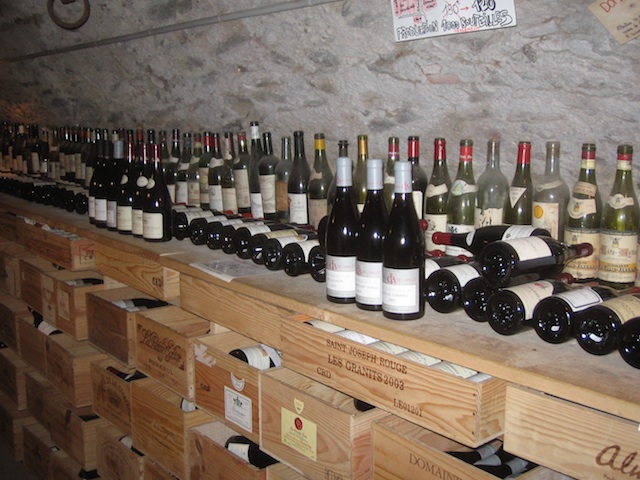
Our French promoter, Alain Lahana of Les Rat des Villes, has been along for the ride on this tour, traveling with us on the bus and giving each new destination the savoir faire and bonhomme enthusiasm that speaks to his love of music and a good time. He's also knows his way around, and that is why, after lunch in Lyon, he takes us to a wine shop on the rue du Boeuf called Antic, where a lover of the grape can only gaze in wonder at the bottles lining the walls, and where the proprietor, Georges Dos Santos, opens a few rare bottles for a tasting. I don't profess to know much about le vin, unlike Jack and Tony who enjoy a sniff-and-swish compare of vineyards and regions, but I do appreciate the litheness of a proper vintage (with perhaps an after-note of Welch's), and to see a bottle that was corked when Proust was alive.
I can't say that the visit influenced our show (since we never inebriate on stage), but that night in Lyon you can feel the gears of the band meshing after a couple of weeks of hard playing. Lyon has always been one of our most volatile cities, with scenes of rioting and uproar when we first came here in 1976. The fervor from the crowd on this electric night doesn't disappoint, the amps catching the hall's resonance and, at one point, splitting a note of Blues DeVille feedback into a pair of harmonic frequencies that overtone and seem to go on forever.
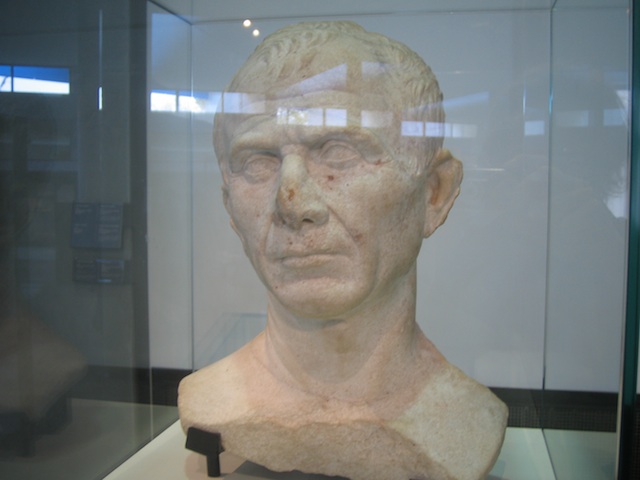
The next evening, in Arles, is completely different. Our show is in a small club, Le Cargo, with a capacity of perhaps 350 tops, and we stay resolutely acoustic. The city is ancient, with a history dating back to Roman times, exemplified by the lifelike bust of Julius Caesar recently retrieved from the Rhone river and now on display at the antiquities museum, as well as the remains of an amphitheater still used for concerts. Vincent Van Gogh severed his ear here in 1888, and the city provided the backdrop for many of his best known pictures, as tonight it will provide the setting for our own aural slice on this starry night.
November 12-13, 2011 NANTES, FRANCE
In the prologue to The Volcano Lover, Susan Sontag describes the anticipation of entering a flea market, the sense of undiscovered possibility, serendipity, the awaiting of the moment when the theme of the day's rummaging reveals itself. Jay Dee always searches out these assemblages of cultural artifact when we land in a city, and today, our first moment off in over a week, we set out to find our particular version of nirvana.
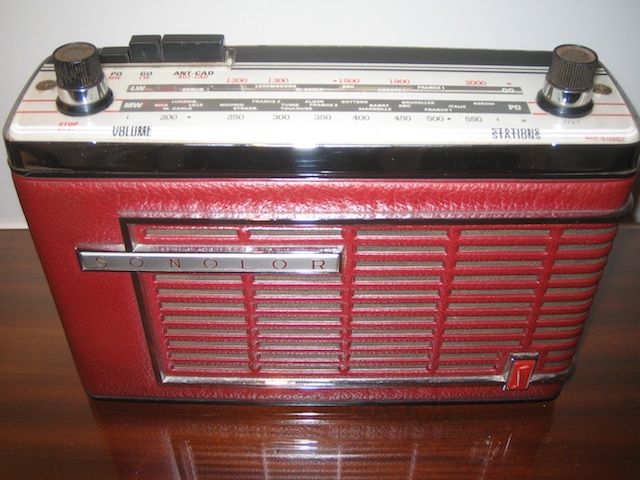
It's not easy to get there, and when the called-for taxi doesn't arrive, we negotiate Nantes' tram lines to the Place Viarme. It's relatively late as far as flea markets go, past noon, and already some of the dealers are packing up; but today good fortune is on my side. In quick succession I go off on a tangent of Algerian travel brochures from when it was a French colony; some literature and a key chain of a car that attracts my bemused interest, the Simca; a picture of Joan of Arc to decorate our tour bus and prepare us for Rouen; and most gloriously, a beautiful vintage transistor radio from the early 1960s, a Sonolor, which has on its Medium Wave and Long Wave dials such exotic frequencies as Madrid, Rabat, Tunis, and Nice. Whether it works or not is hardly relevant, though I am assured by the seller that it will, if only I can find 4.5 volt batteries.
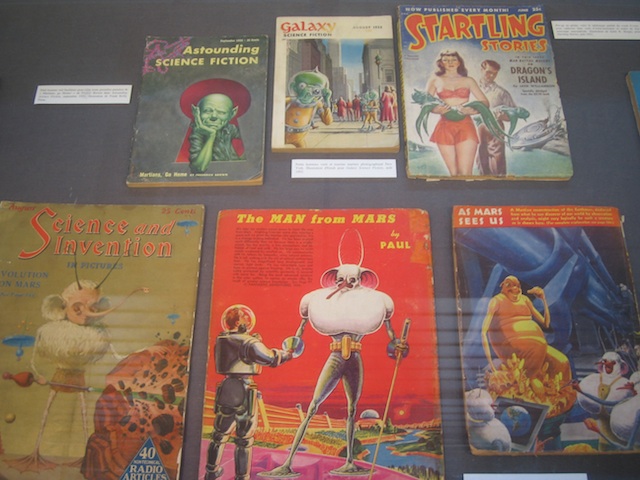
I walk back to the hotel, quite laden, and indulge in a flea market of another kind: the stroll around an unfamiliar town, passing ornate cathedrals and a botanic garden in which I rest my weary bones (sorry, forgot the camera) by a picturesque lake with swans a-swimming. To top it all off, when I return to the hotel, I see that a science fiction convention, Utopiales, is taking place at the convention center next door. I spent much of my early years involved in science fiction fandom, a subculture that parallels that of rock and roll in its obsessional grandeur, and so off I go again, focusing on a beautiful display of vintage magazines and their beyond-futuristic covers.
November 8 - 11, 2011 GRENOBLE / STRASBOURG / CHARLEVILLE / DIJON, FRANCE
The midriff of the tour takes us up along France's eastern provinces, part of a run of five shows in a row. Grenoble is surrounded by mountains, along the Swiss border; Strasbourg is near Germany, and has a feel of the Teutonic; Charleville, of course, is the hometown of Arthur Rimbaud; and Dijon...well, pass le moutarde.
Spending each night on the bus, disembarking for breakfast and a quick swing around the town before soundcheck is hardly a way to get to know a dot on the map. I will etch into memory the bridge that separates a No. African row of cous-cous eateries from an Italian stretch of pizza restaurants in Grenoble, previously only known to me as the site of the 1968 Winter Olympics; Patti doing a reading on a boat that circumnavigates the canals of Strasbourg, passing near the magnificent Cathedral of Our Lady, with its astronomical clock; and arriving in Charleville on the day of Rimbaud's death, which is also the 36th anniversary of the release of Horses.
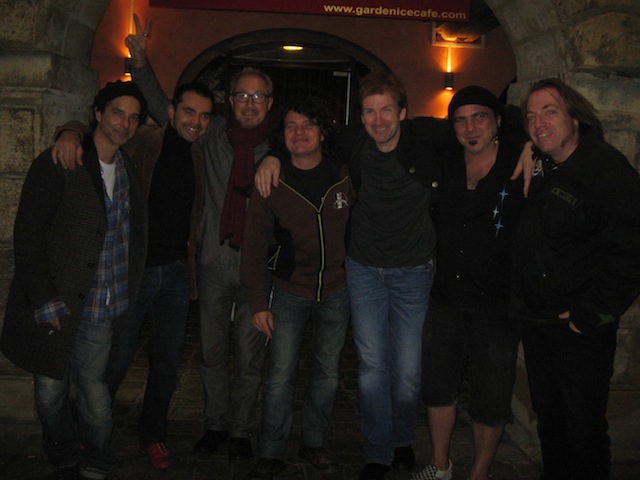
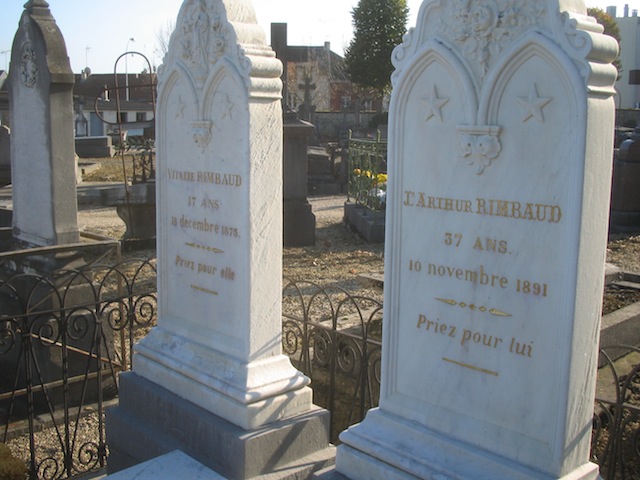
I visit the house where Arthur lived as a child, and walk the streets as he did, trying to imagine life in the mid-nineteenth century, which isn't difficult as Charleville looks relatively untrammeled by modern development. With Tony, Jay Dee, and Jack, we pay a visit to Arthur and his sister Vitalie's grave, where I leave the requisite guitar pick as well as respects. And after the show, we gather in a bar on Charleville's town square to toast the spirits that walk the town, and the spirits that will soon be walking us in a rather crooked line back to the bus. From left to right: Jack, Gerard (front of house mixer), Jay Dee, Olivier (production manager), Tony, Futz (lights/stage right tech), Andrew (tour manager, stage left tech). Wisely opting for an early night are Alain (promoter, bon ami), Darryl (monitors), and our Commandeur.
I awake the next morning outside the venue in Dijon, back in the heartland of France. I look at my watch, which has just crossed the meridian of eleven. The town is covered in red, white, and blue bunting, signifying the end of World War I, an illusory armistice for a war to end all wars. 11-11-11. Happy Nigel Tufnel day.
November 5 - 7, 2011 CLEREMONT-FERRAND / MARSEILLE, FRANCE
On the train. Reading Georges Simenon's My Friend Maigret. We arrive to rejoin the band at soundcheck time. There is something familiar about the venue, but it isn't until I see the many Serge Gainsbourg posters and photos on the wall that I remember we played here before, on the ten week tour of Europe that was 2007. I don't think I ever saw the town on that occasion, but I can't resist making my best French face for Serge.
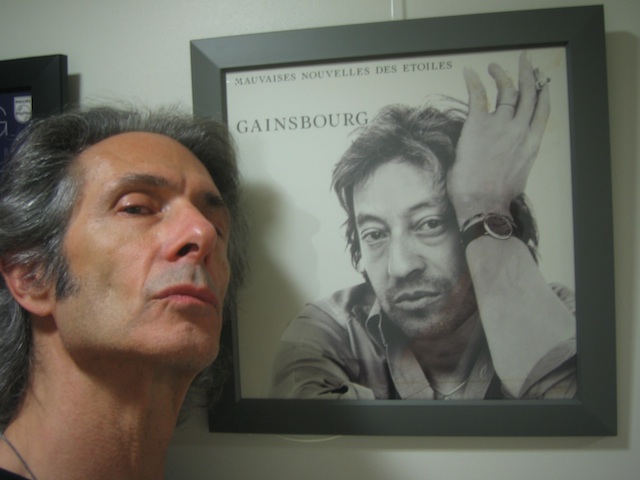
Overnight we go to Marseilles for a much-anticipated day off. I must say it's my favorite city in France, with its seaport swagger and mix of North African and Euro cultures, and I happily dive into the bouillabaisse. Our hotel, along the Vieux Port, has a plaque noting that Chopin and George Sand stayed there in 1839. Some sixty two years later, Arthur Rimbaud would make his last stop in Marseille before expiring, and take his final journey home from the Beaux Arts train station, high on a hill overlooking the city, and where Patti will dedicate a waiting room in his honor on the morrow.
Our show at Le Silo falls on an auspicious date. November 7 marks my band anniversary, the first time I ever took up the in-vocation of the electric guitar, playing an Alpha Sigma Phi fraternity party at Rutgers with the Vandals (our motto: Bringin' Down The House With Your Kind of Music!). Tonight's show, full-on electric following a week of acoustic presentations, is a fitting blow-out of energy. After forty seven years of turning the amplifier up, I look out at the Marseille crowd and marvel at the road traveled, still traveling.
November 4, 2011 PARIS, FRANCE
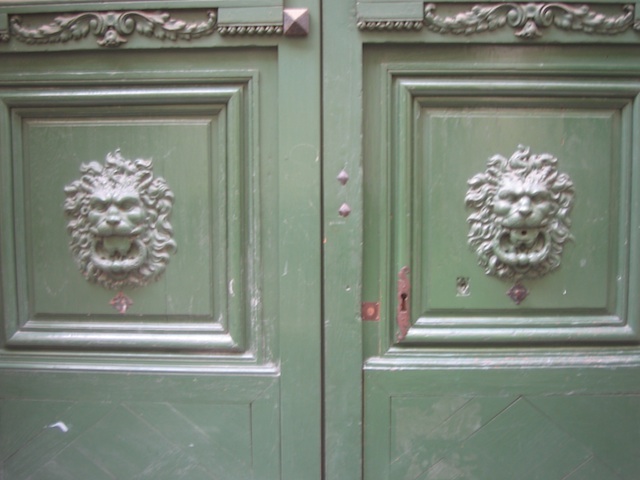
Birth and death revealed. A circle in the calendar: Robert Mapplethorpe, born 1946; Fred "Sonic" Smith, passage 1994.
The church, St. Eustace, is near the birthplace of De Nerval, and dates from the 16th century. It took a hundred years to build and still remains unfinished, as we all will be. Jesse plays with the grace of regeneration, the continuance that ties all these lifespans together.
Patti asks me to sing a song I wrote recently with my Uncle Q, Larry Kusik, noted lyricist of love themes: "A Time For Us," from Zefferelli's Romeo and Juliet, and "Speak Softly Love," from The Godfather. It was he who first brought a callow Link Cromwell into a recording studio, heralding a future that would be crazier than any fox could imagine.
He went into the hospital some weeks ago. Wishing to send him a prayer and healing energy, I leafed through a few song lyrics I'd requested from him a while back, coming upon "Yes I Will." I put the words to melody, and it sang itself, chords falling to hand, chorus unrolling. The simplest of lyrics, and yet the most direct. Couldn't change a syllable, it was so perfectly scanned. I went to visit him on October 17, to sing him his new song. That night, at the age of 92, he moved past the coda; and on this night, as his words echoed through the soaring arches of the cathedral, modulated to a new key. The key of K. The family of Kusikoff.
November 2 - 3, 2011 LILLE / LA ROCHELLE, FRANCE
This is All-Saints Day. It's also what would have been my parents' seventieth wedding anniversary, and considering the miracle of life they bestowed upon me and my sister Jude, I elevate them - St. Harold and St. Ruth - to the realm of canonization.
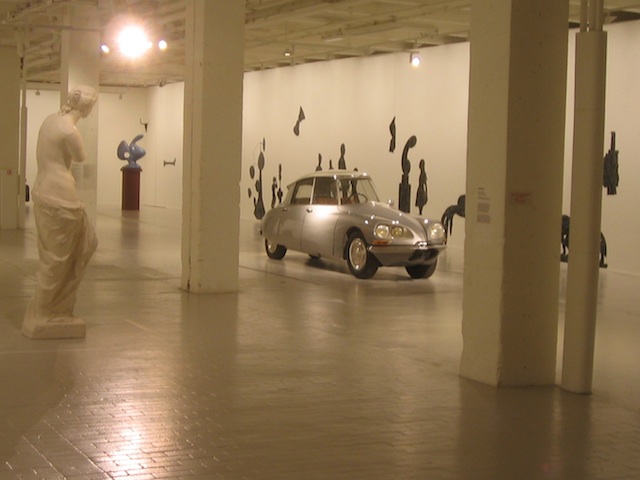
We ride north on the train up to Lille. Though it looks an intriguing town, we'll only have time to do a small pre-show reading in a local avant art museum, where I spot this oddly compressed version of the classic Citroen DS, my favorite eccentric car of all time. Ah, the wonders of hydropneumatic suspension and a starring role in Godard's Breathless. The concert itself is at the Sebastapol Theatre, a red velvet oldie with two balcony tiers. We're at full strength, with Jesse riding the keys and Jack full-toning on stage right, along with our core Tony and Jay Dee; the only lack of firepower is from the rental acoustic I am forced to play. My trusty Collings was given a good crunch by British Airways on the flight over, and I discovered at the Sinner's show that the side binding had a piece broken and the top was in the process of lifting off. Emergency repairs are being attended to by a luthier in Paris. But we're officially underway.
We meet up with our tour bus in Lille, and clamber aboard for the initial journeying, our mobile home-away-from-home for the next three weeks. It's a big 'un, double-decks with full-size windows alongside each bunk, enough room for everyone's accumulations, and a large downstairs area reminiscent of a diner. The refrigerator is stocked with Kronenbourg 1664, France's national brew, and the enclosed insular capsule that is a band on the road sets off into the night.
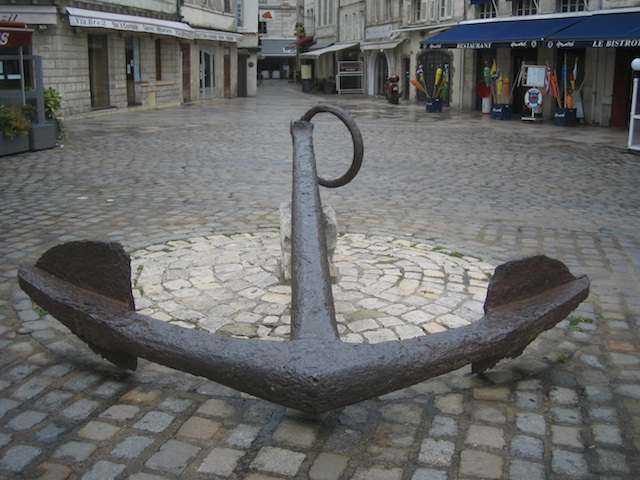
La Rochelle is quite a haul away, nine hours worth, along the shore of the Atlantic, and a lovely town it is. We arrive in time for croissants and café crème, and a lunch at Andre's Restaurant for some just-pulled-from-the-ocean oysters and shrimp and a slice of fish so fresh it still thinks it's swimming away from the net. Apres concert (let the bi-lingual begin!), I am interviewed by the erudite Phillipe Thieyre who hands me his massive tome, Psychedelic Vinyls 1965-1973, which pictures hundreds of album covers from the Gar Age and beyond; and wishes to discuss all things of a Nuggetarian nature. Then to have a walk in the deserted streets of the town, back-dropped by the ancient medieval battle fortifications of the harbor, and the oncoming of dream.
November 1, 2011 PARIS, FRANCE
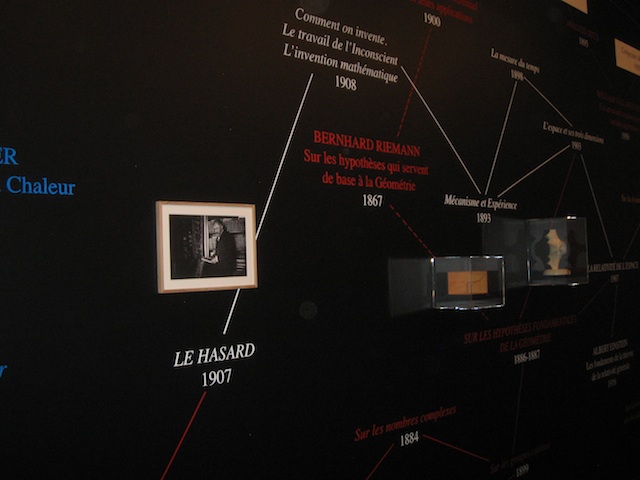
Music is mathematics, and mathematics, in its more exalted form, is music. The Cartier Foundation is having an exhibition called "A Beautiful Elsewhere," allowing artists and mathematicians to collaborate on works that illuminate both modes of theoretical thinking; and the results, spread throughout the Foundation's building on the boulevard Raspail, are mesmerizing. Among the artists interpreting theorems and arcane phenomena are Hiroshi Sugimoto, Jean-Michel Alberola, David Lynch, and Patti, who, appropriately, reads a text within an installation entitled "The Library of Mysteries." A wander through the adjoining rooms, where wall projections spin among spoken recordings and even that Red Chair from Blue Velvet sits awaiting, provokes a sense of lysergic wonder in myself, who could hardly separate x from y when numbers moved into the algebraic abstract.
We have taken this sidetrip to Paris out of band world to give a small intim&ecacute; show at the Cartier, joining Jesse who has finally arrived from America. A small dinner at the Café de Flore, where Sartre and Beauvoir sit in eternal existential discussion, and thence to the show. What to play? "We Three," of course, followed by a version of Harry Nilsson's "One" as equationed by those popular mathematicians, Un Chien Nuit Trois.
October 30, 2011 HASLETT, BELGIUM
It's the eve of an All Hallows weekend when we set off for our nearly month-long Tour de France. I have just finished shivering along to Jo Nesbo's The Snowman, a spooky Norwegian detective thriller where the serial killer eviscerates his victims at the first snow of the season, when news reports in Pennsyltucky begin forecasting nearly a foot of blizzard upcoming. I'm glad we're flying ahead of the storm and ritual murder.
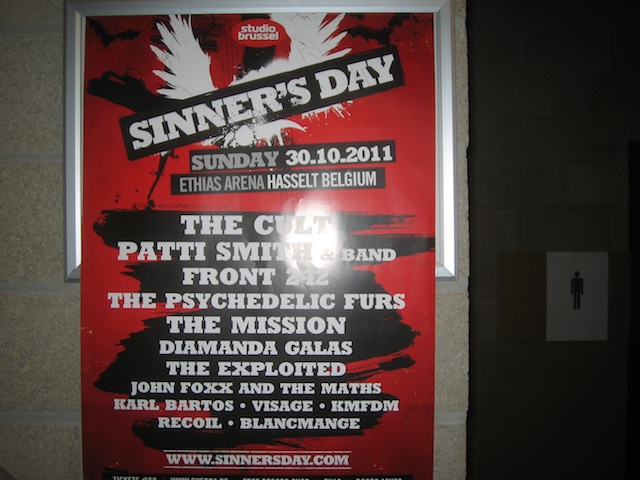
The gig outside of Brussels is set in an airplane hanger / arena and has definite gothic overtones, sharing the bill with the Cult, the Mission, and Diamanda Galas. Jesse Smith is supposed to be helping us out on keyboards while Jack Petruzzelli finishes up a Fab Faux obligation; but the storm has kept her back in New York, and we go on in power trio mode. Still, if Jesus died for somebody's sins, there's something stark and baptismal holy trinity-ing Patti. So we repent, awaiting the transubstantiation of feedback and the absolution of holy noise.
August 30—31, 2011 STOCKHOLM, SWEDEN
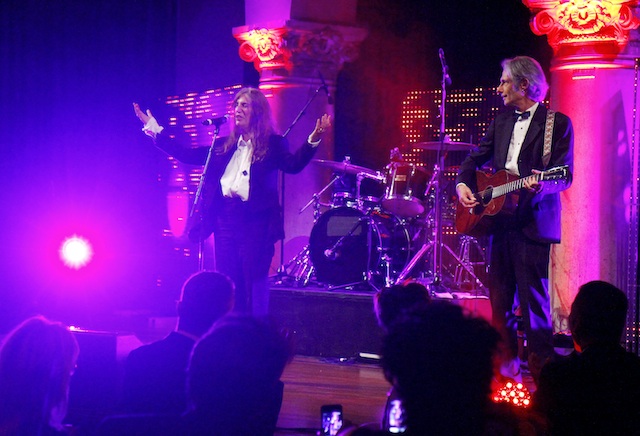
It's not often that one gets feted by royalty, but the awarding of the Polar Prize to Patti—a plethora of P's—was occasion to witness the ceremonial rituals of monarchy in full flower. The honor, founded by ABBA manager Stig Anderson in 1992, celebrates outstanding achievements in music, divided equally between the pop and classical realms, which allows for a breadth of previous laureates like Sir Paul McCartney, Dizzy Gillespie, Ray Charles, Ravi Shankar, B.B. King, Renee Fleming, Pink Floyd, Steve Reich, Iannis Xenakis, Bjork, Robert Moog, and Karlheinz Stockhausen. What, no Spotnicks?
This year Patti joined Kronos Quartet in the bi-polarity of the award, and we prepared to fly to Stockholm for the ceremony and concert to follow. However, Hurricane Irene, a global warming polar prize if there ever was one, was yet to have her say, rampaging up the east coast and shutting down airports on the weekend we were scheduled to fly. SAS did everything they could to get us out by Monday, and after much suspenseful awaiting on the standby line, we were granted seats and lift-off.
The official ceremony was at the Konserthuset, broadcast on television and suitably black-tied. His Majesty King Carl XVI Gustav presented the awards, which were surrounded by renditions of the laureates' songs. Our music has always seemed too idiosyncratic to be covered, so it was slightly surreal to hear Anna Jarvinen sing "Distant Fingers" backed by the Royal Stockholm Philharmonic Orchestra, "Frederick" performed by Gustav Ejstes, "Because The Night" warbled by Vernoica Maggio, "Dancing Barefoot" strummed by the folkish twins of First Aid Kit, and the night crowned by Ola Salo's raise-the-roof rendition of "People Have The Power." Patti's award was presented by Henning Mankel, the Swedish writer who looms large in our literary canon, honor upon honor.
Later, at the banquet in the Grand Hotel, Patti asked me to accompany her on "Wing," in honor of Crown Princess Victoria's upcoming birth of a new royal heir. Which we happily did before dessert, which was Snowball a la Patti Smith, a "meringue covered vanilla ice cream on chocolate brownie with spiced berries." Fit for a king on the wing.
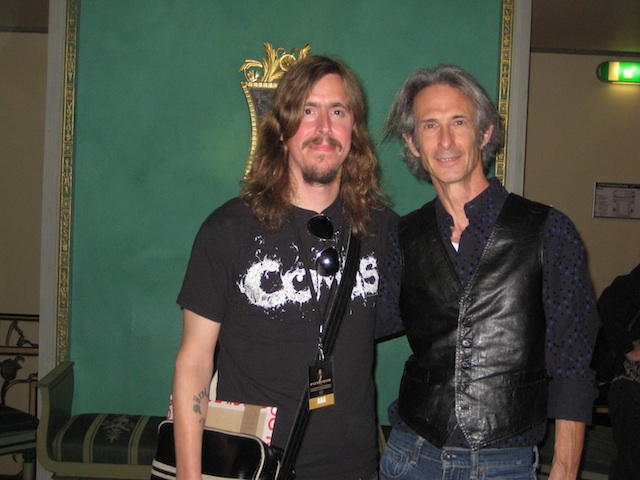
There was another kind of royalty at our show the following night. I had received an email from Mikael Akerfeldt, the leader of the Swedish metal band Opeth, congratulating me on the award. We had met briefly at an Athens festival a few years back, and since Opeth is one of my favorite allegiances—their take on harder rock is expansive and progressive, and I've happily flashed the devil's horns at their live shows—I invited him to the Konserthuset. It's not the best venue even for softer rock, though we had played there in 1976, a show documented on the I Never Talked To Bob Dylan bootleg; and turning down volume seemed the order of the day. With Jackson and Jesse Smith augmenting our band, we showcased a classic and respectful set that got less respectful and downright insurrectionary when we launched into the chant of "outside society" as crowned heads began to roll.
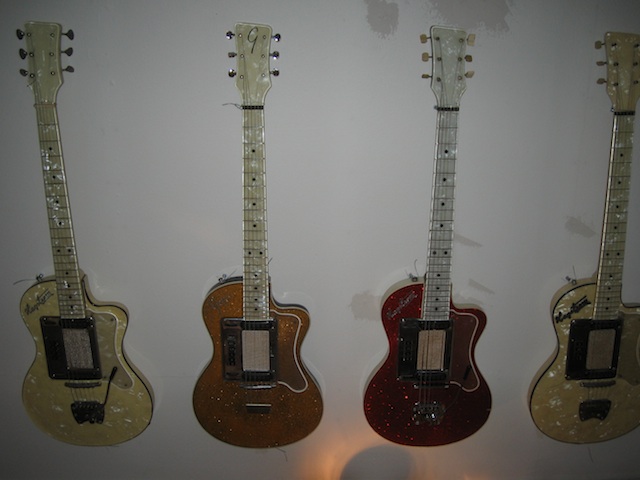
Then it was time to enjoy the wonders of Stockholm for a couple of days. A visit to the Robert Mapplethorpe exhibition at the photography museum; a tour of the Strindbergsmuseet, where we peruse August's library, the desk where he worked, and the bed upon which he spent his final hours; and a visit to Hellstrom Music to see the vintage Hagstrom guitars affixed to the ceiling. Why, if I had a spare 13,336 kroner....
July 30, 2011 NEW YORK CITY
I had circled the date to attend the Girl Group tribute in Lincoln Center's Damrosch Park featuring Ronnie Spector and the Crystals and Leslie Gore and the Toys and the Angels and Maxine Brown and all my other fave femme heartthrobs when I got The Call. Would I consider playing some acoustic guitar on a couple of numbers during the Ellie Greenwich tribute and perhaps backing Ronnie as well? Faster than you could say oowhee baybee I was aboard, and gifted an opportunity to pay my personal homage to the classic singles and vocalese of one of my favorite rock genres. Thus I found myself in a band, able directed by Jeremy Chatzky, that resembled in many ways the legendary Wrecking Crew of Gold Star fame, part of a Wall o' Sound that allowed these fabled thrushes to soar through their tales of truest love and transcendent infatuation.
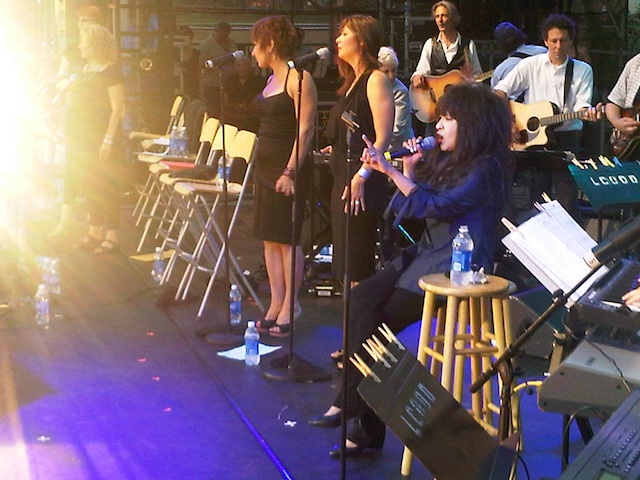
It grew even more exciting when I discovered that my partner in the acoustic guitar section was Gene Cornish. I first saw the Young Rascals at a small disco(theque) in Manhattan shortly before the release of their debut Atlantic single, and was blown away by their stage prowess, becoming a lifelong fan. So to have their guitarist Gene next to me, showing off his considerable licks between each song, locking with him to provide the strummed bedrock of these classic paeans to teen passion, was a wonder to equal negotiating the chords of "River Deep Mountain High" (with LaLa Brooks of the Crystals literally scaling the heights) and hitting the epiphanies of Ronnie's tremulous voice on "Walking In The Rain," "Baby I Love You," and of course, "Be My Baby." Yes, yes, I always will.
My backstage vantage point allowed me the best seat in the house. The first half of the nearly five hour show, curated by Dr. Ike of the Ponderosa Stomp, was devoted to a revue style parade of hits, with, among those not already mentioned, Arlene Smith of the Chantels, Baby Washington, the Jaynetts and the Hearts (represented by lead chanteuse Louise Murray, who floored me when she intoned the classic "Lonely Nights" line: You great big lump of sugah...). Hearing Maxine Brown sing "All In My Mind" was another awe-inspiring moment, one it seems I've been waiting for evah.
Then it was time for the Crystals' "Da Doo Ron Ron," and the rush of riding shotgun on those propulsive chords set the tone for my own dream-come-true entry on stage. Ronnie was as beautiful and soulful as ever, and with one of her "Ronettes" being my friend Jenni Muldaur, I was doubly inspired. The night climaxed with "Be My Baby," and as is so often these days, singing and playing along, I remembered my oh-so-innocent self partaking of the simple pleasures that poured out of the AM radio, and the privilege that allows me to still believe in this purest of adorations.
After midnight I went downtown to Banjo Jim's, where a bittersweet closing party was taking place. Under the aegis of Banjo Lisa, the club, located at the corner of Ave. C and 9th Street in the East Village, was a mecca for homegrown Americana music, a simple joint that was as familial and laid-back as a rejoicing-music bar can be. I played some of my best solo shows there over the last few years, and even wrote a theme song for the joint: Here we are at Banjo Jim's / It's a place for musicians / Here we come to laugh and sing / And do the shing-a-ling....
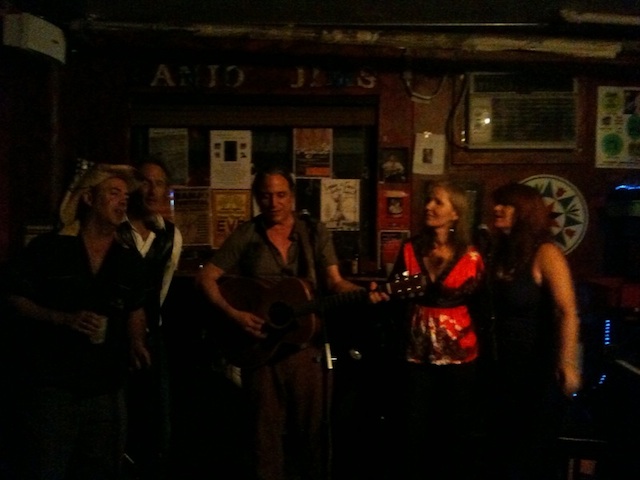
The closing night, or supposed, as the club did stay open for the next couple of weeks until it changed hands, was a typically eclectic affair, with the Demolition String Band, Homeboy Steve, Sean Kershaw, and many others stopping by to sing a final tune.
By 3 a.m., when the last stragglers, including myself and Banjo Lisa, got up to sing "May The Circle Be Unbroken," it was with a sense that music has its own timeline, that verse will follow chorus until it becomes coda, followed by the reprise, which begins the song anew. May it always.
JULY 10 - 16, 2011 NEW YORK CITY
I didn't plan it, but as conjunction would calendar it, I'm traveling around the isle of Manhattan this week, with random, unusual gigs springing up in a cluster that reflects the accelerated on-goings of this city, savored and delectated.
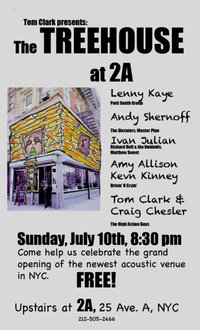
On Sunday, Tom Clark debuts the upstairs space at 2A (which, to out-landers, is located at the corner of E. 2nd St. and Ave. A). He calls it the Treehouse, and for this opening night he's gathered together quite a cast of characters: Ivan Julian, Andy Shernoff, Amy Allison, Kevn Kinney, hisself and myself. It's a local's local, and a packed house for what will be a weekly Sunday night showcase for lit luminaries of the downtown music scene, all free and easy. It's great to see everyone at their loosest, and I particularly enjoy Amy, whom I've never seen before, with her stellar guitarist Pete Galub, and sit in with Kevn Kinney who always brings out the best in me, touching my inner carburetor with "Broken Hearts and Auto Parts."
On Thursday, Patti avec Her Band play a special show in Battery Park's Castle Clinton, originally built to defend the city from the British in the War of 1812, twenty eight cannon worth, and later used as a mid-1800s theater, Castle Garden, where the Swedish Nightingale, Jenny Lind, made her American debut. It's smaller than we anticipated, envisioning a lawn-full free concert with the Statue of Liberty in the background, but the intimacy of the historic site, the full moon, and the crowd's concentration make for a beautifully fireworked Bastille Day. And yes, Patti sings "Rolling In The Deep," with Jessi Smith and a couple Roche Sisters on backup, truly the song of the Summer. (Photos from Brooklyn Vegan)
Still tingling after the show, I go over to the Bowery Electric where a birthday celebration for Johnny Thunders is underway. I get inside their packed basement in time for the Waldos, and when Walter Lure spots me from the corner of his guitar, he motions to come up and sing a bit o' the national anthem of three (count'em) chord rock. Accordingly I do a Jameson-fueled tribute to one of the most soulful humans to ever plant a platformed boot on stage; remembering him as a New York legend and friend, and the last time I saw him, at a club opening in the Wall Street area, past three and yet to go on, only a dozen people in the room by the time he did so, and him onstage with that guitar and his heart and singing his song about memories and holding on. I wish he were here for me to sing this "Gloria" to him, but instead I imagine him waiting in his room for that knock upon his door opening it up to find G-L-O-R-I-A who wants him to teach her the solo to "Bad Girl," or "Chinese Rocks," and so he does, in his inimitable style and swagger.
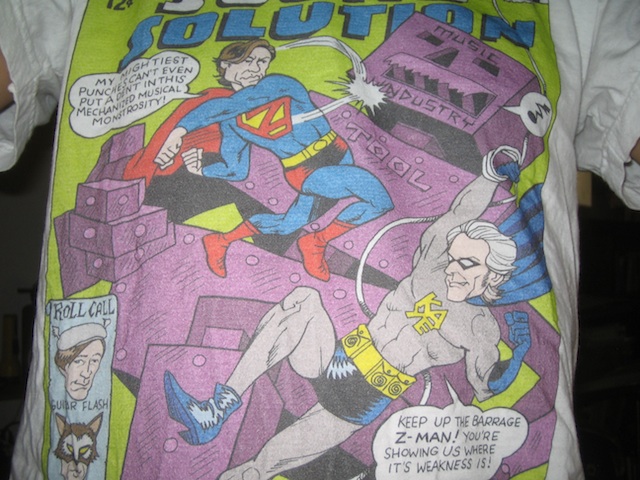
And then it's time for Super Rock, or whatever it is that the Fleshtones call their shake-and-stomp stylee. The record we made together, Brooklyn Sound Solution, has been enthusiastically received, ooh yeah yeah yeah, and to play it live is to amp up the energy tenfold. We've already cracked the egg at Maxwell's in April, and now it's time to humpty the dumpty at Mercury Lounge on a Saturday night. It's a loud 'un - my Fender Vibroverb, which sounded roaring at Castle Clinton knobbed at 3, is up past 6 and I still have to stomp on my Fulltone for some much needed boost - and garagic proud. No time to tune between songs, just blast 'em out - "Comin' Home Baby," "Back Beat # 1," "Daytripper" - and then jump into the crowd, stay up all night, playing pinball with the lower east side, in the city that never does know when to go to bed. My kind of town.
July 4 & 5, 2011 KARLSRUHE / NURMBERG, GERMANY
According to my literary tour guide, Arthur Rimbaud spent much of 1875 in the town of Stuttgart, printing business cards, studying English at the local library, and waging emotional upheavals with his friend Verlaine. Accordingly, on our arrival in Germany, we go in search of his former residence at 10 Miriamstrasse, which is located in what is now the main shopping area of Stuttgart. Unfortunately, the ravages of World War II have not been kind, and little evidence remains of the town that once might have been. We pass through a red light district on the way, only to find the site now occupied by a MacDonald's. Still, sitting in the Schillerplatz having a schnitzel with the sounds of a nearby Turkish festival filling the air with exotic sound, it is possible to imagine Arthur and Paul strolling across the square, having a coffee, engaged in deep discussionals.
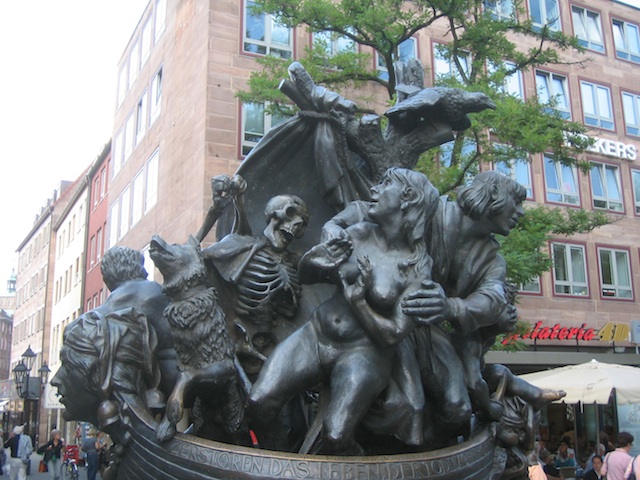
The evidence of World War is inescapable in Germany, and not without good reason, as Berthold, our promoter, tells us ruefully; but ironies abound. It is Independence Day in America, and we travel by car to Karlsruhe to a theater complex built in a deserted industrial park; and on the following day we go by train to Nurnberg, where a beautiful castle still overlooks the city of celebrated Nazi rallies and consequent war-crime trials. Before we play our show, we sit with Karen and Kim who have traveled again to see us on another continent (in Karlsruhe, Carol Green has made the pilgrimage, winning the grand prize of dinner backstage before the show); and then we visit the stadium where Hitler exhorted the crowds to follow him into damnation. There, on the same spot upon which his mad vision was proclaimed, skateboarders now practice their moves, and a few hundred yards away, in a museum complex designed by Albert Speer, we will sing "Ghost Dance" to remember the souls who will ever live again.
July 2, 2011 TONBRIDGE, KENT, ENGLAND
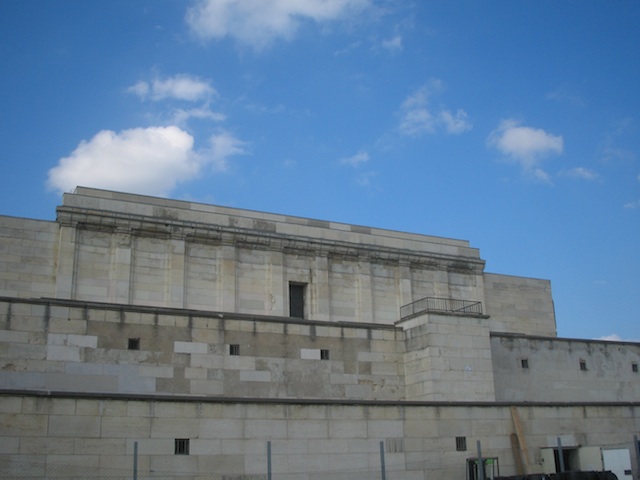
One of the unexpected serendipities of touring is criss-crossing paths with fellow musicians and friends also on the roadeo, getting a chance to see them shake-some-action in unexpected locales. On the day we arrive in England, after a short couple of weeks back home, who should we find playing at a London pub called The Water's Edge but none other than guitarist extraordinaire Jackson Smith, accompanying Detroit country rockers the Orbits on a two-week go-round. His mother is keen to watch her boy do her proud, and so we set out for a raucous evening cheering on Jack's slide and slither six-string prowess, put to good advantage on such Orbits' originals as "Sure Would Be Nice To See Someone Having a Shittier Day Than Me." Hee-haw!
This week-long excursion is acoustic Trio, with me and Tony strumming madly to keep up with Patti, and we've arrived a day early because of the overbooked flights surrounding the Wimbledon tennis championships. That gives me enough time before we head to the Hop Farm Festival in Kent to enjoy the London rituals I've cultivated: an immediate English fry-up breakfast with beans, toast, sausage, mushrooms, and something that looks like a fried egg; a trip to the used bookshops on Cecil Court, where I find a copy of Space Cat Goes To Venus by Ruthven Todd, one of my daughter's favorite childhood series, and to the five-story Foyle's bookshop on Charing Cross Road, where I unearth a strange trilogy by Patrick Hamilton (Twenty Thousand Streets Under The Sky) that is a veritable documentary of London life in the early 1930s; a stroll through the music row of Denmark Street; and dinner at my favorite Indian restaurant, the Punjab, with Aaron Budnik of Red Snapper Books. Literature must be served.
Tony knows Liz, the production manager on Paul Simon's tour, and as he is at the Roundhouse on our second night in town, she arranges first row balcony seats for us. Simon's music has been a part of my life since I first listened to "Sounds of Silence" parking (in more ways than one) in a bowling alley lot in New Brunswick waybackwhen, and I've followed his literate and inventive music through all his permutations, with especial stopovers at "The Boxer" and "American Tune," a marvel at Graceland, a respect for his Broadway musical about the Cape Man, and a welcome regard for his latest album, So Beautiful Or So What. I also have an especial feel for the Roundhouse, which was the site of our first shows in England in May of 1976, and its storied heritage, which includes stage performances by the Jim and Jimi of Morrison and Hendrix.
Simon gives a measured and career spanning retrospective, backed by an impressively accomplished band (there's that bass riposte in "You Can Call Me Al"!), but the most moving moment of the night, bringing a glisten to my eyes, is his solo rendition of "Sounds of Silence." I feel the words burnish over the still-crazy years, their own self-fulfilling prophecy, the me then on the journey to now, and all that comes between. After I am introduced to him, I tell him I was disappointed he didn't play "Motorcycle," his pre-Simon and Garfunkel excursion under the name of Tico and the Triumphs. "How do you know that?" he asks, smiling back, and maybe it helps him remember the long trail he's also traveled, homeward bound.
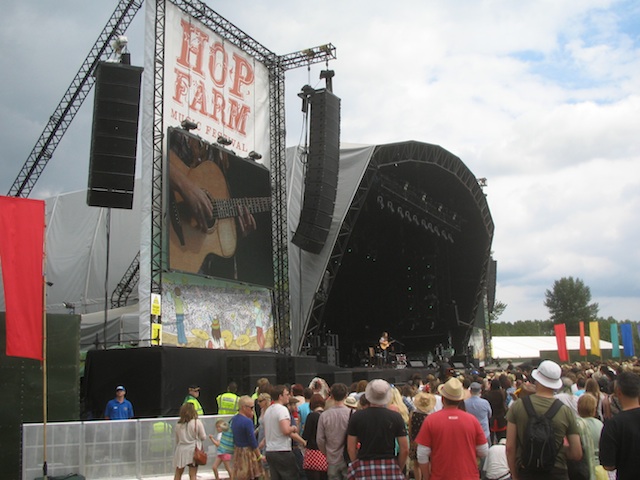
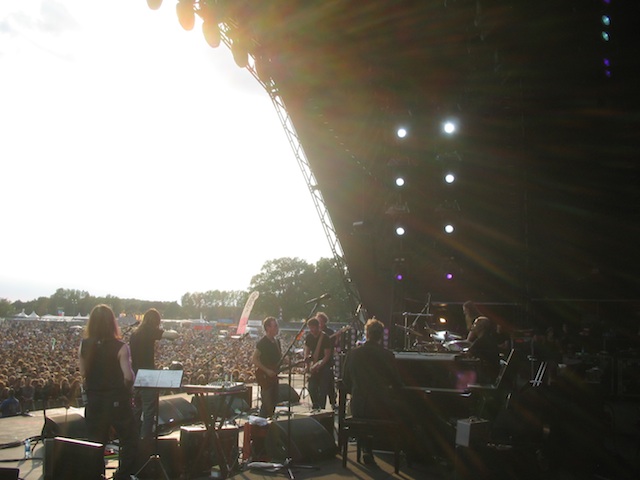
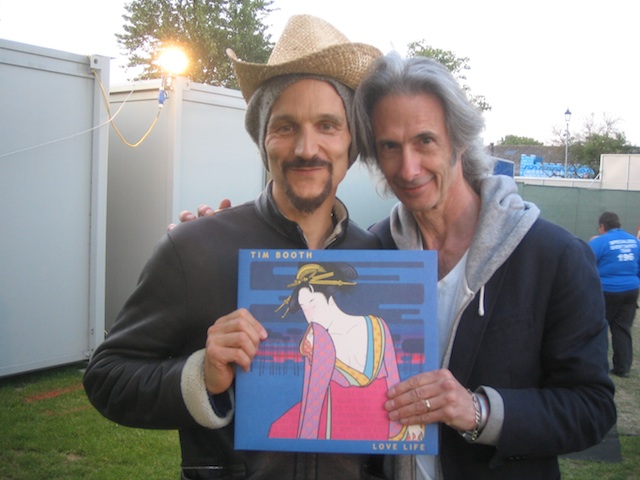
The next day we get back to work, motoring to the Hop Farm festival accompanied by our guest musician, Patrick Wolf, a violinist and harpist who will join us for our short half hour set. It promises to be old home week; we're appearing on the same stage as Lou Reed, Iggy and the Stooges, and Morrissey. On a second stage is Tim Booth, taking a solo tangent from James. Before we go on, I navigate the festival grounds, pastorally filled with young girls wearing flower garlands in their hair and younger children chasing each other, to catch his set. I know Tim from producing James' debut album, and we've maintained our sense of hug and mutual nurture. It's a pleasure to watch him cavort to the delight of the audience, and get a copy of his newest solo album, Love Life (product placement).
Our time in the limelight is all too brief, six songs worth, with Patrick, whose beanpole frame makes even me feel short, embellishing our songs with swirls of sound and Patti arousing the crowd. Then we make way for Lou, who is in fine fettle, signaling and conducting his drummer to punctuate his acerbic insights, and giving me another emotive moment with an acoustic "Femme Fatale"; and the ever-eternal Igster, who gets me barking along in all the right places. Hop on Pop. We have to leave before Morrissey as we wake far too early tomorrow for a flight to Germany, and I regret missing Prince, who will close the festival tomorrow, but in all, I feel satiated by the wonder that is music, a fan and participant in the glory of shaped and shared sound.
June 11, 2011 LAS PALMAS, CANARY ISLANDS
Traveling from Oslo to the Canary Islands has the feel of teleportation, time suspended in the airplane only to emerge in a different universe entirely. One moment we're arising in the Scandinavian dawn, and the next stepping out onto a beach where our feet can splash in the warm Atlantic waters here off the coast of Africa.
Like most blinkered Americans, I have only the most approximate idea of where the Canaries are, and am somewhat amazed to find that this Spanish outpost is nigh due west of Morocco. Also in the realm of amazing, we meet Donovan in the lobby of our hotel. He'd played this festival a couple of nights previously, and makes reference to the volcanic outcropping we're on being Atlantis, which I'm all too ready to believe.
We eat tapas of small fish and ready for our show, this very evening, in a modern auditorium from which I can see surfers riding the waves from the dressing room. Tomorrow, a day off before returning to America, I will swim and sun and visit the old city, knowing that this dream is waking, and waking is to dream.
June 10, 2011 OSLO, NORWAY
Slippin' and slidin'. Oslo is awash in rain when we land, and it shows no sign of letting up. We're here to play the Norwegian Woods festival in the city park, which is not so much a traditional free-for-all as it is a five-night series of concerts. For the first show, Eric Clapton is the headliner; we top the second; and are followed in turn by Ringo Starr's All-Stars, a metal bill climaxed by Mastodon, and closing with the Eagles. Exalted company.
We soundcheck in the wet afternoon, and wait around our backstage trailer as the rain pelts down before showtime. Negotiating soggy stairs to see Nick Lowe open for us, I almost tumble into the rushing stream by the side of the stage. He's worth the risk, a gentlemanly and genteel rocker, and after, though I've never met him, I go to say hello in his dressing room and get his autograph for my friend Tom Clark on a napkin.
We go on to Jack finger-picking the opening strains of the Beatles song for which the festival is named as Patti welcomes the crowd. Miraculously, the rain stops for our set, though it's a mixed blessing as the air hangs heavy with humidity. You can feel sound having trouble moving through the damp, separating each instrument. When it comes time for our pas de deux in "Ain't It Strange," Patti and I circle each other, teasing out guitar ripostes and responses, until, as we begin our dance, the heel of my boot catches a wet spot on stage and... Well, as the ubiquitous You of Tube doth show, let's just say it was all in the spirit of I once had a girl / Or should I say / She once had me....
June 7 & 8, 2011 AMSTERDAM, HOLLAND
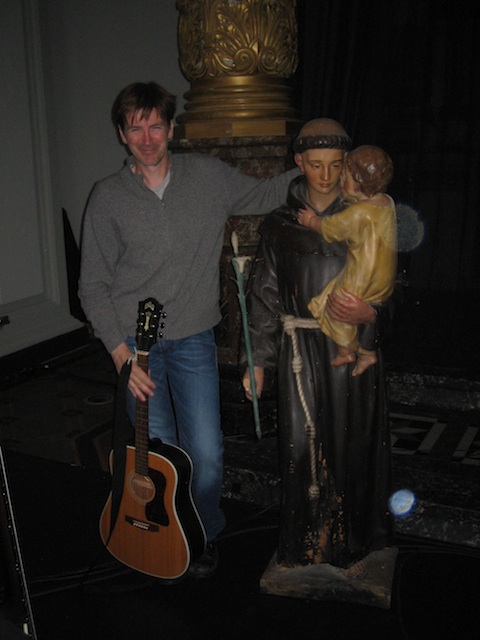
It's Tony Shanahan's birthday and what better place to celebrate than in Amsterdam, city of canals and coffee shops. We've taken him out to dinner the previous evening, ordering him the most expensive bottle of wine on the menu; and at the soundcheck for the first of our shows at De Duif, a small church that only holds 600 or so souls, it is all too synchronous that we find a statue of St. Anthony to place on stage with us.
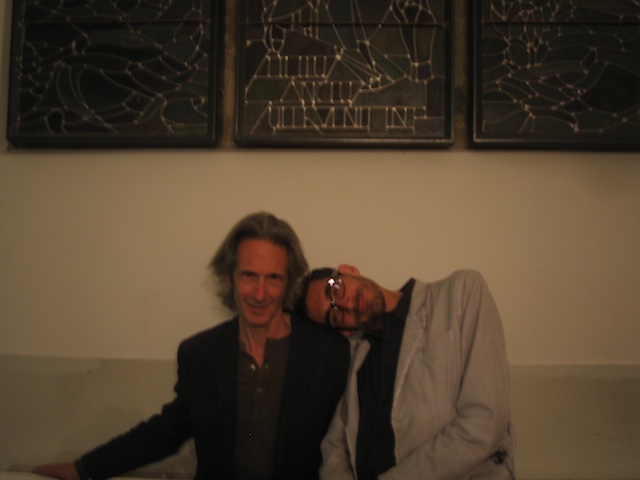
Also in town is my friend Jordan Maclean, leader of Antibalas, the Brooklyn based band which takes Afrobeat to a new level of intense groove, here in his role as musical director of the stage show Fela!, about the life of Nigerian superstar Fela Kuti. We invite him to join us on stage, and devise a version of Buddy Holly's "Words of Love" (soon to appear on a tribute album to celebrate what would have been Buddy's seventy fifth birthday) that will have Jordan rising spectrally from the church pulpit to add trumpet, much to the delighted bewilderment of the audience. Then, to Tony's surprise, we depart the set list and break into "Wild Thing," complete with party hats and a talking balloon. Blow out them candles, Tone, make a wish, and here's to many more!
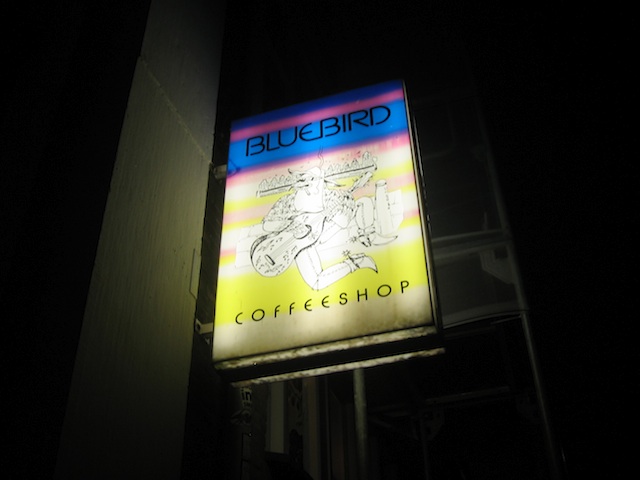
After it's time to visit one of Amsterdam's coffee shops, to enjoy a bit of what makes this city so special. Ah, the pleasures of a smoke in the relaxed atmosphere of the Dolphins off Liedestraat. It is disheartening for me to discover that the Dutch legislature, in a move that can only be akin to cutting off one's probiscus to spite one's face, is attempting to restrict Amsterdam's ganja culture to residents only, which means I'll either have to move there or forego one of the city's primo tourist attractions. Perhaps that, and the fact that I've skipped dinner, accounts for my overindulgence of the Northern Lights ("They're big and bright / They really got us wasted" as the Cannabis Cup song goes) and a small topple off my chair where I am eased to the floor by Jordan and Jack. Duuude....
Two nights in a venue gives a sense of approach and confidence, and I must say that the second of our De Duif performances rides the dynamics and the intricacies of each song to perfection. Instead of the room playing us, we play the room, and the acoustics of the church allow us to feel the sound coming back at us through the audience's concentration and appreciation. Then Patti and I head (hmmm...) out into the night, locating the Bluebird coffee shop (which we had sought in vain on an afternoon stroll) to immerse ourselves in the reggae atmospherics, sharing a space cake and some chai tea in the Amsterdam we love.
June 4 & 5, 2011 SKIBEREEN, CO. CORK, IRELAND
It was nearly fourteen years ago, in 1997, that we came to the beautiful Liss Ard estate to play a show, or rather, several shows, each more unusual than the next. Amidst the emerald forest of southern Eire, we performed with Patti under a tree, the woods-to-woods of acoustic guitars; I did a solo show in a field with Tony backing me up; building up to a full-on electric extravaganza under a tent. There was much wandering around with other included artists such as Nick Cave and David Gray, and it was where I wrote the captured moment of time and space that is "Poppy," an inspiration I will always fondly treasure.
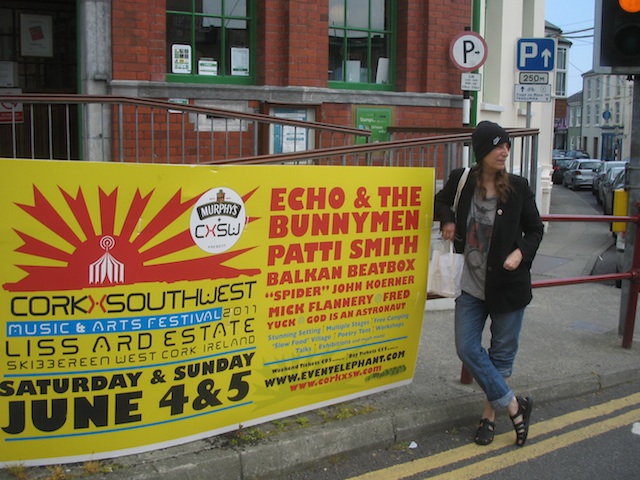
At that time the estate was under the guidance of a German art dealer who had hopes it would become a destination festival site; now, with new ownership, this lovely nature preserve is starting to make that dream come true with Cork X SW, a two day weekend featuring many local Irish bands as well as some anticipated headliners: I was particularly looking forward to Balkan Beat Box scheduled for late Sunday night.
The twelve hours of flight time, including a harrowing crawl through airport bureaucracy at Heathrow that nearly resulted in missing our Aer Lingus connection, left everyone frazzled by the time we pulled into the courtyard of the baronial manor house built in 1850 by the O'Donovan clan. But a sleep in the clean Irish air, and waking to once again be awed by the lush untrammeled botanicals and pastoral pathways, was restorative. The two days off before our first show were particularly welcome, given Patti's need for recovery, and it was sometimes hard to believe we were here working (all praise the gods of rock and roll). I took a bike ride with Andrew, our tour manager, to the local town of Skibereen, visited the Time Traveler book shop (scores: an early English paperback edition of a Bulldog Drummond mystery, a similar Penguin "Room At the Top" by John ), placed feet in a nearby salt water lake, wandered the lanes of Liss Ard to the Sky Garden and back, getting happily lost, and compared Murphy's with Beamish with Guinness. Wish you were here.
The festival was graced with beautiful summer weather on a pair of stages, but I had been advised that a third stage, titled Vibrations, was where the ley lines truly intersected. Visiting there on the night before the festival officially opened, I came upon an encampment where prosceniums were being built of tied branches and natural woods. Joe, the nominal leader of this gypsy commune, told me how they were bringing out the resonant frequencies of each different variety of tree. A maze, for example, was designed not to get you lost, but so you could "feel the oak." Also, in a fascinating discussion, he told me that the 440 regarded as the official concert pitch tuning standard reflects a number that cannot be found within nature. His suggestion is to tune all instruments to 432, so as they might better align and move through one's molecular structure. I'm not sure this translates as cosmically "in tune" as I found it on that evening, but the next night, after our acoustic performance on the secondary stage where we followed a grand by Spider John Koerner, I traipsed into the woods, guitar in hand, to Vibration, and there happily sat around a campfire for two hours strumming along with the musicians, backing tin whistles and flutes, adding my contributions in the form of the Carter Family's "That Old Gospel Ship," the Boxtops "The Letter," various Dylan songs, and a Donovan classic, "Follow The Sun," that I haven't sung for nigh-forty years, amazingly remembering the words, and had a beauteous time 'neath the stars.

After our electric set the next evening, highlighted by my slicing my finger on the rental Strat and decorating its' pickguard in Jackson Pollack swirls of blood red, and Patti bringing up two small girls in the front row to dance and take over guitar duties in our encore, I roamed between the stages to see who might be who. It's one of the things I enjoy most about festivals, the ability to see acts that might never otherwise cross my aural path. I caught Yuck, who I'd heard of, and enjoyed their noisy melodics; and Fred - an infectious group from Derry - who seem to blend Arcade Fire-isms with a sense of tuneful dare-I-say Beatlesque harmonies - at the smaller venue. Then I moved over to the big tent to immerse myself in God Is An Astronaut - electro metal, if there is such a creature - and Balkan Beat Box, who kept me a-dancin' and a-prancin' till the wee hours.
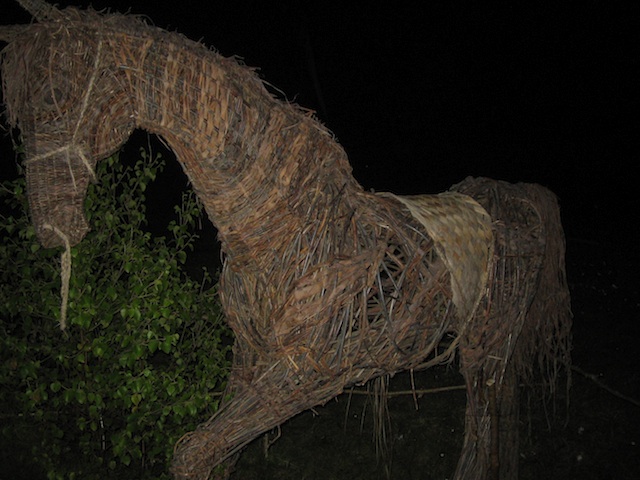
Early the next morning, before heading to the airport, we took a ride to the sea with Caroline, whose husband Phillip is one of the festival organizers, and who can be seen in the R.E.M. video of "The One I Love." There I walked the shore, picking up seashells to take a piece of this lovely land home with me, until I am able to return once more.
May 31, 2011 FRANKFURT, GERMANY
May 30, 2011 VIENNA, AUSTRIA
Zig and zag, we arrive in Vienna on a quiet Sunday. Our hotel is across the Danube from the "centrum" of the city, which gives it a neighborhood feel. I immediately pass out from the overnight flight, but get a wakeup call after a couple of hours, since I've learned that to indulge in a lengthy afternoon sleep means that I'll never get my circadian rhythms back. Groggily, I find my way to a neighborhood bar and have a restorative lager while watching Formula One racing, a sport I've never quite gotten since there seems to be a minimum of passing interrupted by the occasional slide into the wall by one of these behemoths, resulting in an interminable delay.
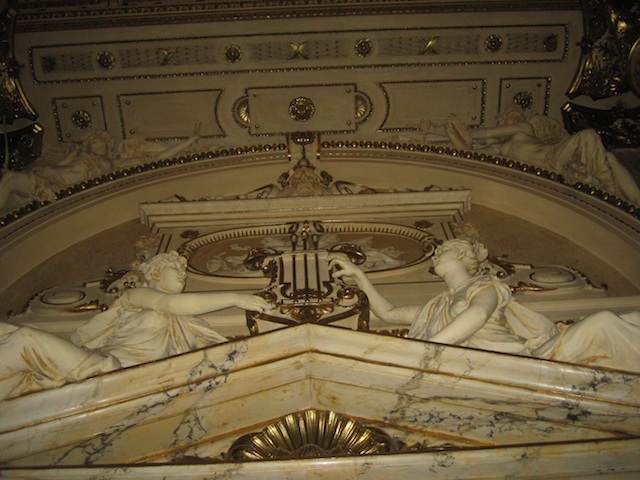
P. has arrived in Vienna feeling under the weather from the arctic air conditioning on the flight, and though we valiantly try to battle the bug with copious amounts of wiener schnitzel, it starts to become worse as showday dawns. Our concert tonight is in the Burgtheater, a beautiful operatic house with murals by Gustav Klimt in the lobby and rows of seats that seem to ascend ever upward. We're playing acoustic here, with Jay Dee on a small kit and even an acoustic bass shared by Tony and Jack, but the sound seems larger-than-life in such a resonant hall (helped along by Pablo mixing our sound and Darryl monitoring). She dedicates "Southern Cross" to the late Christoph Schningensief, who originally brought her to the Burgtheater to enhance one of his visionary avant dramatic productions; and the band shouts out our own resonant tribute to Jim Carroll with a slowed version of "People Who Died." With her voice fraying, we drop the intended encores for "Rock and Roll Nigger," and let it all blow out.
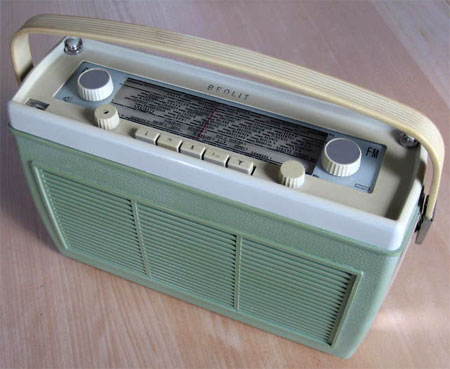
It's funny the chance tangents you get into when on tour. In the hotel lobby I find a commemorative book on the history of the Danish electronics firm of Bang and Olufsen, and idly leafing through it, am drawn to their introduction of the transistor radio in the late fifties, complete with advertisements. Soon I am roaming eBay in search of the elusive Beolit 609 and its related brethren. Let the collecting begin!
August 9, 2010 / HOME
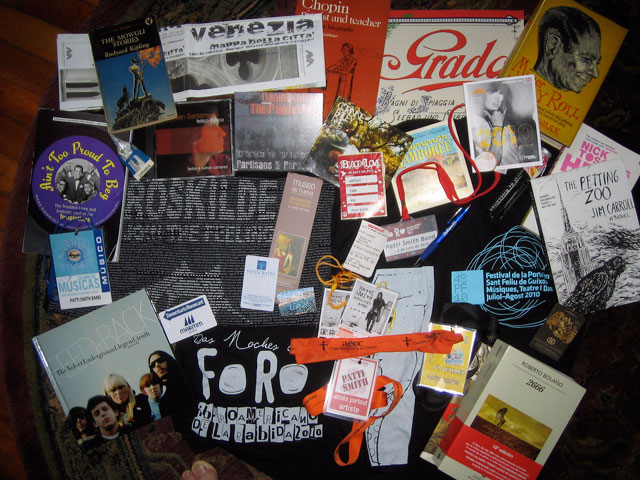
Home is the sailor, home from sea:
Her far-borne canvas furled
The ship pours shining on the quay
The plunder of the world.
Home is the hunter from the hill:
Fast in the boundless snare
All flesh lies taken at his will
And every fowl of air.
'Tis evening on the moorland free,
The starlit wave is still
Home is the sailor from the sea,
The hunter from the hill.
—A.E. Housman (in tribute to Robert Louise Stevenson)
August 3 - 5, 2010 / GRADO / REZZATO / GAVORRANO, ITALY
The images kaleidoscope as dreamscape backdrops in these last trio of shows, each setting worthy of awe.
In Grado we play on the shore of the Adriatic, looking out over the heads of the audience across the water. There is a storm approaching, and we watch its lightning splinter and static the night sky. I look down at the set list, only five songs in. The audience stays with us, braving the elements and the threat of imminent deluge until we round the encores; as we finish, the rain begins to torrent.
The next day we drive up a long pathway between cornfields to a massive Versaillesque mansion built up over two centuries beginning in 1622. The Villa Avogadro Fenaroli in Rezzato is now a hotel, but strangely deserted at this height of summer, with an air of The Shining to it. We are the only occupants, and I keep waiting for a ballroom door to open spilling blood and Jack Nicholson. The stage is set in front of landscaped gardens, and the crowd keeps its formal distance until Patti gives a nod during "Dancing Barefoot," when palace revolution breaks out.
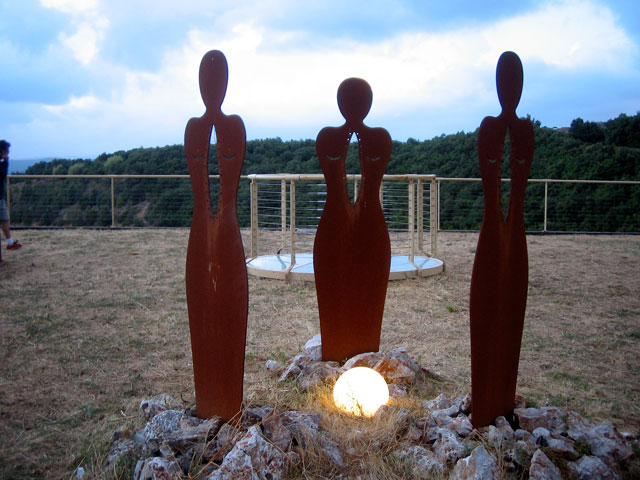
Then high over the mountains to Gavorrano, in the aptly named Theater of the Rocks, which seems carved out of the surrounding stone. The sound bounces back at us, a natural reverb, and on this ultimate evening, the stage volume and dynamics and subtle adjustments in arrangement that only come with playing together find their unspoken interlock. It's as though we are ready to embark on our journey again; and we shall.
If this is just a dream, as the Cinderellas once sang, then please don't wake me.
July 31 / August 1, 2010 / CIVITANOVA / VENICE, ITALY
The photograph on my wall is from September of 1979. I am standing in the Piazza San Marco, holding my hand outstretched, upon which a single pigeon has perched, with the beautiful Basilica behind me. It is only a few days after the Patti Smith Group has played in Florence before 70,000 fans, and though I couldn't know it at the time, it will be our last hurrah as a band in that incarnation. My arrival then in Venice was as much a beginning as ending; and so tonight, where we have come to play on that selfsame square, on the first eve of the month named after the Emperor Augustus.
The antipasti was the previous night, in Civitanova with the Adriatic Sea at our back, getting a handle on the acoustic nature of these shows. We had spent our day off an hour away in San Severino, a medieval town where I see the slippers of Pope Celestine V, who, at the close of the thirteenth century, gave up the Papacy after five months to resume his life of humility and was fatally imprisoned as a result. We also eat steak covered in truffles, which may or may not be humble, but surely renews one's belief in transubstantiation.
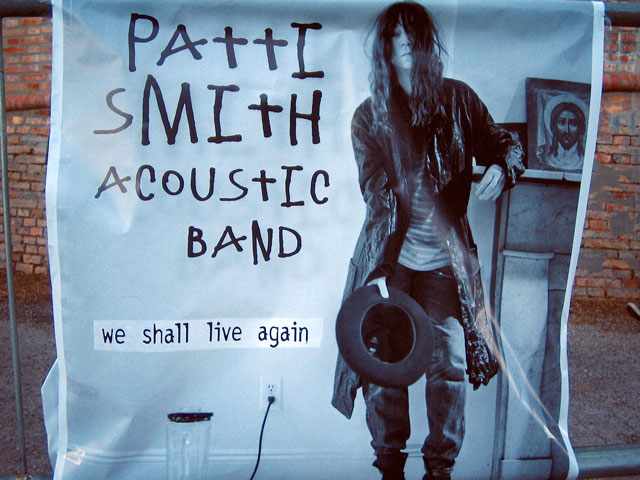
The show in Venice is a benefit for Emergency, the group that provides medical aid to victims of war and pestilence (see www.emergency.it). It is Jim Carroll's birthday, and Patti calls forth his spiritus sanctus in "Southern Cross." Still, the most moving moment for me is when she does "Wave," with Jesse accompanying her on piano, Tony and Jay Dee providing undercurrents, her walking alongside Pope John Paul I on an imaginary beach and waving to him on his balcony, the Patriarch of Venice whose own foreshortened Papacy was marked by the bending knee with which we all approach divine illumination. It is the first time I have heard the song live since 1979. As she recites the simple childlike innocence of its words, the bells of San Marco begin to peal, and I can feel the fluttering wings of a bird alighting on my hand, a picture taken of the future, prophecy fulfilled.
July 27 / 28, 2010 CARPI / OSTIA, ITALY
Ah, Italia. Puttanesca and cappuccino and grappa. It is so nice to be here once again, in the country which has most embraced our band, and where we have played in many piazzas and villas and villages so small that I have to look on a map to see where they might be located, each a pristine jewel of winding streets and renaissance churches and free-flowing vino.
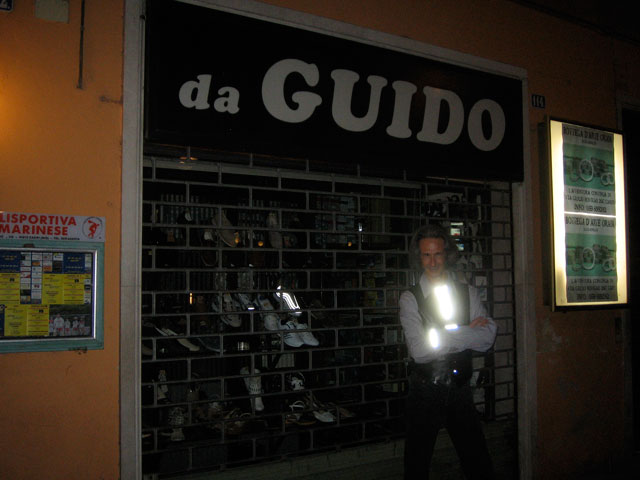
The shows here are acoustic, and our caravan has unplugged with the arrival of Jesse Smith, who will play keyboards, and Mike Campbell, joining me on unamplified guitar. With my daughter Anna along for the sights to see, it feels as if we've become the Carter Family, folk minstrels traversing town to town.
The first stop is Carpi, north of Bologna and outside of Modena, home of balsamic vinegar and our longtime Italian promoter, Rita of International Music. The square where the stage is set up is the second largest in Italy, and we face a glorious church dating back the usual several centuries. We are sandwiched between two highly regarded Italian bands, the crowd gamely attempting to sing along, but the audience reserves their cheering for 13 year old Nicolo Zapador, Rita's son, who comes out to join us for the finale.
Given the bill, we're semi-electric, and even the next night demonstrates that it's not easy to ramp down from the accelerant force of decibels. In Ostia, along the shoreline due west from Rome, we play in an ancient amphitheater dating back to the second century a.d., amidst ruins and the archeologic foundations of a city that, as I roam (smiley-face emoticon here) the tumbled walls and once-teeming vias as the sun sets, gives off an air of haunt and phantasm.
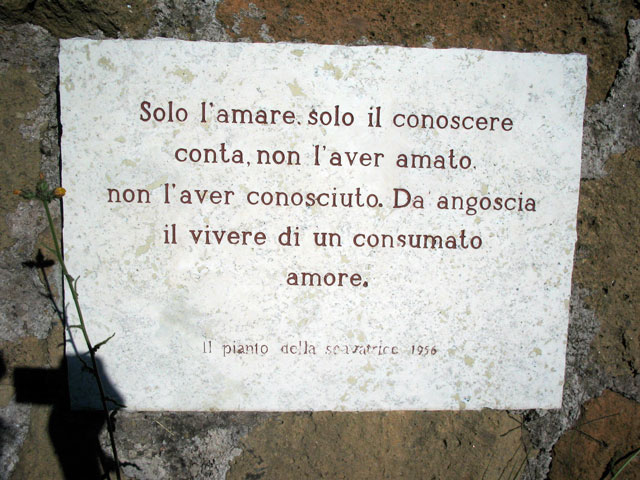
The next morning, before we leave, we feel that same sense of hallowed ground visiting a monument commemorating the spot where the poet, critic, and filmmaker Pier Paolo Pasolini was murdered along the Ostia beach in November of 1975. His Gospel According to Saint Matthew is still the most realistic of Biblical interpretations, Christ as a true proletariat revolutionary; and Salo is unequalled in wallowing depravity, reflecting Mussolini's fascism and Pasolini's unflinching moral courage.
July 23, 2010 / SANT FELIU DE GUIXOLS, SPAIN
The final show of our electric leg takes place in this charming seaside town along the Costa Brava. Below the hotel the Mediterranean splashes invitingly into a secluded cove, and inside Sant Feliu proper, there is an old monastery that has been converted into a museum, which features an exhibit called Art In Heaven of Patti photographs, drawings, and installations, including her reconstruction of Rimbaud's litter, that took him from Harar on his final journey home. As we walk around the exhibition the day before the official opening, sounds of a pipe organ emanating from the church inside the monastery add an extra dimension of celestial aura to the displayed work.
This is also the arrival we have been awaiting ever since we entered Spain. The literary touchstone of our tour has been the great Chilean writer Roberto Bolaño, whose masterwork, 2666, is the centerpiece of our ongoing book club. We have felt his spirit as we draw ever closer to Blanes, the town thirty miles down the coast in which he worked and lived and unfortunately died in 2003, a year before the crowning achievement of his legacy was published. The show has taken on added gravitas with the imminent arrival of the Bolano family, his wife and two children, the oldest of whom, Lautaro, is a talented guitarist, and will join us for a rousing version of "All Along The Watchtower," staying for the rest of the set, a passing of the torch that surely Roberto watches over with filial pride.
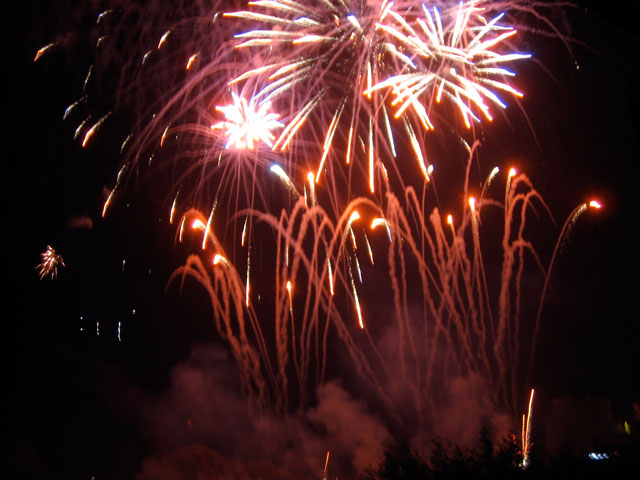
On Sunday we will travel to Blanes, and there, under a full moon, watch a breathtaking fireworks display along the beach that Roberto walked and even wrote about, breathing the sea air that infuses his endlessly kaleidoscopic sentences and pyrotechnic tales within tales and illuminating imagination, the oohs and ahhs dazzling the senses as he plumbs our most ancient depths of war-game violence, ritual sacrifice, unsolved mysteries and poetic transcendence.
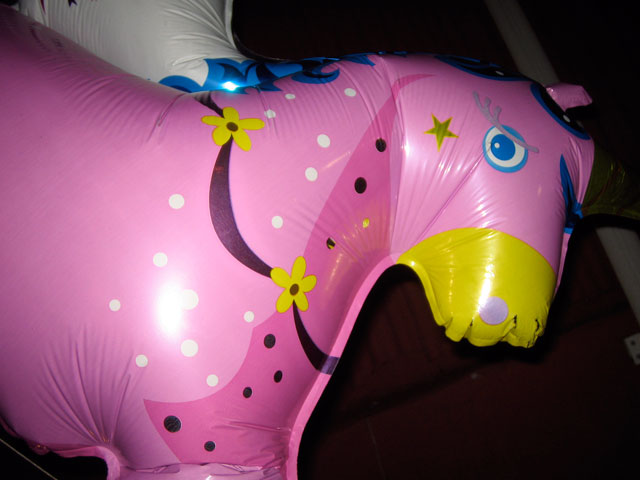
JULY 21, 2010 / SAN SEBASTIEN, SPAIN
With all of our shows outdoors on this go-round (London was under a tent, but still in a park), it's amazing that we haven't seen rain. Not so in San Sebastien, high on the Atlantic coast. In fact, the stage is set up on the beach, overlooking sand and ocean. It's to be a free concert, the first of a five day "jazz" festival (hey, I play a flat five occasionally). But the last time we were here, in 2007, it poured, and today seems no exception. There are rumors that the show will be postponed till the following day, which would be fine with me since our hotel is only a five minutes stroll from surfers riding the waves. Fortunately for the occasion, the sky somewhat clears, the stage is dried, and by nightfall, over 25,000 people have come to the San Sebastien shore to be jazzed. It'll start raining somewhere during the set for a couple of songs—we see umbrellas go up briefly—but the precipitation stays away until after we're done.
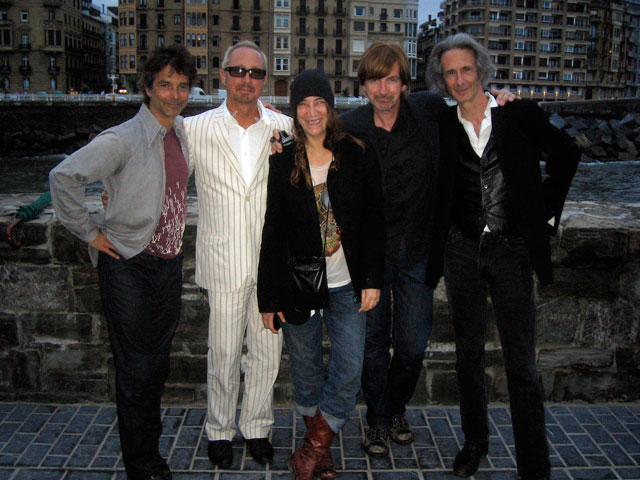
Before we go on we take a commemorative band portrait. From left to right: Jack, Jay Dee, our Noble Leader, Tony, Tour Guide.
July 20, 2010 / MADRID, SPAIN
The prospect of una lavenderia is exciting everyone. Just past the midpoint of the tour, I've gone through every article of clothing, some twice. Around the corner from the hotel, on the Calle de Leon, we engage in the blessed mundanity of doing wash; across from the laundromat is a building sign saying that Miguel de Cervantes vivio y murio here. I wonder if this is where Sancho Panza brought the Quixote armor to be scrubbed.
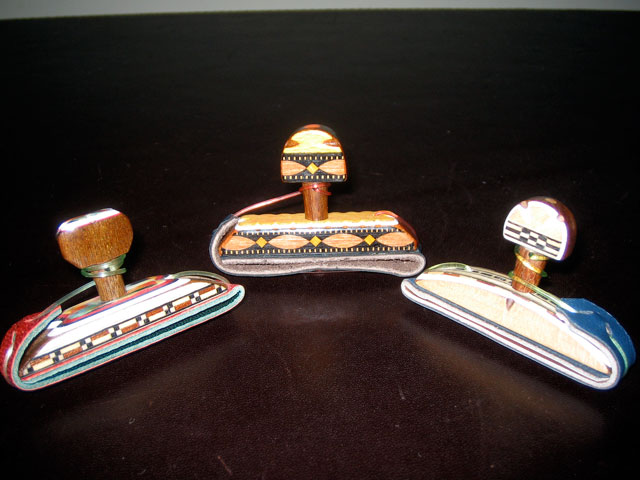
There is a real sense of neighborhood in our vicinity, with tapas bars and cafes in which to while away the rinse cycle, though by the time I finish folding my socks, with the de rigueur one missing, it's the heat of the afternoon and everything shuts for four hours of siesta. When the shops reopen, I successfully locate the classical/flamenco guitar stores I discovered our last time here a couple of years ago. I play a selection of the guitars on hand, and purchase a couple more of the capos that only seem to be made here in Madrid, tiny art objects as functional as they are beautiful.
July 15-18 2010 / HUELVA/CARTAGENA/VIGO, SPAIN
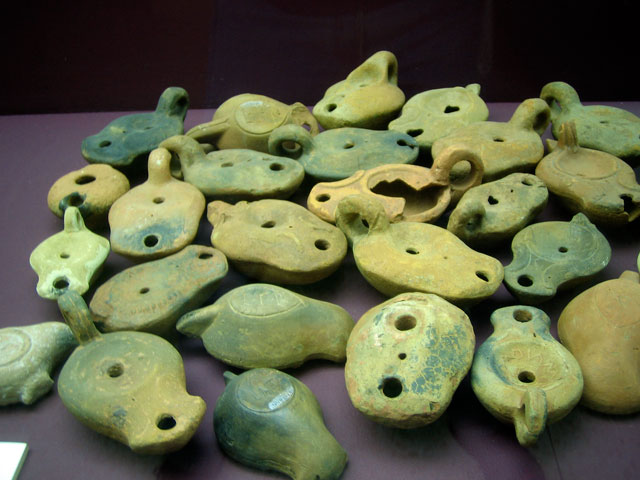
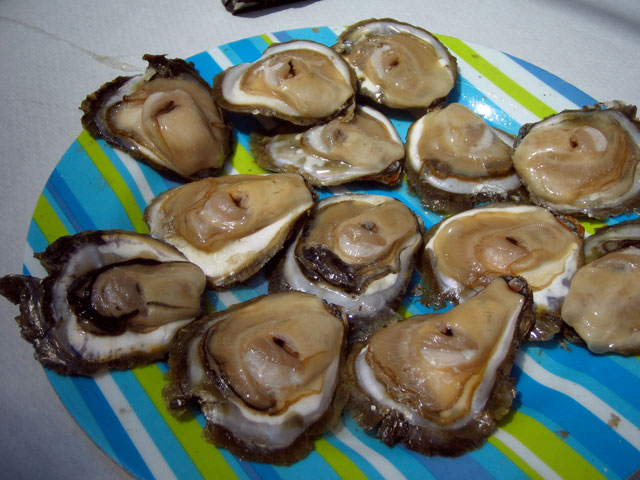
We zig and zag and zip across Spain, three shows in four nights. We begin in Huelva, on the southern coast right next to Portugal, travel 400 miles due east to Cartagena, then diagonally northwest across the country 65l miles to Vigo, picking up stray geographic factoids about each of these port cities as we go. Huelva is where Columbus recruited sailors for his trip across the Atlantic, and stayed in the local monastery while he raised funds for his journey; Cartagena was a Mediterranean gateway into Spain for the Romans, named for the ancient North African city of Carthage, and many like-minded invaders with territorial eyes for the Iberian peninsula followed; and Vigo, on the Atlantic, is a shipbuilding city along a river estuary that is now filled with sailboats and summer frolickers. In honor of the water's proximity in each of these cities, I eat only fish: sardines, anchovies, monkfish, sea bass, dorado, squid, oysters. You can taste the water in which they grow.
All these shows are fervent, especially in places where we do not expect to be known. Traversing the country, much of it arid and reminiscent of scenes in Sergio Leone's spaghetti westerns, which were locationed here, I can't help but reflect on the Civil War that took place in Spain in the 1930s, a testing ground for the battle of world powers that would result in World War II, a microcosm of carnage and conflicting ideologies and the repressive dictatorship that would follow. This war broke out on July 17, 1936, and in Vigo, on the weekend of its anniversary, we send up a flare to those who gave their lives, including the poet Lorca. There is a word that I am taught in the local dialect of Galician that implies a longing for that which is lost, saudade, and as we memorialize "People Who Died," we feel this sense of ineffable missing, and of Espana now restored.
July 12, 2010 / MALLORCA, SPAIN
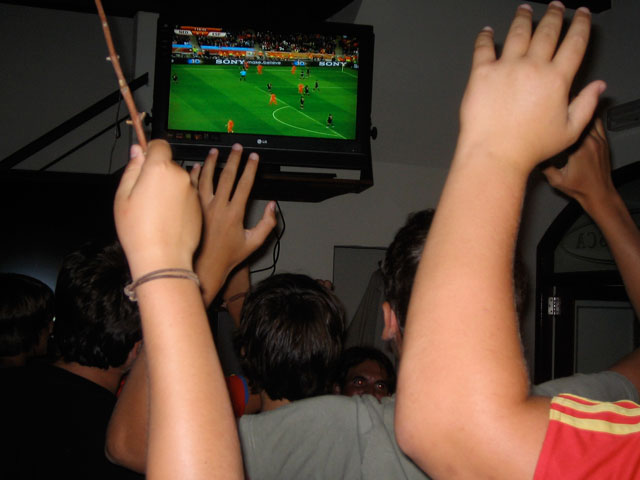
The World Cup soccer championship is being played tonight as we arrive in Spain. I have visions of a giant-screen television in a square filled with thousands of cheering fans, but our hotel is in the mountains of this beautiful island, and the nearest town is Deia, whose main street measures a hundred meters, just long enough for a few restaurants and a couple of bars. I find a seat at the tiny Sa Font Fresca next to a guy dressed in red and yellow banging a bass drum, get a cold San Miguel, and cheer on the home country, playing Los Paises Bajos. The announcer is rapid-firing Spanish but the oohs-and-ahhhs of the forty or so patrons allows me to follow the subtleties of the action. And when Espana scores in the final moments, the town erupts in fireworks and pride. ¡Campeones!
We open the show the next night with "Till Victory." It's the first time for this venue, on the grounds of an abandoned estate taken over by the municipal authorities after the previous aristocratic owners couldn't keep up the sumptious gardens and labyrinthine rooms, and before the show we wander the empty floors with peeling wallpaper and phantasms that seem to still inhabit the space.
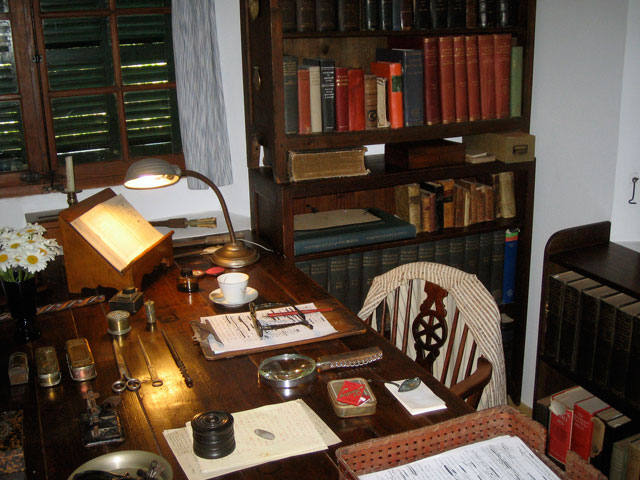
There is another spirit hovering over Mallorca, that of the writer Robert Graves, who moved here with the poet Laura Riding in the early thirties, left for the ten years of the Spanish Civil War and WW II, and then returned for the remainder of his days with his last wife, Beryl. On our day off, their youngest son, Tomas, takes us around the family home, now a museum, in Deia. It is here that Graves wrote his "potboiler," as he liked to refer to I, Claudius, and his beautiful poetry; and tended his gardens and swam in the warm salt of the Mediterranean, as I soon blissfully will.
July 10, 2010 / ST. CYPRIEN, FRANCE
Tonight is a double bill worthy of the Grande Ballroom, us and the Stooges at a festival on the grounds of a huge winery, with the Mediterranean hovering in the background. When we reach our hotel after the few hour drive from Albi, our promoter, Alain, tells us that the Stooges' show last night was highlighted by Iggy cracking heads with an audience member after a swan dive into the crowd, resulting in ten stitches on the Pop browline.
This is the Raw Power Mk. II Stooge line-up, with James Williamson wielding his Les Paul after many years leading a vastly different life as a computer programmer, Mike Watt holding down Ron Asheton's controversial switch to bass, Scott Asheton rock-actioning the traps, and ex-Carnal Kitchen sax player Steve Mackay doing his Funhouse thing.
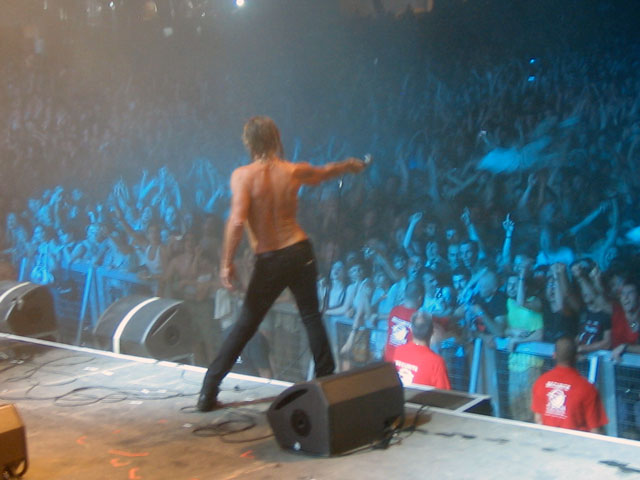
The Stooges have always been near and dear to me, from the first time I saw them opening the MC5 at the World's Fair Grounds in Queens in 1969, through Iggy on the floor in silver gloves at Ungano's, scraping his chest with a broken bottle at Max's, King's Cross Cinema in London and the Palladium in New York and on and on and on until most recently, the stage of Carnegie Hall for the Tibet House benefit, where I got to play the salute-to-Ron solo in "I Wanna Be Your Dog."
They put on one mortarforker of a show. Watching from the side of the stage as Scott and Mike lock the rhythm section, James negotiating the twists and turns of "Search and Destroy" and "Your Pretty Face Is Going To Hell," Iggy tossing and twisting himself with reckless abandon, the ultimate showman, I praise the rock gods that the Stooges are...well, Are. "Outta my mind on Saturday night..." they sang in "1970", and four decades later, amazingly enough, those same words are still ringing ever truer, on this humidity drenched night in the south of France before ten thousand screaming souls.
July 9, 2010 / ALBI, FRANCE
We step out of the bus about noon after the long overnight drive from Switzerland to be greeted by a blast of hundred degree heat. Ah, southern Europa. Me and P. repair to a nearby café for a coffee. Three afternoon inebriates are singing along to a medley of Queen songs, the waitress sits at our table to take our order of chicken tagine and steak frites. The Terminus. Our kind of joint.
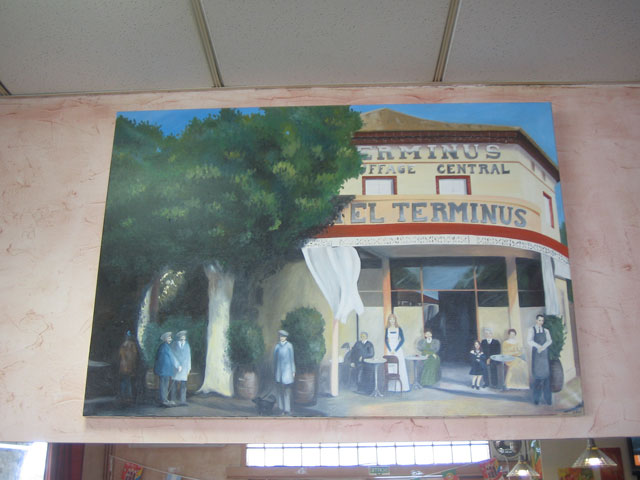
Albi is the birthplace of Toulouse-Lautrec, and the historian in me connects the dots to deduce that it is also the namesake for the Albigensian Heresy, for which the Cathars were nearly wiped out in the early thirteenth century. They believed in the primacy of the spiritual over the authority of the Church, which made them no friends among the Papacy, and a crusade was mounted to teach them a lesson, resulting in such enlightening inquisitional practices as unearthing the Cathar dead to burn them. I spend time in the Toulouse-Lautrec musée, studying his portraits of the Paris demimonde of the Moulin Rouge era, and gaze at the magnificent fortress-like cathedral that overlooks the town square, where we play this evening on a bill with French chanteur Jacques Higelin.
In the early 1970s, on my first trip to Paris, I came upon an album titled Higelin et Areski, which offered a minimal folkish song cycle in importuning French that became one of my late night favorites. I met and became friendly with Jacques a few years later, and often remember a moment where he visited me in New York in 1979 just after we recorded Wave. When I played him "Broken Flag," our bittersweet anthem centered about the Battle of Algiers (see the Pontecorvo film of the same name for cinematic docu-drama), he kissed me on both cheeks and said, in that self-same voice I remembered from Higelin et Areski, "Magnifique!" Now I am about to further closure the circle by meeting Areski Belkacem, who is backstage with Brigitte Fontaine, about to go on after us.
She had been delayed in the traffic of a motor accident on the way to Albi, and so we take her slot in the Pause Guitare festival. It's still light when we go on, but I don't mind, since seeing the crowd and their mirror-imaging Patti's shake-out during "Ghost Dance" makes the huge square a communal party. It's my Dad's birthday today - he would've been 104, bless his soul - and during "People Have The Power" I imagine him on the rooftop opposite, watching over me, proud that I am carrying on the musical traditions of the Kusikoff family. I am a third generation member of Local 802, Musician's Union, my grandfather (born in Russia) a drummer, and my Dad a piano/accordion player. Thanks, Pop.
July 7, 2010 / ZURICH, SWITZERLAND
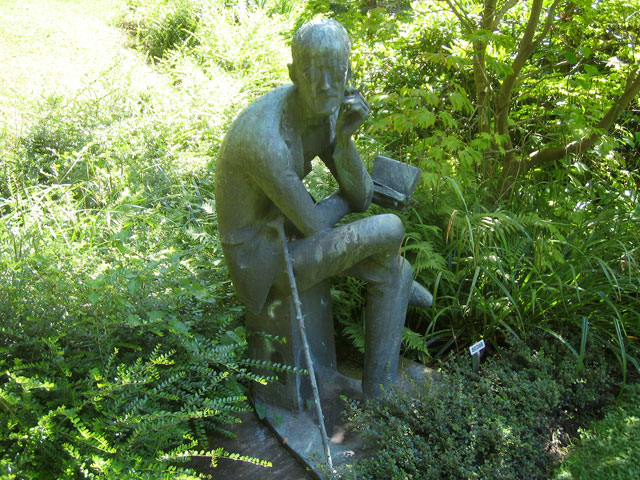
Respect must be paid. When we discover that James Joyce lived intermittently in this city, wrote a good deal of Ulysses here, and is buried in a hilltop cemetery overlooking the lake of Zurich, a pilgrimage is arranged. He is—in my mind—the most important and influential wordsmith of the twentieth century, taking the English language as far as it might go in Finnegan's Wake; and despite its complexities, Ulysses is surprisingly and eminently readable. As Molly Bloom would say, "Yes."
We played tonight's venue, the Rote Fabrik, many years ago, back in the seventies, standing out in memory not so much because of the show as a tear gas bomb was unleashed shortly before we went on. Politricks. What I didn't realize then, and see now since the stage has been moved outdoors for this beautiful midsummer night, is that the theater is beside the lake, and as we soundcheck, me and the boys trying to medley Nuggets like "Psychotic Reaction" and "We Ain't Got Nothin' Yet" and "I'm A Man" and "Tobacco Road" (all we seem to know is an opening verse and chorus), sailboats and swimmers splash by.
For us, it's a strange one onstage, the PA system having to blast to cover the crowd, and its positioning makes everything seem louder than humanly possible. But Patti's tales of fireflies in the forest and Hans mounting Gretel and a beautiful "Wing," with Jack's solo fluttering in the evening air, bring us on home. After, Neil Sugarman of Sharon Jones and the Dap-Kings, who has family here, engages me in talk of analog vs. digital and classic soul in the twenty first century. We resolve that instead of crossing paths in Switzerland, we might have a sausage (Nathan's) and a beer (Brooklyn Pilsener) on our home turf.
July 4-5, 2010 / BONN/BERLIN, GERMANY
On the bus, at last. Our last flight for a while, thank the Wright Brothers, with all the attendant security herdings and mall-like shopping zones and mis-directed luggage. The JumboCruiser which will be our home for the next three or so weeks awaits, and I claim my usual bunk, left side upper, toward the rear, just long enough to accommodate my prone six feet. With a window, which makes all the difference.
I hardly see Bonn, but Andrew Burns, road manager and guitar tech for us in the past and future, is there to greet us as we arrive. He's working for Corinne Bailey Rae, a lovely thrush, and has a fortuitous day off so he can come see us play. Also there is Karen and Kim, front row fans that seem to show up wherever we show down in America and Europe; their presence makes even the abstract tent we're playing in seem familiar.
We drive overnight to Berlin, and I stretch out in my bunk watching the opening episode of Sons of Anarchy on DVD. I came into the show—kind of like The Sopranos on V-twin engines—midway through the second season and was instantly pulled into the motorcycle mayhem. Now starting from the beginning, plot details that remained blurry come into focus, and I ready to embark on this saga of iron horses and the outlaws who duo-glide them.
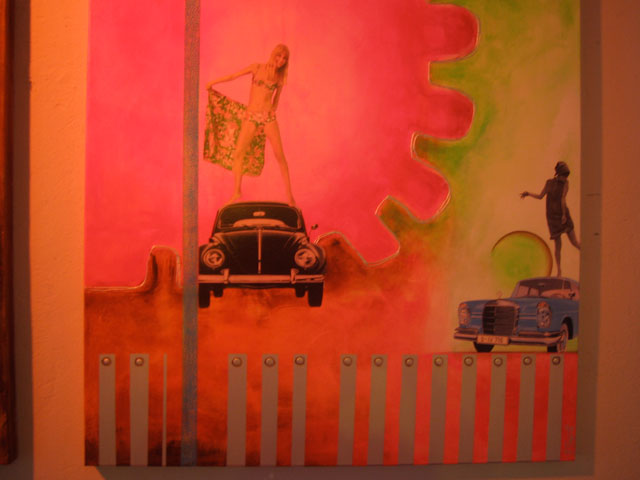
In Berlin we're playing the Zitadelle Spandau, on the outskirts of the city within the grounds of an old castle, complete with moat. We were here in 2007 and it's a good venue, outdoors and with a carnival feel. The edifice was used as an army barracks for a while and now serves as a modern art museum. REM is in town, working on their new record, and the whole band, with families in tow, visits. Peter joins us on "People Who Died," playing some note-perfect Chuck Berry licks during the solo; and then everybody—Michaels Stipe and Mills, Scott, Bill, even Daniel Kahn, the accordion player from the opening klezmeresque act—overflows the stage for "People Have The Power" and the closing noisefest medley of our favorite three chord anthems. We all crash into the final E together, a divine clang, and one that sends any lingering ghosts into the hereafter.
July 3, 2010 / COPENHAGEN, DENMARK
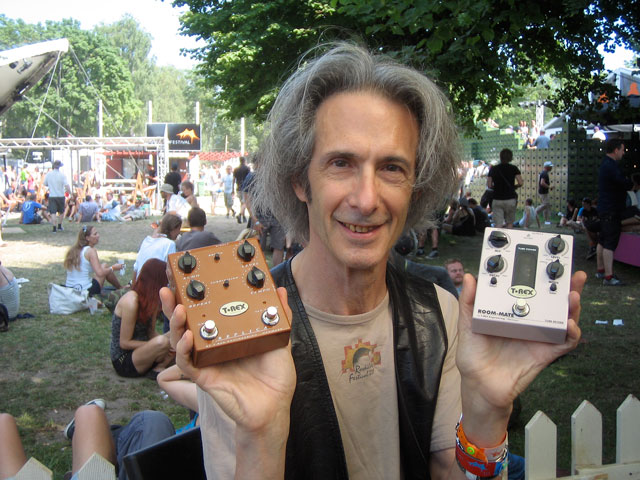
Four hours sleep, no wake-up call, leap into startled wakefulness. At least we're already at Stockholm airport. Returning to the Roskilde festival is somewhat of a déjà vu, though I know the lay of the land. We have an afternoon show at 4:30 on the main Orange stage, and a quick cruise of the grounds reveals the festivities in full sybaritic swing, a good time being had by all. I meet Torsten from Copenhagen-based T. Rex effects pedals in the media tent, and he gifts me a couple of their extremely well made products (shameless endorsement), a reverb stompbox called the Roommate with a genuine 12AX7 tube in it, and a delay called the Replica. Since the bag with my effects has been lost in transit since Thursday's flight from London, he couldn't be more welcome.
The strong wind during the show sends frequencies swirling, and by the time we reach a closing "Rock and Roll Nigger," we throw caution to those very breezes and medley it with snatches of "Radio Ethiopia" and "Gloria," guitar howls set on stun level, the beast language chatter of wrenched sway bars and the feed of back. It's messy, but in this age of perfectly calibrated theatrical shows (not ours, surely), it feels like a reaffirmation of our "outside society" anarchistic roots.
Which, leaving the festival grounds around eight, we decide to indulge on the way back to our hotel. We stop in Christiana, a once Danish hippy encampment inside Copenhagen where—despite the right wing government's periodic attempts to shut it down and build condominiums—still maintains an air of free-for-all. We admire a particularly nice display of blocks of hashish, complete with stamped inlaid seals; a price twice nice for a slice suffice. I-ce.
July 2, 2010 / BORLANGE, SWEDEN
When Patti and I first played the Love and Peace Festival in 2006 as an acoustic duo, fortuitously helped out by Peter Buck who happened to be there as well, it was a small idealistic event whose stage was set up on the main street of the town. Now it's become the second largest festival in Scandinavia, next to Roskilde, and the two giant prosceniums set up side by side, along with several satellite venues, testify to its explosive growth. It's been a long travel day from Copenhagen, two flights and a connection at the Stockholm airport that seems as if we've walked halfway to Borlange, the second plane a prop aircraft that rides the air currents like a roller coaster. Whooeee...! When we get to the festive site, L&P; is in full swing, Lily Allen bouncing around on the adjacent stage and our equipment set up and ready to launch. We add "Love Train" to the set at the last moment, and sing-a-long's commence.
Aftershow I have a brief few moments to see who's playing. In the early eighties Kim Wilde and her producer-brother Ricky made some of the best pop records of the late vinyl era, and I hop on a convenient shuttle to catch a few numbers. Though I don't have time to hear "Kids In America," Kim is winning and I have my mental photo of her in performance. I make it back to our encampment with enough moments to see the Hives, for whom this is a local gig, celebrating those garage verities we all know and love, though hardly peace.
Then we're back in motion mode, a three hour van trip to Stockholm airport so we can catch a too-early flight. It never really gets dark, more twilight or pre-dawn, the rising of the moon at midnight ghostly and spectral, as if we are phantasms caught between worlds, which in a way we are. The between of here and there.
July 1, 2010 / COPENHAGEN, DENMARK
I read out the names, one by one, the tolling of nine: three Danes, three Swedes, a German, an Australian, a Dutch, all young men, lost in their prime. Ten years ago, at the Roskilde Festival outside Copenhagen, during a set by Pearl Jam, they had the misfortune to be crushed as the crowd pressed forward, overwhelming them. A year later, after a symbolic planting of nine trees near the stage, our band unfurled a version of "I'm Still Alive" to honor their memory. Those trees are now grown, and in commemorative invocation to open the festival, Patti throws nine roses to the crowd for each life foreshortened. We then pick up our acoustic guitars and play "Southern Cross" and "Blakean Year," affirming the life force within music, and our duty to appreciate each day of this exis-dance.
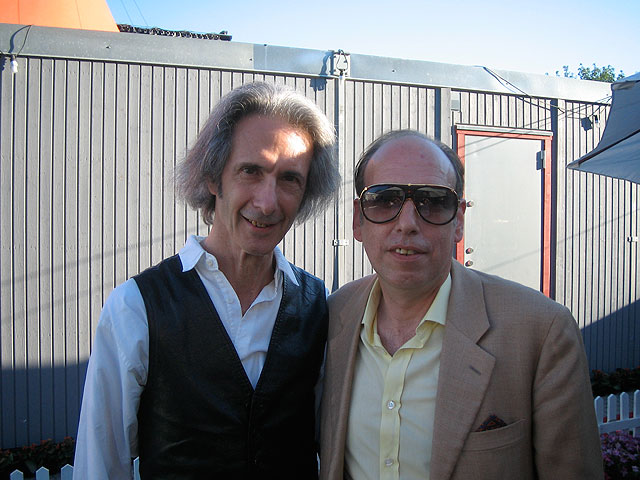
Traveling to Denmark on an early flight out of Heathrow we had run into the Gorillaz, who now contain within their considerable ranks two old friends, ex-and-always Clashers Paul Simenon and Mick Jones. Backstage, like veteran warriors, we trade reminiscences and renewals. We can't stay to see the show, which looks to be an amazing vaudeville-like extravaganza, replete with an Arabic string section, animated projections, and even the venerable Bobby Womack, since we have a pair of early flights tomorrow to get to Sweden and meet the rest of the band; but the Gorillaz will be in America in September. See you then.
June 29, 2010 / LONDON, ENGLAND
There is an art to getting out of town for six weeks. Tying together the loose ends of a scattered life, paying ahead bills, finishing last minute writings, fixscreendoorcleanturtletankfindblackjacketchoosebooksgathergadgetsguitarspassport...why is it one always finishes five minutes before jumping into the car to the airport?
This year it's complicated by the due date of a track for a Nolan Strong and the Diablos tribute album. One of my favorite Detroit doowop groups, recording for the legendary Fortune label, the project was initiated by Norton Records' Billy Miller and producer-enthusiast Rich Tupica. My choice is "I Wanna Know," and I decide to do it all in my basement, soup to nuts, drums to bass to organ to guitars to vocals, including four part harmony, which of course takes far more weeks than I could've imagined. I have never gone the distance on my ProTools LE setup, and the learning curve is steep (luckily for my percussion skills, I figure out how to move the bass drum to land somewhere near the downbeat); but by early on the morning of my leavetaking, I press play on the final mixage, bounce to disk, and send the "files" to Billy and Rich.
I meet the band at Newark airport, everyone slightly bedraggled from their own efforts to get life in order. Joining with Tony and Jay Dee on this voyage is Jack Petruzelli, stage right guitar, and our noble crew of Barre (tour and stage left manager, and my caustic guitar conscience), Futz (taking care of the other side of the stage), Darryl (monitors), and Pablo doing front-of-house sound, much as he did fifteen years ago when we set off on the road, before taking a long detour working for Bob Dylan, among others.
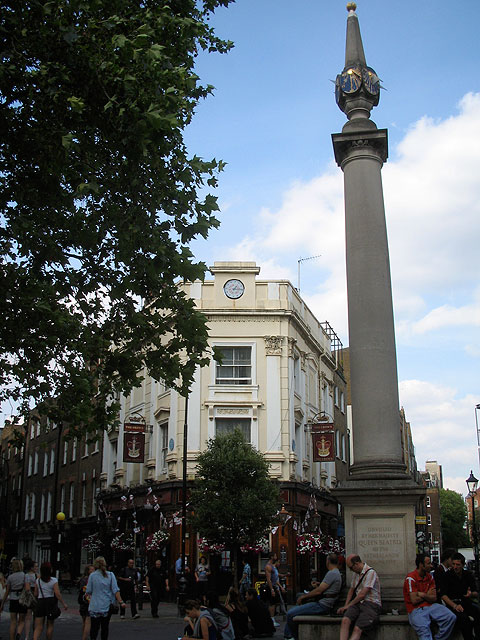
It's beautiful weather when we land in Blighty, the papers full of shock-horror about the English soccer team's ignominious flame-out in the World Cup. We usually stay near the Seven Dials in Covent Garden, named for the seven streets that meet at its obelisk, and though there are elements of touristic Times Square in adjacent Piccadilly, I have my rounds: English breakfast at a trad cafe, lamb madras at Punjab, the bookshops on Cecil Court, the guitar shops along Denmark Street, and a pint or six of London Pride at the Crown across the street.
The first show is always fraught with uncertainty, and we're playing in a big tent in Hyde Park. Normally you don't want to open in a major capital, working out the rough spots and grey areas in somewhere a bit less on-the-spot, but the crowd's roar galvanizes us and we spin through our set triumphant, buoyed by backstage visitors like Morrissey (who once covered "Redondo Beach") and Kevin Shields (who inspires me to play louder). The curfew of 10 p.m. cuts us off just about when we begin to spell G-L-O-R-I-A. By then we've cracked open the bottle on this tour.
The next day is a rest before we go to Europe proper. Aaron Budnick, a rare book dealer of long acquaintance, gifts me a copy of Alan Lomax's Jelly Roll Morton autobiographical transcriptions, and treats me to a high-end lunch at Brown's Hotel, where we feast upon potted shrimp and aged porterhouse. Begun.
SXSW Diary
Austin, Texas
March 17 - 21, 2010
Wednesday. The pinball begins immediately. Within minutes of checking into the hotel, on my way to pick up registration and laminate, I start running into random friends and acquaintances, negotiating streets not only packed with bands caterwauling on every corner, but throngs of partygoers who are celebrating St. Patrick's day of inebriation.
It's been ten years since I attended the annual music business/art clusterfuck known as South by Southwest. Then, celebrating the release of Gung Ho, Patti and Her Band played a set under the stars in the local park, opened by Ray Price (of all gentlemen) and Alejandro Escovedo (another gentle man), and highlighted by a helicopter apocalyptically landing near us during "Gung Ho." In the decade since, it appears that the conference has grown exponentially, now amounting to nearly two thousand musical attractions buttressed by an unknown number of more would-be's, wanna-be's and truly-are's just coming to join in the party. With the downtown streets blocked off, and every available venue hosting bands from noon until pass-out, it resembles Mardi Gras at its most whoop-de-doo. And I'm a-whoopin' along, make no doubt about it.
I don't have too many duties, just to appear on a couple of easy-going panels, and the rest of the time let loose. I don't even know what or who's happening, since I never advance checked the scheduling. I've learned not to make too many plans at these things, as it's more fun to go with the flow, prepare for the unexpected, and be surprised, emphasis on the prize.
The first person I run into is Joe Keyes, my editor at eMusic, and a fellow metal fan who alerts me to the High on Fire show later that night at Mohawk. Then Sandy Pearlman tips me to some bbq joint I have to try. Jim Fouratt lets me know he's there to be our collective conscience. Dr. Ike, of the Ponderosa Stomp, recommends Rocky Erickson at La Zona Rosa. But before I have a chance to put any of them into play, a chance run-in with disc jockey B.P. Fallon tells me where to start the eve, at his show where he'll be singing/chanting and will be backed by Clem Burke and Nigel Harrison of Blonder fame, and Aaron from the Madison Square Gardeners, old friends all. When I find the venue, which actually is in a parking lot somewhere north of 4th St., he's singing "Gloria" and is his usual ebullient self. Spliffs are rolled and then it's off into the night.
I hop on the Bob Gruen express, a familiar shuttle since we've been doing the Rock Scene stroll ever since the seventies. We arrive at somewhere-or-other in time to see the last five minutes of Wanda Jackson, walk a few blocks to the Austin Music Hall to catch the encore of Michael Monroe's high powered set, where he's aided and abetted by Sami Yaffa and Steve Conte.
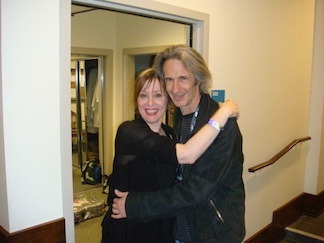
Word reaches me that Suzanne Vega is playing across town in a church. It is a beautiful setting for one who has gifted such a memorable presence in my life, and I surprise her happily backstage. Flanked by Gerry Leonard on interstellar guitar and Mike Visceglia on bedrock bass, framed by a beautiful and beatific religious painting, she is as wondrous as always, her songs indelible, her voice pure and untremeloed.
Then I lose myself in the crowds on Sixth Street. The color green is everywhere, but Red 7 is where the metal bands roost and I have a hankering for the loud and pummeling. I know not whom I see, but sometimes it doesn't matter. Finally, taking Joe Keyes' advice, I go to High on Fire, who are righteously unhinged, tossing off stage divers with a smile and a shrug, the guitarist's ten-string (!!!) emitting howls that might make Beezlebub wince. Up for nearly twenty hours, and with ears a-pealing, I soon totter off for the nearest prone position.
Thursday. I have been sent down here by the Rock and Roll Hall of Fame to speak on their panel, "Does Rock and Roll Belong In A Museum?," along with head curator Jim Henke, journalist Ann Powers and Miles from the Akron Family. As a long time supporter of the Hall, especially their newfound Library, I am happy to make the case that though such artifact enshrinement often means something is caged and neutered, that the several thousand musicians howling at this conference shows that the form is alive and well, thank you, and yes, I do hope they let me play John Cippolina's amplifier someday.
Next door is a fascinating panel on the fortieth anniversary of Miles Davis' Bitches' Brew, with drummer Lenny White telling behind-the-scenes tales, and reissue producer Steve Berkowitz guiding us through the Davis archives. I then accomplish my main mission in Austin, which is to have some baby back ribs and Lone Star beer. Around the corner from the Convention Center is Ironworks, where I lunch it up. Sated, on my way back to the hotel to take a much-needed nap, I happen on the Vivian Girls playing in the Mohawk courtyard. I'd heard of them, and yes, they live up to their Darger-like name, being both Amazonian-warrior, incredibly tuneful, and somewhat perverse.
After siesta, I head over to La Zona Rosa where Nicole Atkins is showcasing. I produced more than half an album with her in 2006 before an executive turnover at her record company at the time changed our direction; but it forged a bond that we both nurture and celebrate. Backed by a great Austin band, Future Clouds and Radar, she plays a set of all new awe-inspiring material and delivers it with passion and intensity. She is followed by John Hiatt, and as I pass him backstage, I lean over and sing the first few lines of "What Do We Do Now," a song of his from a few years back that is among my personal hit paraders, and that I've even gone so far as to cover live. A circle fulfilled, and though he doesn't play it or another fave, "Perfectly Good Guitar," he is resonant and earthy, with a burnished stage manner that reminds me of a well-worn Martin.
I should stick around to see Ray Davies and then Rocky now that I'm at La Zona Rosa, but I've witnessed both of them recently, and I have a lot of pals in town. Cheetah Chrome and Syl Sylvain call themselves the Batusis, and over at Prague, the atmosphere is like a rock dive of the seventies. I feel right at home, especially since my posse (Bob G., Steve Greenberg, Diane Birch, B.P., and Dana from the Delancey Bar) are surrounding, and the night is devolving into the whirl of encounter. A stop at the Dirty Dog, XX at the Mohawk, and dreamland, blessed dreamland.
Friday. I meet Hits mover-and-shaker Karen Glauber at the Four Seasons for breakfast. She's moderating a panel called "What Becomes A Legend Most?" with Jonathan Poneman from Sub Pop; Leslie Fram, program director of WRXP, New York's contribution to an expansive sense of classic rock; and the irrepressible Andrew WK. The topic concerns the care and feeding of legends, whether oneself (I am described in the press as a "minor key legend," which is about as good as it gets!) or those we all know and love. A grand bunch, and talk is lively. I find out what legendary truly means, however, at my book signing scheduled for right after. I arrive at the SXSW bookstore to find they were unable to procure any copies of You Call It Madness, and thus no auto in the graph.
I do get to see Diane Birch play at the Conference Center, a beautiful thrush whose debut album I am proud to have been a part of. Bob Gruen texts me that there is a premiere screening of Don Letts' new film about Joe Strummer, "Strummerville," that evening. Surrounded by Joe's family and friends, I get a chance to watch this heartfelt tribute to a great human-I-tarian, and his legacy founding an organization helping skint musicians to play and record. Lots of heart-tugging footage of Joe live and at home. Great to see Don as well, who was there when punk was just becoming, and used to send me beat-down-Babyon reggae mix tapes in the seventies that provided a touring soundtrack for many an overnight haul. Jah lives!
I have an excellent Japanese dinner with Bob, one of our rituals whenever we find ourselves in a strange city, and thus sake fortified, head off to Japan Night at Elysium. I walk in on a femme trio called Red Bacteria Vacuum, about as infectious and joyful and enervating as anyone could wish, prompting me to buy their CD and get their autographs. Continuing the international bent of the eve, I wait on line for Balkan Beat Box at Spill. Their "Shushan" is an iPod favorite of mine, and I've never seen them live. Da shit, plain and simple.
Upping the ante, however, at Red 7, is Thurston Moore helming a hardcore thrash band. Giving over guitar duties to Don Fleming, he's lead-singer-exhorter, reading lyrics from paper (I believe this is a tribute to a particular band, Minor Threat perhaps?) and the distortion factor is immense and intense. It can't get any louder.
Saturday. Alright, I admit it. I need a break. And what better way to unwind then to go to the adjacent guitar flea market/record fair held alongside SXSW. I happily geek out for a couple of hours, wandering amidst the rarities and the oddball (I almost plunk for a Hagstrom bass). Though I firmly resolve not to add any rekkids to my quite out-of-control collection, I am unable to resist: an Art Tatum 10" featuring a jaw dropping version of "Humoresque"; an LP of Buck Owens live at Carnegie Hall; a Ventures pre-Mosrite 45 picture sleeve of "Perfidia"; and most amazing of all, a girl group 45 by the Juliettes on Chattahoochie that I abstractly pick out to hear because I love "Popsicles and Icicles," and find to be one of my favorite little-known doowop songs in disguise ( "I'll Be Forever Loving You," originally by the El Dorados, though known to me by Jordan and the Fascinations).
I visit a panel featuring Texas garage rockers - there's a Kenny and the Kasuals!, a Zakary Thaks!, a Green Fuzz!, a Souls! - and listen in on Nuggets come to life. Then I escape the SXSW cauldron and take a taxi to the outskirts of town, where Alejandro Escovedo is hosting an outdoor barbeque at a joint called Maria's Taco Express. The weather, previously in the seventies, has dropped at least thirty five degrees, and so most of the action - including starting on the margaritas at 6 and a great enchilada - takes place inside the restaurant. The chairs and tables are cleared away for Mad Juana's gypsy rock encampment, and then the stage is set for Alejandro and his band. He is, simply, one of the most soulful performers I have ever had the pleasure of witnessing, an inspiration who has walked a long path in his career, not so much singing his songs as experiencing and letting his songs sing him. He asks me to sit in for the Stones' "Beast of Burden," and I leave off dancing with Maria and her beautiful five year old daughter to tickle a string or three.
It's fitting that my last official show at SXSW will be the Big Star tribute at Antone's. Alex Chilton's unexpected passing has hung over the conference like a reminder of mortality in the never-say-die universe of live performance and partying. Originally scheduled to salute the new Big Star box set, with Alex in the lineup, the show has become a memorial to a great musician, and the group, with Jody Stephens astride the drum stool, aided /abetted by Ken Stringfellow of the Posies, with many guest appearances (Mike Mills of REM), is not so much a weeper as it is a commemoration of a great, wild card talent. There is no more fitting tribute to the Bigness of Star that will always be Alex.
Sunday. When I walk into the Continental Club for Alejandro's traditional post-SXSW show, and see Grady in full-bore volume on stage, I'm glad that Alejandro's band came up to my hotel room earlier in the day to go over a few songs. This is a gathering of friends and family - there are several Escovedo siblings and children in attendance - and I'm proud to be asked to partake in the proceedings. Grady mashes Texas boogie with metal riffings, my kind o' band, and are followed by Ivan Julian, a guitar brother from New York who I've known and appreciated since the Voidoid days. When it's my turn to take the stage, I borrow a Fender Jaguar and start out solo with "Goin' Local" and "Jealousy", and then call up Alejandro's band to welcomingly back me up. We gallop through "Luke The Drifter," slow it for "Naked As The Day," ruminate with "Things You Leave Behind," and then close out with a rompin' version of a song that's been on my mind ever since I heard of Alex's ascension: "The Letter," in which I imagine the "baby sent me a letter" being an angel, and his ticket to an airplane getting him a heavenly ride.
At the end of the night, Alejandro serenades the Continental backed by an eleven piece band, complete with horn section and vocal chorus, singing songs from his newest album, Street Songs of Love, and old favorites. A heart as big as Tejas.
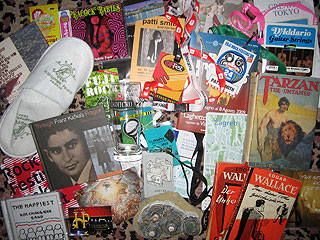
July 29, 2009 / HOME
Where the heart is.
Turning up Creedence's "Looking Out My Back Door".....
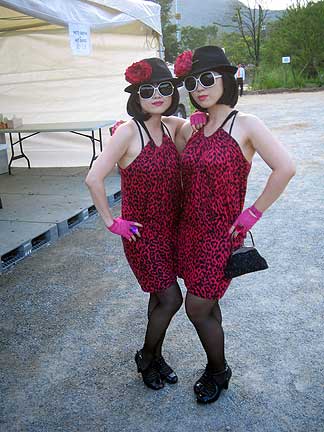
July 26, 2009 / INCHEON, KOREA
Twelve hours of journeying, bus to plane to bus, arrives us in Seoul late on Saturday night, not much time to explore a city that sprawls for miles in any direction, and of which I know very little. In fact, it occurs to me I have never eaten Korean cuisine, but given the tip-off that their spicy barbecue is the way to go, I set off from our towering hotel in search of a friendly establishment. About six blocks away I get to an actual neighborhood, find a welcoming haven, sit at a table with a broiling fire-pit in the middle, and, with the help of a waitress who understands I know not what to do, start a-grilling and a-tasting and a-tingling. Happy carnivore am I!
The next day is to be our final show of this go-round. The Jisan Valley Rock Festival is about an hour from Seoul in Incheon, not far from the borderline that separates South and North in this once war-torn and still global hotspot. There are two alternating stages, and alongside many local groups, there is the same rotating cast of international characters as Fujirock, spread over three days. Oasis headlines our night, and others featured are Jimmy Eat World, Fall Out Boy, and Basement Jaxx. The mood seems ebullient at each stage, local heroes excitedly cheered, and I watch a rapturous reception greet Chang Ki Ha and the Faces, complete with female back-up duo and chanting hooks that make me want to sing along even if I don't know a word of Korean.
Our set begins on a disconcerting note, as my amplifier blows at the first chord, and a second, hastily set up, also fails to put out full power. But the third proves the charm, and since the crowd makes you feel you can do no wrong, by the time I get a working sound they're in full cheer, clapping along (in time no less!) and joining us on the choruses and letting us know they're with us all the way. It can't help but rouse one's performance, and during "Peaceable Kingdom," a song that has especial meaning in this particular setting, I take a personal moment to look around and appreciate the journey on which rock and roll has taken me, an around-the-world odyssey that keeps on circumnavigating, amazingly enough.
Hot and sweaty and slightly enflamed, we leave the stage, where Tony and I are greeted by the spicy barbeque of the twin singing girls of Chang Ki Ha. Jay Dee and I will make a bee-line for another grill-'em and fill-'em when we get back to Seoul. You never know when we'll be back.
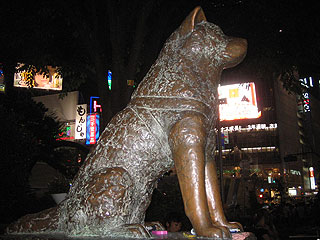
July 24, 2009 / NAEBA, JAPAN
We auspiciously land in Japan just as a full solar eclipse begins over Asia. The cloud cover means the sun's cosmic moonshadow is felt rather than seen, and mixing with the drenching Tokyo humidity and jet lag that comes with having lost a day somewhere along the journey, I do feel on the other side of Alice's looking glass.
Our hotel is near the American Embassy, in a neighborhood that seems more office structures than tourist attractions. A short walk down a hill leads to me what I'm craving, though, the traditional workingman's lunch of rice with beef curry sauce, a cheap and filling favored staple that I pick out of the food pictured on the wall, hoping for the best. I then call my friend Gaku Torii, a music journalist who I've known since 1989, when I made my first trip here; and a well-versed punk and garage-rock fan who seems to know everything about everyone.
He tells me he's now managing a club in the Shibuya district called Aoi-Heya, or the Blue Room. It's owned by a woman named Masako Togawa, a crime novelist and singer in the chanson mode who made her reputation in the 1950s, and whose VIP room - decorated with Edith Piaf posters - was once frequented by none other than the great and controversial writer Yukio Mishima. How could I resist? We agree to meet outside Shibuya Station by the statue of the dog Hachi-koh, reputedly so devoted that when his master died, Hachi-koh refused to be fed by anyone else and expired by his side. Accompanied by a mournful koto melody, no doubt. Since the overwhelm of Shibuya makes Times Square look positively provincial, I wait for him there.
I'm expecting garage punk in the Johnny Thunders mode, but the Blue Room is having a cabaret night this evening, with be-gowned female singers crooning Kurt Weill standards, adding to my overall sense of surreality. Another old friend, Marc Zermati from Paris, joins us, in town as I am for the Fujirock festival. In the seventies he ran Open Market, championing and promoting concerts by bands like the Police (when they were the backing group for Warhol chanteuse Cherry Vanilla), Generation X, and other punk purveyors, including moiself. Later we go to Gas Panic, a basement hip-hop club off the main thoroughfare where the music seems taken off the soundtrack from The Wire. I finally find my way back to the metro and the Ginza Line, get off at what I think is my stop, realize I don't know which direction my hotel is, and proceed to get well lost. In Translation.
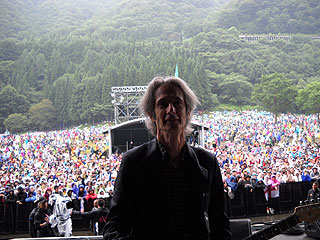
The Fujirock Festival is a four hour bus ride from Tokyo, a world away from urban overkill, in the mountains. It's our third time doing the festival, a true smattering of global talent assembled by promoter Masa, and I look forward to wandering its far reaches. But the rain that has been held in check by the gathering atmospheric pressure starts to seep through as we ascend the heights. It stays dry for our set, but as I set out to explore the festival grounds, the mud starts to rise above my ankles. I head back to the artist's catering area, where, relaxing after their regular shows, I get to watch a few unexpected performances by some steel guitar favorites: Jeff Lang, from Australia, on the lap steel, swiping the bar and combining Hawaiian, the blues, and Indian modes; and Robert Randolph of the Family Band, who is literally rolling on the floor with laughter cutting up with his musicians.
Around midnight I venture out, the rain having diminished to a drizzle. Guitarist Wilko Johnson, once of the seventies' pub-rock band Dr. Feelgood, is playing in the nearby Crystal Tent, and I haven't seen him in, well, thirty years or more. He puts on a dazzling show, clawing at his Telecaster and breaking into the semi-deranged zig-zag strut that is his stage trademark, his tone clean and piercing, his rhythm section steaming along with each blueswailing excursion. He plays without a pick, and when I visit backstage and mention this, he shows me his right hand, the bloody string slice on his thumb, and we share the type-O brotherhood of the guitarist's secret handshake.
July 20, 2009 / FRANKFURT, GERMANY
There's laundry hanging in my room after a much-needed wash in the sink, and the television alternates between a black and white Arabic movie musical and the German motorcycle Grand Prix. The latter is my favorite thrill sport, only broadcast in America on the odd cable channel, so even if the announcer is raising his voice in Deutsch, it's a treat for me to root along with my hero Valentino Rossi as he goes for his 101st win. Which he does in typical fashion, slithering around corners at an impossible lean angle, avoiding the dreaded high-side, lifting the front wheel off the ground when he crosses the finish line, accompanied by the raucous sounds of a Gay Pride celebration a couple of blocks from the hotel. A day off, not much to do, and I intend to do much of it.
It's our last Euro stop, in a city that I learned of as a young'n reading Johanna Spyri's Heidi. Little of Heidi's Frankfurt seems to remain, with postcards of how the bombed-out city looked in the aftermath of World War II on sale at the local souvenir stand; but with the booming sounds of techno-disco echoing and same-sex couples strolling happily amidst bratwurst-and-beer tents, this is a Germany far removed from its past. We are playing the Jahrhunderthalle, on the outskirts of the city, a seated venue in which the lights seem to black out the audience from us, and a dry stage where the instruments sound separate from each other. My amp - I've been renting Fender DeVille's on this tour, and have found them to be generally consistent - is being extremely recalcitrant, at times overbearing, at others lost in sludge, an uphill battle. But the rare inclusion of "Radio Ethiopia" in our set seems to gather our collective and improvisational energies, and when the crowd floods down to the stage lip after "Dancing Barefoot," the night mood-swings dramatically.
On the long flight the next day to Tokyo, ten plus hours, I watch Anvil: The Story of Anvil, a documentary about a heavy metal band from Canada continually trying to re-light the Olympic flame of its apex a quarter century before. I had heard of the movie, thought it was a mock-umentary in the vein of This Is Spinal Tap, but instead found it to be a sympathetic and moving tale of living the rock dream as it refuses to die. The members of Anvil struggle with their day jobs (Lips, the lead singer, delivers meals to schools - shades of Mickey Rourke in The Wrestler), undertake a grueling five week tour of the Euro-metallic provinces for which they ultimately make no money - there's Zagreb! - and in the end, live for those moments on stage that bring them back to why they picked up their instruments in the first place.
The lottery that is rock and roll. Sometimes your number comes up, and sometimes you just keep on playing. I can relate to this ever renewing commitment and sacrifice and dedication that comes with being in a band, and getting a chance to perform one's music the world over, and the gratitude I feel whenever I walk to the stage to see what the amp will sound like that night.
July 18, 2009 / WELS, AUSTRIA
The wet weather that has been trailing us - word comes that Graz flooded yesterday - finally catches up. It is chill and raining steadily in Wels when we pull in after an overnight drive, and we all catch some sleep and rest. I awake to find 2009 EastEnders episodes on the BBC channel of the telly, my favorite English soap, though in America we're only up to 2003 or so. The plot lines are "similar," this one sleeping with that one who fancies the other next one, though the cast of characters has evolved. I'm happy to see (spoiler alert!) old faces like Phil, Ian, Gary, and surprisingly, Janine, and some of the new families that have moved into Albert Square; and, of course, lift an operatic pint at ye olde Queen Vic.
The gods of weather smile upon the Alter Schlachtof, a large club of twenty four years standing that has moved their show outdoors for the occasion. The rain ceases in time for soundtrack and show, even if the temperature remains dropped. The venue reminds me very much of the Arena in Vienna, one of our favorite haunts; and though it's cold, especially compared to what we've been used to, the warmth of the crowd gives off its own reflective heat.
As we get back on the bus for another nine hour haul, the rain starts again. Into the night, into the bunk, into sleep.
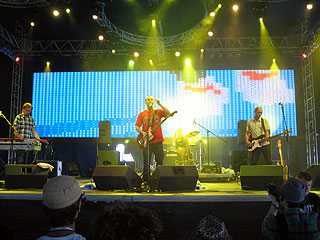
July 17, 2009 / TRENCIN, SLOVAKIA
"Pohoda" means "the state of cool," and in the "new nation, old country" that is Slovakia, that counts for more than mere entertainment. It is hard for me to imagine what decades of Soviet occupation meant for this country, though the rapturous ovation given Marta Kubisova on the Arena stage of a festival located on a former military airport on the outskirts of Trencin is an indication. Not your usual hard rockin' fare, from 1965 to 1970 she was the leading Czechoslovak pop singer until banned from public performance for twenty years. An entire generation was forced to take their music underground, and the nineties signaled an eruption of creative energy long suppressed.
Walking around the festival in the hot summer afternoon before our set, there is a sense of youth and positive energy. A puppet show tent is set up for children, ecological booths abound, and a tent city surrounds the several stages. By a synchronous coincidence, the only band I know at Pohoda, the mysteriously appellated Fujiya and Miyagi, managed by my friend Martine, is on show when I get out of the van, and I hurry over to their tent, slither my way to the front of the stage, and give David, Steve, and Matt the devil's horn salute. They've just added a drummer to their synth-bass-guitar lineup, hardening their sound, and the considerable crowd dances along.
Local Slovakian talent abounds. Billy Barman & Orchester is just that, a bouncy guitar band with an eight piece string-and-horn section. Obviously the crowd knows their work because they delightedly sing along, just like over on our Main Stage, where the act before us, Richard Muller from Bratislavia, hardly has to do any of his own vocals, the crowd echoing all his lyrics, 40,000 strong.
And when it's our turn, and "People Have The Power" is hoisted aloft, the words take on ever more resonance. The Pohoda Festival has fought hard for their right to sing, and we salute them.
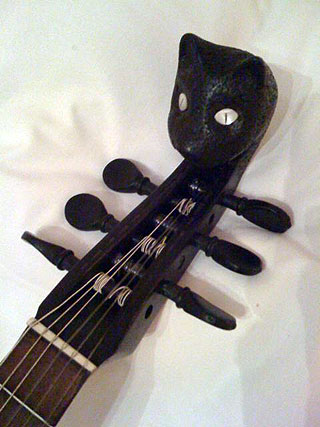
July 16, 2009 / PRAGUE, CZECH REPUBLIC
I raise my glass. More Slivovitz! The waitress gives me a refill of the classic plum brandy that my grandfather Ben's musician "cronies" used to sit around and kvell over, smooth and soothing even with its kick of grain alcohol, accompanied by a small glass of Pilsener Urquell, here the local brew, my Czech variant on the classic Pennsyltucky shot-and-a-beer "VFW." Accompanied by marinated chicken wings in hot garlic sauce. Yum. I'm in a restaurant called the Koala at an aftershow dinner with our promoter and our booking agent Andy, flown in from London, feeling increasingly warm and cuddly.
We arrived in Prague in the pouring rain, actually the first we've seen on this trip, though by afternoon the sun illuminated this astoundingly beautiful city. We never came here in the seventies because Ivan, my guitar compatriot in the PSG, was a refugee from the Communist takeover in 1968. Now it appears as if the country - or at least this bustling city - is a major tourist stopover, with every third person seeming to carry a map and a digital camera. I'm happy to join their throngs during our subsequent day off, on walkabout with Patti, stopping at the ornate clock tower, the Franz Kafka sites (he lived for a time just off the main square), the numerous churches, and of course, antiquariat book shops. My score for the day has an Edgar theme: two tattered Edgar Wallace mystery paperbacks in German with exceptionally expressionistic covers (no, I don't read Deutsch, and only know Wallace as a name, though he wrote 175 novels! as well as the preliminary screenplay of King Kong); and a 1920s English hardcover edition of Edgar Rice Burroughs' Tarzan The Untamed complete with dust jacket and J. Allen St. John illustrations.
Oh, yes...a kitty cat followed me home from a local musical instrument shop. Her name is Margarita. Can I keep her? Pleeeaaase?
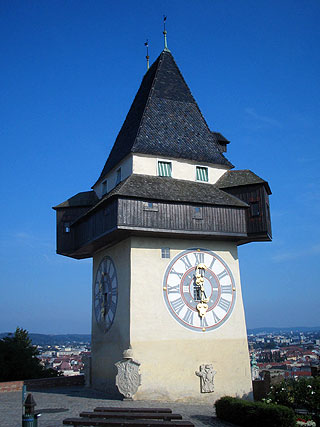
July 14, 2009 / GRAZ, AUSTRIA
I take a walk with Tom V. to look for a schallplatten shop. Graz is a smallish city with a fast-moving river running in front of our hotel, and a seedy erotische street in back. The best of both worlds. At In-Out Records (we do not make this up) we find a large vinyl assortment, including a live album from 1979 by San Francisco's punk standard-bearers the Avengers that attracts me; but with far too many discs awaiting listening at home, and the prospect of carrying a 12-inch record unscathed through the next four countries, I opt to browse more than purchase, the equivalent of "I like to watch." And the elusive Sensitive Touch album of Nicky Roberts and his Magic Guitar, which is our musical obsession of the day, is nowhere to be found.
The show is high on a hill overlooking Graz, and I'm told that we played here in 2003 at the same venue. I have no memory of it, and think I might've remembered the giant clock tower which stands guard over the city. There is a sense of experimentation in the air, and "Are You Experienced" has distinctly Stockhausenesque overtones, courtesy of Tom and his own Magic Guitar.
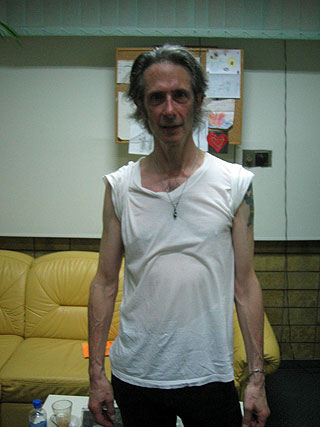
July 13, 2009 / ZAGREB, CROATIA
A day off is a wonderful thing, especially after five shows and the constant in-motion of the past week, and Zagreb on a Sunday seems to be particularly amenable to downshifting. Our hotel is the Esplanade, built in 1925 and located near the train station, one of the stopovers of the famed Orient Express. Best of all, my luggage has made its way from Rome, and I am reunited with socks and guitar.
Croatia, like its Balkan neighbors, is in a shadowland between achieving long sought independence and hopes for joining the EU. While there are pluses for the country in becoming an official part of the Euro block - the ease of a common currency, border regulations and citizenships that might make travel easier - our promoter tells us at dinner that there are surely downsides, especially since - in a fashion reminiscent of America's House of Representatives - they would only have four votes to, say, England's 50 in the European parliament. Still, in this city where outdoor cafes seem the mode of leisure on a perfect summer Sunday, and green space abounds amidst flea and flower markets, I sit in a park near enough to a church where I can hear the sound of the organ, and for a brief moment, catch my breath and revel in the immediacy of unwind.
The next night's show is a sweat box, an over-capacity audience packed into every conceivable corner of Tvornica Kulture, spilling out into the halls of the auditorium, temperatures well into what the Celsius might describe as the mid-forties. Jay Dee calls it one of our top three sauna performances, on a par with New Orleans in 1978 and the Elysee Montmarte in Paris in 2002, though I remember a particularly steamy schvitz in New York at Hurrah's in August of 1979. I like the let-it-loose drenching humidity, however, and with the crowd howling away, reach inside and find my inner animal.
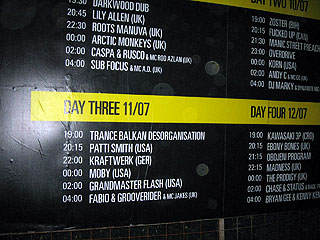
JULY 11, 2009 / NOVI SAD, SERBIA
The Exit Festival was begun in 2000 as a spontaneous student uprising against the government of Slobodan Milosevic, hoping to serve as a rallying point to "exit" out of ten years "of madness," as the festival booklet points out. From madness to insanity, it seems. Located in the ancient stone fortress of Petrovaradin, built by the Czechs in the 13th century, it has grown to encompass all forms of music on a hydra-headed variety of stages, close to four hundred acts spread over four days, and a true paean to musical freedom of choice.
After our well-received set, flanked by a glorious sunset, I take the couple of hours I have left before our bus embarks for an overnight jaunt to roam the festival grounds, sampling the musics on offer, a somewhat random way to particle collide with an unexpected epiphany. As I'm leaving our stage, Kraftwerk begins their melding of Man and Machine, the dehumanizing underlying theme of their highly influential music that set new standards of sequencing. While video screens and robotic presentation make for a spectacular extravaganza, and I do enjoy "Trans Europe Express" on the replicant dance floor, there seems to be little chance of performance surprise. I like the hit-or-miss, the chances taken, the reach and grasp.
I head toward the Explosive Stage, where the metal bands rule. Earlier in the day I'd caught Monument from Bosnia-Herzegovina, though the BIH acronym next to their name denoting country of origin might also stand for Burn In Hell, the opposite of Rest in Peace, and a metaphor this brand of Death Metal loves to embrace. When I return at night, I'm on time for Serbia's homegrown Amon Din, who instantly bottom out my right eardrum with a bass frequency positively subhuman. The schedule is running behind so I miss Swedish purveyors Sabaton, whom I'd hoped to see, since the Scandinavian brand of this metallic is the most depraved. Instead, I hop over to the Fusion Stage where the Stalingrad Cowgirls from Finland show out to be spunky black-eyeliner rockers in the Joan Jett mode; pay a quick visit to the reggae stage (Black Ark Crew); and then witness the strange apparition of the Silent Disco, where dancers wear headphones as they groove to whatever it is they may be listening. I can't hear, partially because of Amon Din, and because the blended sound of all this music converging makes for the greatest Din of all.
July 10, 2009 / SKOPJE, MACEDONIA
The joys of traveling. Yesterday, after a four aftershow drive in the night from Sogliano Al Rubicone to a Rome airport hotel, getting two hours sleep, going through the rigamarole of getting on the plane and arriving in Thessaoniki, Greece, where the rest of the Her Band will be meeting us for the electric portion of the tour, our luggage is nowhere to be found. Nor is it on the next flight, as promised, though we spend six hours in this Grecian airport awaiting. Finally, about nine, we set off for Macedonia, without Collings guitar and any other clothing but what I have on. I will grow to love this grey t-shirt, I'm sure.
It's good be reunited with the band on a bus, a familiarity that is all the more intimate for our enclosure. Along with the stalwart rhythm section of Tony Shanahan and Jay Dee Daugherty, we are joined this trip by the irrepressible Tom Verlaine, and our noble crew of Emery (front of house sound), Darryl (monitors), Laurence (right stage tech) and Futz (left stage tech and tour manager). Family.
After a lengthy border crossing from Greece into Macedonia, we leave the EU for a republic that - like the others of the next few countries we will now enter - were once grouped under the post World War II heading of Yugoslavia, and previous to that subject to whatever regimes held sway in the regime. Skopje has a distinct Ottoman flavor, and when we are taken to the old town, there is a Turkish air of bazaar. Or is that bizarre?
There is some concern that with Santana in town, booked by a rival promoter, our attendance will suffer, but as the instantaneous you-are-there of the ubiquitous Tube shows, the place is full and rockin'. As usual, I am amazed and gratified that our music travels to such distant and exotic climes, that the crowd sings and hollers the words of our foreign lingual, and that those three chords (E, D and A for those who care to play along) crosses borders without need of strip-search, visa, or passport.
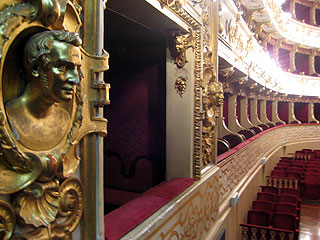
July 7 - 8, 2009 PARMA / SOGLIANO AL RUBICONE
The duel Parmas of ham and cheese live up to their name, as does the beautiful Duomo we come on unawares, with celestial frescoes by Corregio. That all has not been as peaceful as it now seems in this northern Italian town is shown by the evidence of World War II bombing on the facade of the legislative building in which our stage is set up in a square courtyard; but next door at an opera house with bas-reliefs of famous composers and poets, the immortality of Italian appreciation for their culturati is once again affirmed.
And so for us as well. On the following day after Parma, Patti travels to Florence to announce a conceived-and-confirmed thirtieth anniversary concert to commemorate the Patti Smith Group's final show, which took place on September 10, 1979. That original moment in time was a much-storied event, resounding throughout a country which had seen little international rock and roll up till then, as evidenced by the 70,000 plus music fans that packed the soccer stadium that day, a moment I will always treasure and remember. Now, three decades later, we will be performing in a piazza where stands Dante's statue, where there is a church in which Michelangelo and Galileo found their final resting place. History will be served.
I travel with the rest of our acoustic band - Jesse Smith and Mike Campbell and accompanying Del Flor - by van to a beautiful town in the hills near the Adriatic. The town square is named after Giacomo Matteotti, a noted fighter against fascism who was murdered in 1924, one more resonance of the past as it echoes into the future, much like we can hear the sound ricocheting off the surrounding walls. After the show, we catch our breath in the dressing room, located in a children's school, and trace our travels on a giant map of Italy, amazed at where we've been, knowing the journey is hardly over.
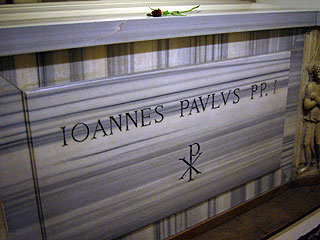
July 6, 2009 / ROMA
In college, I thought briefly of majoring in Roman History, having a fairly rumpled and obsessed Rutgers classics professor (Dr. Lenaghan) and an excellent scholar of Byzantine history (Dr. Peter Charanis) as mentor. Though I never could've embraced the Greek and Latin needed to continue my studies, and the inescapable fact that my "minor" at school, playing in bands (The Zoo!) eventually became the best vocational education I could've received, I've always had a fascination with the Empire as it transformed our cultural historiography. In Rome, turning a corner to be confronted with the archeological rubble of two millennia past, whether it be Trajan's magnificent column, or the pagan and Christian mixage that is the Pantheon, one feels the weight of centuries and centurions.
St. Peter's in the Vatican, though I am of Jesus' original religious persuasion and hardly the rock upon which his church is edificed, is awe-inspiring, even to me who has visited on other occasions. To come upon the Pieta unawares and see Michelangelo's glory in all its three sculpted dimensions, or to hear a pipe organ echoing within its magnificent space of the basilica, is to feel the magnificence of the art the essence of the Christ inspires, in a setting of overwhelming grandiosity. I am most moved, however, by the simple tomb of John Paul I, in the basement under St. Peter's, the modest pope who became the symbol of our album, Wave, and whose spirit seems to me to embody the true essence of Christianity, even if his reign only lasted thirty three days.
Our show is in a park, under a night sky lit by a full moon. Backstage we are visited by Roberto Saviano, the journalist whose expose of the "other" Mafia in Naples, the Camorra, in his groundbreaking book Gomorrah, has endangered him to where he must continually be accompanied by a police escort. We dedicate "Wing" to his courage and desire to still stand defiant, remaining free.
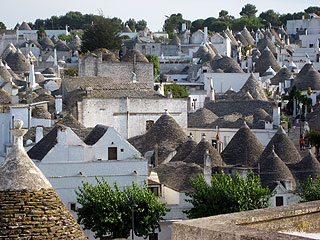
July 4, 2009 / ALBEROBELLO
Traveling east across Italia to the top of the boot-heel, Alberobello is in sun-drenched country with abundant olive trees and oil to match, with a town square that looks like an Antonioni movie, and distinctive houses with cone-shaped stone roofs known as Trulli. One local legend has it that these cupola constructs originated from the eastern Mediterranean on a route favored by traders and seafarers, so fashioned as to be quickly collapsed should the taxman come around, and easily rebuilt. Wherever their coming-from, looking at this town in Puglia on Independence Day is as far from hot dogs and fireworks as might be.
After the show, we wander the town square in search of the perfect gelato, surrounded by concert-goers who follow like the children of Hamlin. When we get our cones (mine is strachitella, made from a fresh and light cream that seems just delivered from the cow), I note that it is topped with a small second cone. Truly.
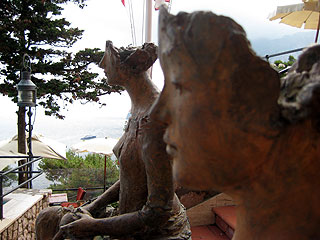
July 3, 2009 / CAPRI
Ah, Mediterraneo... To swim in the sea, to stub one's toe on the rocks, mingling one's blood with the sweet salt of the water, and then to climb the rocks to sleep in the lulling shade, or feel the sun on unforgiving skin, as one chooses.
Capri, a hydrofoil's jaunt from Naples, is a breathtakingly beautiful isle, home of expensive designer stores, winding romantique lanes and Those Pants, and surely a respite from the road. The occasion is a literary festival devoted to the seven deadly sins, with each writer assigned a different venal. Patti's evening is devoted to the disguised angel of Lust, more question-and-answer than song, and there is not much for her accompanying musicians to do but enjoy the fabled locale where the waters of the Blue Grotto reflect all shades of translucence, and the emperor Tiberius spent the later years of his life in sybaritic pleasure, at least according to Suetonious, who may or may not be believed.
We dine in a restaurant supposedly frequented by Graham Greene. I sit across from George Saunders, whose work I am not familiar with though will investigate since our discussion ranges from the trickiness of literary "autobiography" a la Waylon to Gogol's residence in Rome. Next to me is an impish David Sedaris, my daughter Anna's favorite author, who - with his companion Hugh - reveals he is a fan of the Shams, the East Village femme trio I produced in the early 90s, and discourses on Spokane's marmet population. Tete a tete.
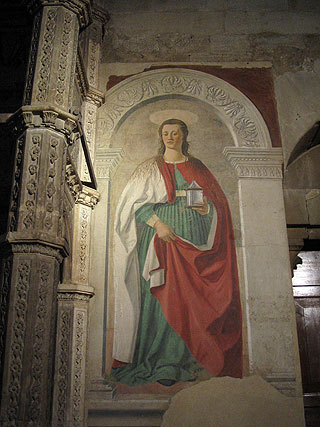
July 1, 2009 / AREZZO
For a sense of temporal awe, there is little to compare with playing venues in Europe during the summer. Stages are set up in ancient fortresses and castles, in town squares that have seen centuries of generations gather, and as tonight's show will, in the shadows of grand cathedrals.
Arezzo is in Italia, about a half hour from Florence in the Tuscan hills. Born in nearby Sansepolcro, Piero della Francesca understood this landscape well, and you can see in his frescoes and panel paintings his geographic surroundings as backdrop to his scenes of revelation and divine illumination. The town and its narrow medieval streets contain two repositories of Francesca's fifteenth century art. The Basilica of San Francesco houses Piero's magnificent Legend of the True Cross, its sumptuous colors and amazing battle scenes contrasting with the modest church in which it resides; and the magnificent Duomo a few short blocks away paradoxically contains a simple unaffected depiction of St. Mary Magdalene, all too human in her direct gaze, hidden away behind a column.
Standing on stage, gazing up at the Cathedral, singing the resurrection hymn of "Ghost Dance" and the anthem of "Gloria" as the crowd follows along in their Horses hymnal, is to realize the blessings of true faith and the baptismal font that is rock and roll.
June 30, 2009 / LYON
It was the Beatific generation that provided my barely adolescent self with a rite-of-passage, gifting me a way of seeing the zen world and the ecstatic universe surrounding, a way of aligning poetry and the avant-en-garde with a bohemian lifestyle and a sense of inner consciousness that I can say truly changed my being. Reading Kerouac's On The Road, Ginsberg's Howl, Burrough's Naked Lunch, Corso and Snyder and Ferlinghetti and their flights of confrontational musical language and phantasmagoric worlds placed me within a cultural continuum that I embraced, and have been lucky enough to continue to live within, idealistically and inspirationally.
Tonight, in this city split by two rivers, the Seine and the Rhone, we are performing a tribute show to Allen Ginsberg with Philip Glass. The roots of this celebration go back to the first Tibet House benefit I participated in at Carnegie Hall, which Philip curated with Allen. I had known the great poet peripherally, been introduced at a literary fete in the seventies, and had seen him intermittently around our shared neighborhood of New York's lower east side. One night in the eighties, letting my dog run free down the ghostly streets of lower Broadway after midnight, I came upon him at a telephone booth. He seemed revved up, somewhat agitated, and we spoke of nothing much, but it remains my fond memory of his human approachability.
At the Tibet House show, Allen drafted me to play bass behind his epic "Ballad of the Skeletons" urging me to get ever wilder as the poem reached its crescendo. In the audience was Danny Goldberg, helming Mercury Records at the time, and he suggested to Allen that he record a single of the work. So it was that I found myself producing Allen in 1997, accompanied by Marc Ribot and David Mansfield on guitars, and via the miracle of transatlantic technology, sending the tapes to England where Paul McCartney added drums and organ. Me, playing bass to Paul's drumming; you could not invent such a scenario, nor could I have ever imagined sitting in a control room with Allen, comparing line-by-line readings and dropping in the occasional vocal tweak.
At that session he taught the assembled musicians the Buddhist Walk, hands folded one atop the other, carefully and deliberately stepping to follow the curvature of the earth. Space and time. Now, within the ruins of an old Roman amphitheatre constructed by the emperor Claudius in the first century a.d., Patti reads Allen's poetry as well as her own, and Philip swirls and arpeggiates his piano to shade and highlight each imagistic line and phrase. They ride with Allen through the cruise control of "Wichita Vortex Sutra" and the notice-must-be-paid of "On Cremation," which Allen wrote in commemoration of his spiritual teacher. At the end I join them for "Footnote to Howl," to commemorate our spiritual teacher, to light a candle and continue his dance.
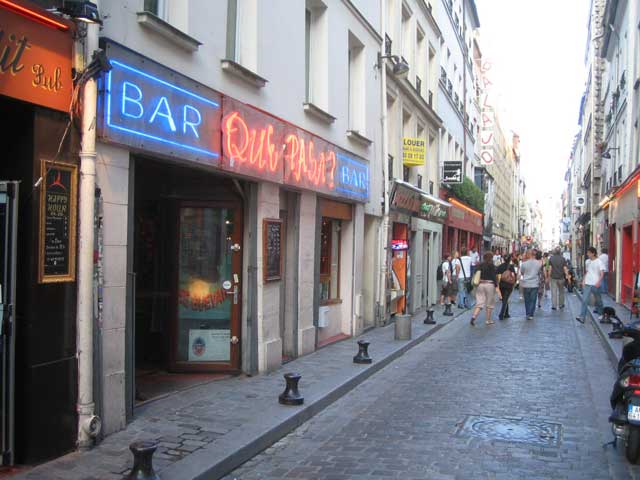
June 28, 2009 / PARIS
The songs on the sound system are familiar - Screamin' Jay Hawkins doing "I Put A Spell On You," Sam and Dave's "Soul Man" with those great Steve Cropper licks, "Let's Twist Again" and the immortal "Louie Louie"; but the surroundings are not.
I'm at a bar on the Rue de Lappe, in the 11th arrondissement of Paris, just a few short steps from the Place de la Bastille. Not twenty four hours ago, as the jet lag flies, I was having a beer (Yuengling) at a joint on Bleecker Street, riding out a summer rain storm and readying to get in a car to go to Newark airport. Now I'm inside the dark confines of the incongruously named Que Pasa?, drinking a Leffe and thinking about going to have a tagine at an Moroccan restaurant around the corner. The street, more narrow alley than thoroughfare, has been around for centuries, with an old Parisian feel haunted by memories of dance halls where "apaches" and "gigolettes" once roamed, where such as Francis Carco and Marlene Dietrich partied on into the night. Hakim, the oud player with Rachid Taha, brought me here a couple of years ago. Even though the locals say it's not what Paris used to be, it's close enough for me.
The acoustic part of our tour starts in a couple of days, in Lyon, but right now the only daze I seem to be partaking of is the need for body-clock adjustment and the unwind from the frenzy of getting ready to get out of town for a month. My Collings guitar is still somewhere in transit from London. The next month holds the promise of ain't-it-stranger countries (the tour sheet takes us through Macedonia and Serbia and much of the former Yugoslavia, through Austria and Slovakia and Frankfort to festivals in Japan and Korea). But at the moment, I'm content to be at the starting gate, the present tense of being on the road, neither there nor here, but in transit. Today.
The newspapers are full of Michael Jackson tribute and speculation, but strangely, it's the same-day passing of Sky Saxon of the Seeds that touches me the most. Especially after performing "Pushin' Too Hard" on our 2007 go-round, seeing the galvanizing effect it had on our audience, not to mention my garage-rockin' self, who bought said single at a department store in New Brunswick when my hair wasn't much shorter than Sky's, I was a true Seedling. I am so glad that I got to see them at the Knitting Factory a few years ago, close to the original lineup with Jan Savage on guitar playing That Solo. On me, on meeee....
Return to Current Tour Diary
December 29 - 31, 2011 BOWERY BALLROOM, NEW YORK CITY
We've always liked to spend New Years Eve and its holidaze environs on stage, closing out the old and welcoming the next annum. That the week after Christmas also celebrates my and Patti's birthdays, down to the same year, marks this final few days of the calendar as even more star-crossed. Fourteen orbits of the sun ago, we came to the Bowery Ballroom for what would prove to be a Tradition, and now, like the Augustan year itself, the coming of the full circle is at hand. We've learned the Stones' "The Last Time" and will sing it proudly on this final go-round.
There is a trajectory to these shows, a pattern that usually reveals itself as first night ("ooh, does that chord go there?"), second night (professional be us), and third night (as Adam said to Eve, pass the champagne!). This year we get the professional night out of the way first, allowing Patti's birthday to be rife with unexpected tangents and roller coasting, making way for Michael Stipe to come on stage at midnight on the cusp of the newest year and sing "Wichita Lineman."
I'm going to miss this annual get-together, a treat for our front row fans and ourselves, me literally walking to work and back again, ruminating as I make my way through the East Village of where I've been over the year, the many blessings bestowed, reflections - in the words of Bob Marley - of old friends we've lost and new friends we've gained, and the passage of time that provides an archeological layer of memory for each show.
Next year? We'll see where these twelve months of twelve take us, but hopefully I'll see you there. Raised glass in hand.
November 21 - 22, 2011 PARIS, FRANCE
The Olympia is one of the world's premier venues, with a stage that has hosted Edith Piaf, Johnny Hallyday, Jimi Hendrix and the Rolling Stones. While I'm in first-time-in-Paris reminiscence mode, I was in the balcony witnessing the Jackson Five and Alice Cooper then; and though we have played the Olympia several times before this, it is always a thrill to see one's band heralded in the glowing red lights of the fabled marquee.
The shows go well, high-pointed on the first night by a fragile duet between Zaza's accordion and Patti's "Closed Eyes." But further memorable moments are in store. After soundcheck on our second night, Patti requests the band and crew to meet her at the nearby apartment of Coco Chanel, which has been reserved for a special ceremonial. I suspect it will be a champagne toast to a tour well accomplished, but then Patti begins to read:
On this date, November 22, which was for my generation one of the saddest days of our young lives, we gather for a happy occasion. To honor one's own.
Only God can bestow grace but man may recognize, in his fashion, and reward even an aspect of grace in his fellow man.
In the words in Rock and Roll Nigger I have said a 1,000 times over, Outside of Society, that's where you'll find me, and if you want me, that's where you'll find Lenny.
Forever on the left, loyal and faithful Comrade, who dropped his net and came with me.
Forever remembered with this cherished merit.
And then, to my astonished surprise, the Republique Francaise in the person of the Le Ministre de la Culture et de la Communication pins upon my chest, over the heart, the medal that signifies knighthood, a Chevalier de L'Ordre des Arts et des Lettres.
I am humbled and honored. Les gardiens de l'histoire seront un jour ou l'autre recompenses par l'histoire elle-meme. The guardians of history are soon rewarded with history themselves.
November 20, 2011 PARIS, FRANCE
I first came to the City of Lights in a chill November of 1972, and stayed at the small Hotel Esmeralda across from Notre Dame on the Left Bank. Around the corner was a venerable bookstore, Shakespeare and Company, founded by George Whitman in 1951 and named after Sylvia Beach's original gathering spot for Lost Generation writers. Its location on the Rue de la Bucherie encompasses a literary tradition that includes Lawrence Durrell, Henry Miller, and those who took haven in the "Beat Hotel" located on nearby Rue Git Le Coeur. Tonight I am privileged to join this hallowed lineage with a reading from You Call It Madness, organized by Aaron Budnik of Red Snapper Books in London, George's daughter Sylvia, and the store's events coordinator, Jemma Birrell. Merci!
The audience overflows into the street, where speakers have been set up outside the store, and inside, surrounded by volumes of magnificent wordplay and lingual, I relive the days when crooning was a whisper in the ear and a gateway to the soul. I illustrate each passage with song, including the titular "You Call It Madness," "Where the Blue of the Night (Meets the Gold of the Day), and a moon medley where, when asked, the crowd supplies their own favorite moon croon (I wonder who has that angelic voice from the back singing "It's Only A Paper Moon").
After the signing, I go out to the street, where I find the busking duo Hanami entertaining the post-reading crowd. We first happened on Bopper and Wilson playing outside our gig in Lille, and were so taken by their sunny optimism and harmony that we invited them to see us in Paris. And Bordeaux. And Rouen. And now they're here, in front of Shakespeare and Co. What else can I do but join them in song, with the Seine flowing behind us and Notre Dame providing a breathtaking backdrop.
November 17 - 19, 2011 TOULOUSE / BORDEAUX / ROUEN, FRANCE
I have been fascinated with the story of Joan of Arc since early childhood, when an encounter with Scoop #87, a 1954 set of bubble gum cards which featured headlines of the past, showed our heroine engulfed in flames whilst gazing Heavenward. It led to numerous schoolyard games where I, in the guise of Kid Crimefighter, rescued the Maid of Orleans and rode her off into the sunset. And now pilgrimage is underway.
On the road to Rouen, we pass through Toulouse, where Monsieur Lautrec is from. A day off in wander mode brings me into narrow winding streets where unaccountably I discover a host of record shops proferring vinyl temptation. The French in particular have lovely 45 picture sleeves, and though albums prove too bulky to cart around on tour, I can't resist the seven inch lure: old jazz issues of Charlie Parker and Art Tatum; four EPs of the Spotnicks, Scandinavia's answer to the Ventures; and a couple of vintage Algerian singles. Yes, I never learn, and highly recommend Armadillo Disques at 32 rue Pharaon.
The boys and I have been working on a medley of Nuggets-inspired classics throughout the tour, and tonight, in honor of the town, we segue into the Heartbreakers' "Born To Lose." But it's win-win, or rather win-vin, and the next night, in Cenon, right outside Bordeaux, the promoter fine wines us with some examples of the local plonk.
Finally, to Rouen. We eat lunch alongside the square where Joan met her fate in a restaurant called La Courrone, which has signed photos of Haile Selassie and Sophia Loren on its walls, and was an inn at the time of her demise. It is slightly surreal to be eating le agneau not a hundred yards from the cross that marks Joan's spot; or to visit the Cathedral, still bearing the scars of WWII bombing on its delicate latticework and sculptural ornateness; or enter the Jeanne D'Arc Museum to see lifelike dioramas that illustrate each of her stations of the Cross.
In the show, Patti draws an analogy to the visionary change that One Young Girl can set in motion, and as if to illustrate, comes upon a little eight year old girl standing by the side, and brings her up with us on stage. After we play I take a solitary walk to the site of Jeanne's pyre to pay my own tribute, accompanied by booming disco music from a club across the way, the now of then.
November 13-14, 2011 LYON / ARLES, FRANCE
Our French promoter, Alain Lahana of Les Rat des Villes, has been along for the ride on this tour, traveling with us on the bus and giving each new destination the savoir faire and bonhomme enthusiasm that speaks to his love of music and a good time. He's also knows his way around, and that is why, after lunch in Lyon, he takes us to a wine shop on the rue du Boeuf called Antic, where a lover of the grape can only gaze in wonder at the bottles lining the walls, and where the proprietor, Georges Dos Santos, opens a few rare bottles for a tasting. I don't profess to know much about le vin, unlike Jack and Tony who enjoy a sniff-and-swish compare of vineyards and regions, but I do appreciate the litheness of a proper vintage (with perhaps an after-note of Welch's), and to see a bottle that was corked when Proust was alive.
I can't say that the visit influenced our show (since we never inebriate on stage), but that night in Lyon you can feel the gears of the band meshing after a couple of weeks of hard playing. Lyon has always been one of our most volatile cities, with scenes of rioting and uproar when we first came here in 1976. The fervor from the crowd on this electric night doesn't disappoint, the amps catching the hall's resonance and, at one point, splitting a note of Blues DeVille feedback into a pair of harmonic frequencies that overtone and seem to go on forever.
The next evening, in Arles, is completely different. Our show is in a small club, Le Cargo, with a capacity of perhaps 350 tops, and we stay resolutely acoustic. The city is ancient, with a history dating back to Roman times, exemplified by the lifelike bust of Julius Caesar recently retrieved from the Rhone river and now on display at the antiquities museum, as well as the remains of an amphitheater still used for concerts. Vincent Van Gogh severed his ear here in 1888, and the city provided the backdrop for many of his best known pictures, as tonight it will provide the setting for our own aural slice on this starry night.
November 12-13, 2011 NANTES, FRANCE
In the prologue to The Volcano Lover, Susan Sontag describes the anticipation of entering a flea market, the sense of undiscovered possibility, serendipity, the awaiting of the moment when the theme of the day's rummaging reveals itself. Jay Dee always searches out these assemblages of cultural artifact when we land in a city, and today, our first moment off in over a week, we set out to find our particular version of nirvana.
It's not easy to get there, and when the called-for taxi doesn't arrive, we negotiate Nantes' tram lines to the Place Viarme. It's relatively late as far as flea markets go, past noon, and already some of the dealers are packing up; but today good fortune is on my side. In quick succession I go off on a tangent of Algerian travel brochures from when it was a French colony; some literature and a key chain of a car that attracts my bemused interest, the Simca; a picture of Joan of Arc to decorate our tour bus and prepare us for Rouen; and most gloriously, a beautiful vintage transistor radio from the early 1960s, a Sonolor, which has on its Medium Wave and Long Wave dials such exotic frequencies as Madrid, Rabat, Tunis, and Nice. Whether it works or not is hardly relevant, though I am assured by the seller that it will, if only I can find 4.5 volt batteries.
I walk back to the hotel, quite laden, and indulge in a flea market of another kind: the stroll around an unfamiliar town, passing ornate cathedrals and a botanic garden in which I rest my weary bones (sorry, forgot the camera) by a picturesque lake with swans a-swimming. To top it all off, when I return to the hotel, I see that a science fiction convention, Utopiales, is taking place at the convention center next door. I spent much of my early years involved in science fiction fandom, a subculture that parallels that of rock and roll in its obsessional grandeur, and so off I go again, focusing on a beautiful display of vintage magazines and their beyond-futuristic covers.
November 8 - 11, 2011 GRENOBLE / STRASBOURG / CHARLEVILLE / DIJON, FRANCE
The midriff of the tour takes us up along France's eastern provinces, part of a run of five shows in a row. Grenoble is surrounded by mountains, along the Swiss border; Strasbourg is near Germany, and has a feel of the Teutonic; Charleville, of course, is the hometown of Arthur Rimbaud; and Dijon...well, pass le moutarde.
Spending each night on the bus, disembarking for breakfast and a quick swing around the town before soundcheck is hardly a way to get to know a dot on the map. I will etch into memory the bridge that separates a No. African row of cous-cous eateries from an Italian stretch of pizza restaurants in Grenoble, previously only known to me as the site of the 1968 Winter Olympics; Patti doing a reading on a boat that circumnavigates the canals of Strasbourg, passing near the magnificent Cathedral of Our Lady, with its astronomical clock; and arriving in Charleville on the day of Rimbaud's death, which is also the 36th anniversary of the release of Horses.
I visit the house where Arthur lived as a child, and walk the streets as he did, trying to imagine life in the mid-nineteenth century, which isn't difficult as Charleville looks relatively untrammeled by modern development. With Tony, Jay Dee, and Jack, we pay a visit to Arthur and his sister Vitalie's grave, where I leave the requisite guitar pick as well as respects. And after the show, we gather in a bar on Charleville's town square to toast the spirits that walk the town, and the spirits that will soon be walking us in a rather crooked line back to the bus. From left to right: Jack, Gerard (front of house mixer), Jay Dee, Olivier (production manager), Tony, Futz (lights/stage right tech), Andrew (tour manager, stage left tech). Wisely opting for an early night are Alain (promoter, bon ami), Darryl (monitors), and our Commandeur.
I awake the next morning outside the venue in Dijon, back in the heartland of France. I look at my watch, which has just crossed the meridian of eleven. The town is covered in red, white, and blue bunting, signifying the end of World War I, an illusory armistice for a war to end all wars. 11-11-11. Happy Nigel Tufnel day.
November 5 - 7, 2011 CLEREMONT-FERRAND / MARSEILLE, FRANCE
On the train. Reading Georges Simenon's My Friend Maigret. We arrive to rejoin the band at soundcheck time. There is something familiar about the venue, but it isn't until I see the many Serge Gainsbourg posters and photos on the wall that I remember we played here before, on the ten week tour of Europe that was 2007. I don't think I ever saw the town on that occasion, but I can't resist making my best French face for Serge.
Overnight we go to Marseilles for a much-anticipated day off. I must say it's my favorite city in France, with its seaport swagger and mix of North African and Euro cultures, and I happily dive into the bouillabaisse. Our hotel, along the Vieux Port, has a plaque noting that Chopin and George Sand stayed there in 1839. Some sixty two years later, Arthur Rimbaud would make his last stop in Marseille before expiring, and take his final journey home from the Beaux Arts train station, high on a hill overlooking the city, and where Patti will dedicate a waiting room in his honor on the morrow.
Our show at Le Silo falls on an auspicious date. November 7 marks my band anniversary, the first time I ever took up the in-vocation of the electric guitar, playing an Alpha Sigma Phi fraternity party at Rutgers with the Vandals (our motto: Bringin' Down The House With Your Kind of Music!). Tonight's show, full-on electric following a week of acoustic presentations, is a fitting blow-out of energy. After forty seven years of turning the amplifier up, I look out at the Marseille crowd and marvel at the road traveled, still traveling.
November 4, 2011 PARIS, FRANCE
Birth and death revealed. A circle in the calendar: Robert Mapplethorpe, born 1946; Fred "Sonic" Smith, passage 1994.
The church, St. Eustace, is near the birthplace of De Nerval, and dates from the 16th century. It took a hundred years to build and still remains unfinished, as we all will be. Jesse plays with the grace of regeneration, the continuance that ties all these lifespans together.
Patti asks me to sing a song I wrote recently with my Uncle Q, Larry Kusik, noted lyricist of love themes: "A Time For Us," from Zefferelli's Romeo and Juliet, and "Speak Softly Love," from The Godfather. It was he who first brought a callow Link Cromwell into a recording studio, heralding a future that would be crazier than any fox could imagine.
He went into the hospital some weeks ago. Wishing to send him a prayer and healing energy, I leafed through a few song lyrics I'd requested from him a while back, coming upon "Yes I Will." I put the words to melody, and it sang itself, chords falling to hand, chorus unrolling. The simplest of lyrics, and yet the most direct. Couldn't change a syllable, it was so perfectly scanned. I went to visit him on October 17, to sing him his new song. That night, at the age of 92, he moved past the coda; and on this night, as his words echoed through the soaring arches of the cathedral, modulated to a new key. The key of K. The family of Kusikoff.
November 2 - 3, 2011 LILLE / LA ROCHELLE, FRANCE
This is All-Saints Day. It's also what would have been my parents' seventieth wedding anniversary, and considering the miracle of life they bestowed upon me and my sister Jude, I elevate them - St. Harold and St. Ruth - to the realm of canonization.
We ride north on the train up to Lille. Though it looks an intriguing town, we'll only have time to do a small pre-show reading in a local avant art museum, where I spot this oddly compressed version of the classic Citroen DS, my favorite eccentric car of all time. Ah, the wonders of hydropneumatic suspension and a starring role in Godard's Breathless. The concert itself is at the Sebastapol Theatre, a red velvet oldie with two balcony tiers. We're at full strength, with Jesse riding the keys and Jack full-toning on stage right, along with our core Tony and Jay Dee; the only lack of firepower is from the rental acoustic I am forced to play. My trusty Collings was given a good crunch by British Airways on the flight over, and I discovered at the Sinner's show that the side binding had a piece broken and the top was in the process of lifting off. Emergency repairs are being attended to by a luthier in Paris. But we're officially underway.
We meet up with our tour bus in Lille, and clamber aboard for the initial journeying, our mobile home-away-from-home for the next three weeks. It's a big 'un, double-decks with full-size windows alongside each bunk, enough room for everyone's accumulations, and a large downstairs area reminiscent of a diner. The refrigerator is stocked with Kronenbourg 1664, France's national brew, and the enclosed insular capsule that is a band on the road sets off into the night.
La Rochelle is quite a haul away, nine hours worth, along the shore of the Atlantic, and a lovely town it is. We arrive in time for croissants and café crème, and a lunch at Andre's Restaurant for some just-pulled-from-the-ocean oysters and shrimp and a slice of fish so fresh it still thinks it's swimming away from the net. Apres concert (let the bi-lingual begin!), I am interviewed by the erudite Phillipe Thieyre who hands me his massive tome, Psychedelic Vinyls 1965-1973, which pictures hundreds of album covers from the Gar Age and beyond; and wishes to discuss all things of a Nuggetarian nature. Then to have a walk in the deserted streets of the town, back-dropped by the ancient medieval battle fortifications of the harbor, and the oncoming of dream.
November 1, 2011 PARIS, FRANCE
Music is mathematics, and mathematics, in its more exalted form, is music. The Cartier Foundation is having an exhibition called "A Beautiful Elsewhere," allowing artists and mathematicians to collaborate on works that illuminate both modes of theoretical thinking; and the results, spread throughout the Foundation's building on the boulevard Raspail, are mesmerizing. Among the artists interpreting theorems and arcane phenomena are Hiroshi Sugimoto, Jean-Michel Alberola, David Lynch, and Patti, who, appropriately, reads a text within an installation entitled "The Library of Mysteries." A wander through the adjoining rooms, where wall projections spin among spoken recordings and even that Red Chair from Blue Velvet sits awaiting, provokes a sense of lysergic wonder in myself, who could hardly separate x from y when numbers moved into the algebraic abstract.
We have taken this sidetrip to Paris out of band world to give a small intim&ecacute; show at the Cartier, joining Jesse who has finally arrived from America. A small dinner at the Café de Flore, where Sartre and Beauvoir sit in eternal existential discussion, and thence to the show. What to play? "We Three," of course, followed by a version of Harry Nilsson's "One" as equationed by those popular mathematicians, Un Chien Nuit Trois.
October 30, 2011 HASLETT, BELGIUM
It's the eve of an All Hallows weekend when we set off for our nearly month-long Tour de France. I have just finished shivering along to Jo Nesbo's The Snowman, a spooky Norwegian detective thriller where the serial killer eviscerates his victims at the first snow of the season, when news reports in Pennsyltucky begin forecasting nearly a foot of blizzard upcoming. I'm glad we're flying ahead of the storm and ritual murder.
The gig outside of Brussels is set in an airplane hanger / arena and has definite gothic overtones, sharing the bill with the Cult, the Mission, and Diamanda Galas. Jesse Smith is supposed to be helping us out on keyboards while Jack Petruzzelli finishes up a Fab Faux obligation; but the storm has kept her back in New York, and we go on in power trio mode. Still, if Jesus died for somebody's sins, there's something stark and baptismal holy trinity-ing Patti. So we repent, awaiting the transubstantiation of feedback and the absolution of holy noise.
August 30—31, 2011 STOCKHOLM, SWEDEN
It's not often that one gets feted by royalty, but the awarding of the Polar Prize to Patti—a plethora of P's—was occasion to witness the ceremonial rituals of monarchy in full flower. The honor, founded by ABBA manager Stig Anderson in 1992, celebrates outstanding achievements in music, divided equally between the pop and classical realms, which allows for a breadth of previous laureates like Sir Paul McCartney, Dizzy Gillespie, Ray Charles, Ravi Shankar, B.B. King, Renee Fleming, Pink Floyd, Steve Reich, Iannis Xenakis, Bjork, Robert Moog, and Karlheinz Stockhausen. What, no Spotnicks?
This year Patti joined Kronos Quartet in the bi-polarity of the award, and we prepared to fly to Stockholm for the ceremony and concert to follow. However, Hurricane Irene, a global warming polar prize if there ever was one, was yet to have her say, rampaging up the east coast and shutting down airports on the weekend we were scheduled to fly. SAS did everything they could to get us out by Monday, and after much suspenseful awaiting on the standby line, we were granted seats and lift-off.
The official ceremony was at the Konserthuset, broadcast on television and suitably black-tied. His Majesty King Carl XVI Gustav presented the awards, which were surrounded by renditions of the laureates' songs. Our music has always seemed too idiosyncratic to be covered, so it was slightly surreal to hear Anna Jarvinen sing "Distant Fingers" backed by the Royal Stockholm Philharmonic Orchestra, "Frederick" performed by Gustav Ejstes, "Because The Night" warbled by Vernoica Maggio, "Dancing Barefoot" strummed by the folkish twins of First Aid Kit, and the night crowned by Ola Salo's raise-the-roof rendition of "People Have The Power." Patti's award was presented by Henning Mankel, the Swedish writer who looms large in our literary canon, honor upon honor.
Later, at the banquet in the Grand Hotel, Patti asked me to accompany her on "Wing," in honor of Crown Princess Victoria's upcoming birth of a new royal heir. Which we happily did before dessert, which was Snowball a la Patti Smith, a "meringue covered vanilla ice cream on chocolate brownie with spiced berries." Fit for a king on the wing.
There was another kind of royalty at our show the following night. I had received an email from Mikael Akerfeldt, the leader of the Swedish metal band Opeth, congratulating me on the award. We had met briefly at an Athens festival a few years back, and since Opeth is one of my favorite allegiances—their take on harder rock is expansive and progressive, and I've happily flashed the devil's horns at their live shows—I invited him to the Konserthuset. It's not the best venue even for softer rock, though we had played there in 1976, a show documented on the I Never Talked To Bob Dylan bootleg; and turning down volume seemed the order of the day. With Jackson and Jesse Smith augmenting our band, we showcased a classic and respectful set that got less respectful and downright insurrectionary when we launched into the chant of "outside society" as crowned heads began to roll.
Then it was time to enjoy the wonders of Stockholm for a couple of days. A visit to the Robert Mapplethorpe exhibition at the photography museum; a tour of the Strindbergsmuseet, where we peruse August's library, the desk where he worked, and the bed upon which he spent his final hours; and a visit to Hellstrom Music to see the vintage Hagstrom guitars affixed to the ceiling. Why, if I had a spare 13,336 kroner....
July 30, 2011 NEW YORK CITY
I had circled the date to attend the Girl Group tribute in Lincoln Center's Damrosch Park featuring Ronnie Spector and the Crystals and Leslie Gore and the Toys and the Angels and Maxine Brown and all my other fave femme heartthrobs when I got The Call. Would I consider playing some acoustic guitar on a couple of numbers during the Ellie Greenwich tribute and perhaps backing Ronnie as well? Faster than you could say oowhee baybee I was aboard, and gifted an opportunity to pay my personal homage to the classic singles and vocalese of one of my favorite rock genres. Thus I found myself in a band, able directed by Jeremy Chatzky, that resembled in many ways the legendary Wrecking Crew of Gold Star fame, part of a Wall o' Sound that allowed these fabled thrushes to soar through their tales of truest love and transcendent infatuation.
It grew even more exciting when I discovered that my partner in the acoustic guitar section was Gene Cornish. I first saw the Young Rascals at a small disco(theque) in Manhattan shortly before the release of their debut Atlantic single, and was blown away by their stage prowess, becoming a lifelong fan. So to have their guitarist Gene next to me, showing off his considerable licks between each song, locking with him to provide the strummed bedrock of these classic paeans to teen passion, was a wonder to equal negotiating the chords of "River Deep Mountain High" (with LaLa Brooks of the Crystals literally scaling the heights) and hitting the epiphanies of Ronnie's tremulous voice on "Walking In The Rain," "Baby I Love You," and of course, "Be My Baby." Yes, yes, I always will.
My backstage vantage point allowed me the best seat in the house. The first half of the nearly five hour show, curated by Dr. Ike of the Ponderosa Stomp, was devoted to a revue style parade of hits, with, among those not already mentioned, Arlene Smith of the Chantels, Baby Washington, the Jaynetts and the Hearts (represented by lead chanteuse Louise Murray, who floored me when she intoned the classic "Lonely Nights" line: You great big lump of sugah...). Hearing Maxine Brown sing "All In My Mind" was another awe-inspiring moment, one it seems I've been waiting for evah.
Then it was time for the Crystals' "Da Doo Ron Ron," and the rush of riding shotgun on those propulsive chords set the tone for my own dream-come-true entry on stage. Ronnie was as beautiful and soulful as ever, and with one of her "Ronettes" being my friend Jenni Muldaur, I was doubly inspired. The night climaxed with "Be My Baby," and as is so often these days, singing and playing along, I remembered my oh-so-innocent self partaking of the simple pleasures that poured out of the AM radio, and the privilege that allows me to still believe in this purest of adorations.
After midnight I went downtown to Banjo Jim's, where a bittersweet closing party was taking place. Under the aegis of Banjo Lisa, the club, located at the corner of Ave. C and 9th Street in the East Village, was a mecca for homegrown Americana music, a simple joint that was as familial and laid-back as a rejoicing-music bar can be. I played some of my best solo shows there over the last few years, and even wrote a theme song for the joint: Here we are at Banjo Jim's / It's a place for musicians / Here we come to laugh and sing / And do the shing-a-ling....
The closing night, or supposed, as the club did stay open for the next couple of weeks until it changed hands, was a typically eclectic affair, with the Demolition String Band, Homeboy Steve, Sean Kershaw, and many others stopping by to sing a final tune.
By 3 a.m., when the last stragglers, including myself and Banjo Lisa, got up to sing "May The Circle Be Unbroken," it was with a sense that music has its own timeline, that verse will follow chorus until it becomes coda, followed by the reprise, which begins the song anew. May it always.
JULY 10 - 16, 2011 NEW YORK CITY
I didn't plan it, but as conjunction would calendar it, I'm traveling around the isle of Manhattan this week, with random, unusual gigs springing up in a cluster that reflects the accelerated on-goings of this city, savored and delectated.
On Sunday, Tom Clark debuts the upstairs space at 2A (which, to out-landers, is located at the corner of E. 2nd St. and Ave. A). He calls it the Treehouse, and for this opening night he's gathered together quite a cast of characters: Ivan Julian, Andy Shernoff, Amy Allison, Kevn Kinney, hisself and myself. It's a local's local, and a packed house for what will be a weekly Sunday night showcase for lit luminaries of the downtown music scene, all free and easy. It's great to see everyone at their loosest, and I particularly enjoy Amy, whom I've never seen before, with her stellar guitarist Pete Galub, and sit in with Kevn Kinney who always brings out the best in me, touching my inner carburetor with "Broken Hearts and Auto Parts."
On Thursday, Patti avec Her Band play a special show in Battery Park's Castle Clinton, originally built to defend the city from the British in the War of 1812, twenty eight cannon worth, and later used as a mid-1800s theater, Castle Garden, where the Swedish Nightingale, Jenny Lind, made her American debut. It's smaller than we anticipated, envisioning a lawn-full free concert with the Statue of Liberty in the background, but the intimacy of the historic site, the full moon, and the crowd's concentration make for a beautifully fireworked Bastille Day. And yes, Patti sings "Rolling In The Deep," with Jessi Smith and a couple Roche Sisters on backup, truly the song of the Summer. (Photos from Brooklyn Vegan)
Still tingling after the show, I go over to the Bowery Electric where a birthday celebration for Johnny Thunders is underway. I get inside their packed basement in time for the Waldos, and when Walter Lure spots me from the corner of his guitar, he motions to come up and sing a bit o' the national anthem of three (count'em) chord rock. Accordingly I do a Jameson-fueled tribute to one of the most soulful humans to ever plant a platformed boot on stage; remembering him as a New York legend and friend, and the last time I saw him, at a club opening in the Wall Street area, past three and yet to go on, only a dozen people in the room by the time he did so, and him onstage with that guitar and his heart and singing his song about memories and holding on. I wish he were here for me to sing this "Gloria" to him, but instead I imagine him waiting in his room for that knock upon his door opening it up to find G-L-O-R-I-A who wants him to teach her the solo to "Bad Girl," or "Chinese Rocks," and so he does, in his inimitable style and swagger.
And then it's time for Super Rock, or whatever it is that the Fleshtones call their shake-and-stomp stylee. The record we made together, Brooklyn Sound Solution, has been enthusiastically received, ooh yeah yeah yeah, and to play it live is to amp up the energy tenfold. We've already cracked the egg at Maxwell's in April, and now it's time to humpty the dumpty at Mercury Lounge on a Saturday night. It's a loud 'un - my Fender Vibroverb, which sounded roaring at Castle Clinton knobbed at 3, is up past 6 and I still have to stomp on my Fulltone for some much needed boost - and garagic proud. No time to tune between songs, just blast 'em out - "Comin' Home Baby," "Back Beat # 1," "Daytripper" - and then jump into the crowd, stay up all night, playing pinball with the lower east side, in the city that never does know when to go to bed. My kind of town.
July 4 & 5, 2011 KARLSRUHE / NURMBERG, GERMANY
According to my literary tour guide, Arthur Rimbaud spent much of 1875 in the town of Stuttgart, printing business cards, studying English at the local library, and waging emotional upheavals with his friend Verlaine. Accordingly, on our arrival in Germany, we go in search of his former residence at 10 Miriamstrasse, which is located in what is now the main shopping area of Stuttgart. Unfortunately, the ravages of World War II have not been kind, and little evidence remains of the town that once might have been. We pass through a red light district on the way, only to find the site now occupied by a MacDonald's. Still, sitting in the Schillerplatz having a schnitzel with the sounds of a nearby Turkish festival filling the air with exotic sound, it is possible to imagine Arthur and Paul strolling across the square, having a coffee, engaged in deep discussionals.
The evidence of World War is inescapable in Germany, and not without good reason, as Berthold, our promoter, tells us ruefully; but ironies abound. It is Independence Day in America, and we travel by car to Karlsruhe to a theater complex built in a deserted industrial park; and on the following day we go by train to Nurnberg, where a beautiful castle still overlooks the city of celebrated Nazi rallies and consequent war-crime trials. Before we play our show, we sit with Karen and Kim who have traveled again to see us on another continent (in Karlsruhe, Carol Green has made the pilgrimage, winning the grand prize of dinner backstage before the show); and then we visit the stadium where Hitler exhorted the crowds to follow him into damnation. There, on the same spot upon which his mad vision was proclaimed, skateboarders now practice their moves, and a few hundred yards away, in a museum complex designed by Albert Speer, we will sing "Ghost Dance" to remember the souls who will ever live again.
July 2, 2011 TONBRIDGE, KENT, ENGLAND
One of the unexpected serendipities of touring is criss-crossing paths with fellow musicians and friends also on the roadeo, getting a chance to see them shake-some-action in unexpected locales. On the day we arrive in England, after a short couple of weeks back home, who should we find playing at a London pub called The Water's Edge but none other than guitarist extraordinaire Jackson Smith, accompanying Detroit country rockers the Orbits on a two-week go-round. His mother is keen to watch her boy do her proud, and so we set out for a raucous evening cheering on Jack's slide and slither six-string prowess, put to good advantage on such Orbits' originals as "Sure Would Be Nice To See Someone Having a Shittier Day Than Me." Hee-haw!
This week-long excursion is acoustic Trio, with me and Tony strumming madly to keep up with Patti, and we've arrived a day early because of the overbooked flights surrounding the Wimbledon tennis championships. That gives me enough time before we head to the Hop Farm Festival in Kent to enjoy the London rituals I've cultivated: an immediate English fry-up breakfast with beans, toast, sausage, mushrooms, and something that looks like a fried egg; a trip to the used bookshops on Cecil Court, where I find a copy of Space Cat Goes To Venus by Ruthven Todd, one of my daughter's favorite childhood series, and to the five-story Foyle's bookshop on Charing Cross Road, where I unearth a strange trilogy by Patrick Hamilton (Twenty Thousand Streets Under The Sky) that is a veritable documentary of London life in the early 1930s; a stroll through the music row of Denmark Street; and dinner at my favorite Indian restaurant, the Punjab, with Aaron Budnik of Red Snapper Books. Literature must be served.
Tony knows Liz, the production manager on Paul Simon's tour, and as he is at the Roundhouse on our second night in town, she arranges first row balcony seats for us. Simon's music has been a part of my life since I first listened to "Sounds of Silence" parking (in more ways than one) in a bowling alley lot in New Brunswick waybackwhen, and I've followed his literate and inventive music through all his permutations, with especial stopovers at "The Boxer" and "American Tune," a marvel at Graceland, a respect for his Broadway musical about the Cape Man, and a welcome regard for his latest album, So Beautiful Or So What. I also have an especial feel for the Roundhouse, which was the site of our first shows in England in May of 1976, and its storied heritage, which includes stage performances by the Jim and Jimi of Morrison and Hendrix.
Simon gives a measured and career spanning retrospective, backed by an impressively accomplished band (there's that bass riposte in "You Can Call Me Al"!), but the most moving moment of the night, bringing a glisten to my eyes, is his solo rendition of "Sounds of Silence." I feel the words burnish over the still-crazy years, their own self-fulfilling prophecy, the me then on the journey to now, and all that comes between. After I am introduced to him, I tell him I was disappointed he didn't play "Motorcycle," his pre-Simon and Garfunkel excursion under the name of Tico and the Triumphs. "How do you know that?" he asks, smiling back, and maybe it helps him remember the long trail he's also traveled, homeward bound.
The next day we get back to work, motoring to the Hop Farm festival accompanied by our guest musician, Patrick Wolf, a violinist and harpist who will join us for our short half hour set. It promises to be old home week; we're appearing on the same stage as Lou Reed, Iggy and the Stooges, and Morrissey. On a second stage is Tim Booth, taking a solo tangent from James. Before we go on, I navigate the festival grounds, pastorally filled with young girls wearing flower garlands in their hair and younger children chasing each other, to catch his set. I know Tim from producing James' debut album, and we've maintained our sense of hug and mutual nurture. It's a pleasure to watch him cavort to the delight of the audience, and get a copy of his newest solo album, Love Life (product placement).
Our time in the limelight is all too brief, six songs worth, with Patrick, whose beanpole frame makes even me feel short, embellishing our songs with swirls of sound and Patti arousing the crowd. Then we make way for Lou, who is in fine fettle, signaling and conducting his drummer to punctuate his acerbic insights, and giving me another emotive moment with an acoustic "Femme Fatale"; and the ever-eternal Igster, who gets me barking along in all the right places. Hop on Pop. We have to leave before Morrissey as we wake far too early tomorrow for a flight to Germany, and I regret missing Prince, who will close the festival tomorrow, but in all, I feel satiated by the wonder that is music, a fan and participant in the glory of shaped and shared sound.
June 11, 2011 LAS PALMAS, CANARY ISLANDS
Traveling from Oslo to the Canary Islands has the feel of teleportation, time suspended in the airplane only to emerge in a different universe entirely. One moment we're arising in the Scandinavian dawn, and the next stepping out onto a beach where our feet can splash in the warm Atlantic waters here off the coast of Africa.
Like most blinkered Americans, I have only the most approximate idea of where the Canaries are, and am somewhat amazed to find that this Spanish outpost is nigh due west of Morocco. Also in the realm of amazing, we meet Donovan in the lobby of our hotel. He'd played this festival a couple of nights previously, and makes reference to the volcanic outcropping we're on being Atlantis, which I'm all too ready to believe.
We eat tapas of small fish and ready for our show, this very evening, in a modern auditorium from which I can see surfers riding the waves from the dressing room. Tomorrow, a day off before returning to America, I will swim and sun and visit the old city, knowing that this dream is waking, and waking is to dream.
June 10, 2011 OSLO, NORWAY
Slippin' and slidin'. Oslo is awash in rain when we land, and it shows no sign of letting up. We're here to play the Norwegian Woods festival in the city park, which is not so much a traditional free-for-all as it is a five-night series of concerts. For the first show, Eric Clapton is the headliner; we top the second; and are followed in turn by Ringo Starr's All-Stars, a metal bill climaxed by Mastodon, and closing with the Eagles. Exalted company.
We soundcheck in the wet afternoon, and wait around our backstage trailer as the rain pelts down before showtime. Negotiating soggy stairs to see Nick Lowe open for us, I almost tumble into the rushing stream by the side of the stage. He's worth the risk, a gentlemanly and genteel rocker, and after, though I've never met him, I go to say hello in his dressing room and get his autograph for my friend Tom Clark on a napkin.
We go on to Jack finger-picking the opening strains of the Beatles song for which the festival is named as Patti welcomes the crowd. Miraculously, the rain stops for our set, though it's a mixed blessing as the air hangs heavy with humidity. You can feel sound having trouble moving through the damp, separating each instrument. When it comes time for our pas de deux in "Ain't It Strange," Patti and I circle each other, teasing out guitar ripostes and responses, until, as we begin our dance, the heel of my boot catches a wet spot on stage and... Well, as the ubiquitous You of Tube doth show, let's just say it was all in the spirit of I once had a girl / Or should I say / She once had me....
June 7 & 8, 2011 AMSTERDAM, HOLLAND
It's Tony Shanahan's birthday and what better place to celebrate than in Amsterdam, city of canals and coffee shops. We've taken him out to dinner the previous evening, ordering him the most expensive bottle of wine on the menu; and at the soundcheck for the first of our shows at De Duif, a small church that only holds 600 or so souls, it is all too synchronous that we find a statue of St. Anthony to place on stage with us.
Also in town is my friend Jordan Maclean, leader of Antibalas, the Brooklyn based band which takes Afrobeat to a new level of intense groove, here in his role as musical director of the stage show Fela!, about the life of Nigerian superstar Fela Kuti. We invite him to join us on stage, and devise a version of Buddy Holly's "Words of Love" (soon to appear on a tribute album to celebrate what would have been Buddy's seventy fifth birthday) that will have Jordan rising spectrally from the church pulpit to add trumpet, much to the delighted bewilderment of the audience. Then, to Tony's surprise, we depart the set list and break into "Wild Thing," complete with party hats and a talking balloon. Blow out them candles, Tone, make a wish, and here's to many more!
After it's time to visit one of Amsterdam's coffee shops, to enjoy a bit of what makes this city so special. Ah, the pleasures of a smoke in the relaxed atmosphere of the Dolphins off Liedestraat. It is disheartening for me to discover that the Dutch legislature, in a move that can only be akin to cutting off one's probiscus to spite one's face, is attempting to restrict Amsterdam's ganja culture to residents only, which means I'll either have to move there or forego one of the city's primo tourist attractions. Perhaps that, and the fact that I've skipped dinner, accounts for my overindulgence of the Northern Lights ("They're big and bright / They really got us wasted" as the Cannabis Cup song goes) and a small topple off my chair where I am eased to the floor by Jordan and Jack. Duuude....
Two nights in a venue gives a sense of approach and confidence, and I must say that the second of our De Duif performances rides the dynamics and the intricacies of each song to perfection. Instead of the room playing us, we play the room, and the acoustics of the church allow us to feel the sound coming back at us through the audience's concentration and appreciation. Then Patti and I head (hmmm...) out into the night, locating the Bluebird coffee shop (which we had sought in vain on an afternoon stroll) to immerse ourselves in the reggae atmospherics, sharing a space cake and some chai tea in the Amsterdam we love.
June 4 & 5, 2011 SKIBEREEN, CO. CORK, IRELAND
It was nearly fourteen years ago, in 1997, that we came to the beautiful Liss Ard estate to play a show, or rather, several shows, each more unusual than the next. Amidst the emerald forest of southern Eire, we performed with Patti under a tree, the woods-to-woods of acoustic guitars; I did a solo show in a field with Tony backing me up; building up to a full-on electric extravaganza under a tent. There was much wandering around with other included artists such as Nick Cave and David Gray, and it was where I wrote the captured moment of time and space that is "Poppy," an inspiration I will always fondly treasure.
At that time the estate was under the guidance of a German art dealer who had hopes it would become a destination festival site; now, with new ownership, this lovely nature preserve is starting to make that dream come true with Cork X SW, a two day weekend featuring many local Irish bands as well as some anticipated headliners: I was particularly looking forward to Balkan Beat Box scheduled for late Sunday night.
The twelve hours of flight time, including a harrowing crawl through airport bureaucracy at Heathrow that nearly resulted in missing our Aer Lingus connection, left everyone frazzled by the time we pulled into the courtyard of the baronial manor house built in 1850 by the O'Donovan clan. But a sleep in the clean Irish air, and waking to once again be awed by the lush untrammeled botanicals and pastoral pathways, was restorative. The two days off before our first show were particularly welcome, given Patti's need for recovery, and it was sometimes hard to believe we were here working (all praise the gods of rock and roll). I took a bike ride with Andrew, our tour manager, to the local town of Skibereen, visited the Time Traveler book shop (scores: an early English paperback edition of a Bulldog Drummond mystery, a similar Penguin "Room At the Top" by John ), placed feet in a nearby salt water lake, wandered the lanes of Liss Ard to the Sky Garden and back, getting happily lost, and compared Murphy's with Beamish with Guinness. Wish you were here.
The festival was graced with beautiful summer weather on a pair of stages, but I had been advised that a third stage, titled Vibrations, was where the ley lines truly intersected. Visiting there on the night before the festival officially opened, I came upon an encampment where prosceniums were being built of tied branches and natural woods. Joe, the nominal leader of this gypsy commune, told me how they were bringing out the resonant frequencies of each different variety of tree. A maze, for example, was designed not to get you lost, but so you could "feel the oak." Also, in a fascinating discussion, he told me that the 440 regarded as the official concert pitch tuning standard reflects a number that cannot be found within nature. His suggestion is to tune all instruments to 432, so as they might better align and move through one's molecular structure. I'm not sure this translates as cosmically "in tune" as I found it on that evening, but the next night, after our acoustic performance on the secondary stage where we followed a grand by Spider John Koerner, I traipsed into the woods, guitar in hand, to Vibration, and there happily sat around a campfire for two hours strumming along with the musicians, backing tin whistles and flutes, adding my contributions in the form of the Carter Family's "That Old Gospel Ship," the Boxtops "The Letter," various Dylan songs, and a Donovan classic, "Follow The Sun," that I haven't sung for nigh-forty years, amazingly remembering the words, and had a beauteous time 'neath the stars.
After our electric set the next evening, highlighted by my slicing my finger on the rental Strat and decorating its' pickguard in Jackson Pollack swirls of blood red, and Patti bringing up two small girls in the front row to dance and take over guitar duties in our encore, I roamed between the stages to see who might be who. It's one of the things I enjoy most about festivals, the ability to see acts that might never otherwise cross my aural path. I caught Yuck, who I'd heard of, and enjoyed their noisy melodics; and Fred - an infectious group from Derry - who seem to blend Arcade Fire-isms with a sense of tuneful dare-I-say Beatlesque harmonies - at the smaller venue. Then I moved over to the big tent to immerse myself in God Is An Astronaut - electro metal, if there is such a creature - and Balkan Beat Box, who kept me a-dancin' and a-prancin' till the wee hours.
Early the next morning, before heading to the airport, we took a ride to the sea with Caroline, whose husband Phillip is one of the festival organizers, and who can be seen in the R.E.M. video of "The One I Love." There I walked the shore, picking up seashells to take a piece of this lovely land home with me, until I am able to return once more.
May 31, 2011 FRANKFURT, GERMANY

| One of my most fondly remembered second grade memories is having Johanna Spryi's Heidi read to us by the teacher, and it was then that Frankfurt first began to hold a magical aura for me. On the way into the city from the airport, Patti recounts the tale of Heidi helping little Clara to walk in the face of opposition from the aptly named Fraulein Rottenmeier, finally getting to return to her Grandfather's bucolic cottage high in the Alps. And though the hotel where we're staying, the cleverly titled Roomers, is a glossy post-modern labyrinth in shades of black-on-grey, I can feel an older metropolis taking shape 'neath my wanderings. Our noble leader has contracted laryngitis, and there is some discussion on whether the show, at a club called Mousonturm, should go on. But we've never cancelled a performance, and Patti, ever the trouper, gives it a go. She lets the crowd know that she is not in good voice, and over the course of the night, struggles valiantly to keep us all on track. The audience provides as many bursts of energy as they can ("It never stopped Dylan," hollers one wag), singing along and shouting out encouragement; sometimes, as in "Helpless," the sharding of her vocal cords works to good effect. Urged on by the crowd, there is an element of hard-won triumph, and our German promoter, Bertold Seliger, expresses his appreciation and lets us know that the audience tonight saw something human and real. Later, as we sit over beers in the hotel lobby, he tells me he once had family in Reading, Pennsylvania, and I relate to him that the town is the setting for John Updike's famous Rabbit quartet of novels. He has read them and we have an animated literary discussion that makes me wonder if he views Reading the same way I regarded Frankfurt as a youth. Small world. |
May 30, 2011 VIENNA, AUSTRIA
Zig and zag, we arrive in Vienna on a quiet Sunday. Our hotel is across the Danube from the "centrum" of the city, which gives it a neighborhood feel. I immediately pass out from the overnight flight, but get a wakeup call after a couple of hours, since I've learned that to indulge in a lengthy afternoon sleep means that I'll never get my circadian rhythms back. Groggily, I find my way to a neighborhood bar and have a restorative lager while watching Formula One racing, a sport I've never quite gotten since there seems to be a minimum of passing interrupted by the occasional slide into the wall by one of these behemoths, resulting in an interminable delay.
P. has arrived in Vienna feeling under the weather from the arctic air conditioning on the flight, and though we valiantly try to battle the bug with copious amounts of wiener schnitzel, it starts to become worse as showday dawns. Our concert tonight is in the Burgtheater, a beautiful operatic house with murals by Gustav Klimt in the lobby and rows of seats that seem to ascend ever upward. We're playing acoustic here, with Jay Dee on a small kit and even an acoustic bass shared by Tony and Jack, but the sound seems larger-than-life in such a resonant hall (helped along by Pablo mixing our sound and Darryl monitoring). She dedicates "Southern Cross" to the late Christoph Schningensief, who originally brought her to the Burgtheater to enhance one of his visionary avant dramatic productions; and the band shouts out our own resonant tribute to Jim Carroll with a slowed version of "People Who Died." With her voice fraying, we drop the intended encores for "Rock and Roll Nigger," and let it all blow out.
It's funny the chance tangents you get into when on tour. In the hotel lobby I find a commemorative book on the history of the Danish electronics firm of Bang and Olufsen, and idly leafing through it, am drawn to their introduction of the transistor radio in the late fifties, complete with advertisements. Soon I am roaming eBay in search of the elusive Beolit 609 and its related brethren. Let the collecting begin!
August 9, 2010 / HOME
Home is the sailor, home from sea:
Her far-borne canvas furled
The ship pours shining on the quay
The plunder of the world.
Home is the hunter from the hill:
Fast in the boundless snare
All flesh lies taken at his will
And every fowl of air.
'Tis evening on the moorland free,
The starlit wave is still
Home is the sailor from the sea,
The hunter from the hill.
—A.E. Housman (in tribute to Robert Louise Stevenson)
August 3 - 5, 2010 / GRADO / REZZATO / GAVORRANO, ITALY
The images kaleidoscope as dreamscape backdrops in these last trio of shows, each setting worthy of awe.
In Grado we play on the shore of the Adriatic, looking out over the heads of the audience across the water. There is a storm approaching, and we watch its lightning splinter and static the night sky. I look down at the set list, only five songs in. The audience stays with us, braving the elements and the threat of imminent deluge until we round the encores; as we finish, the rain begins to torrent.
The next day we drive up a long pathway between cornfields to a massive Versaillesque mansion built up over two centuries beginning in 1622. The Villa Avogadro Fenaroli in Rezzato is now a hotel, but strangely deserted at this height of summer, with an air of The Shining to it. We are the only occupants, and I keep waiting for a ballroom door to open spilling blood and Jack Nicholson. The stage is set in front of landscaped gardens, and the crowd keeps its formal distance until Patti gives a nod during "Dancing Barefoot," when palace revolution breaks out.
Then high over the mountains to Gavorrano, in the aptly named Theater of the Rocks, which seems carved out of the surrounding stone. The sound bounces back at us, a natural reverb, and on this ultimate evening, the stage volume and dynamics and subtle adjustments in arrangement that only come with playing together find their unspoken interlock. It's as though we are ready to embark on our journey again; and we shall.
If this is just a dream, as the Cinderellas once sang, then please don't wake me.
July 31 / August 1, 2010 / CIVITANOVA / VENICE, ITALY
The photograph on my wall is from September of 1979. I am standing in the Piazza San Marco, holding my hand outstretched, upon which a single pigeon has perched, with the beautiful Basilica behind me. It is only a few days after the Patti Smith Group has played in Florence before 70,000 fans, and though I couldn't know it at the time, it will be our last hurrah as a band in that incarnation. My arrival then in Venice was as much a beginning as ending; and so tonight, where we have come to play on that selfsame square, on the first eve of the month named after the Emperor Augustus.
The antipasti was the previous night, in Civitanova with the Adriatic Sea at our back, getting a handle on the acoustic nature of these shows. We had spent our day off an hour away in San Severino, a medieval town where I see the slippers of Pope Celestine V, who, at the close of the thirteenth century, gave up the Papacy after five months to resume his life of humility and was fatally imprisoned as a result. We also eat steak covered in truffles, which may or may not be humble, but surely renews one's belief in transubstantiation.
The show in Venice is a benefit for Emergency, the group that provides medical aid to victims of war and pestilence (see www.emergency.it). It is Jim Carroll's birthday, and Patti calls forth his spiritus sanctus in "Southern Cross." Still, the most moving moment for me is when she does "Wave," with Jesse accompanying her on piano, Tony and Jay Dee providing undercurrents, her walking alongside Pope John Paul I on an imaginary beach and waving to him on his balcony, the Patriarch of Venice whose own foreshortened Papacy was marked by the bending knee with which we all approach divine illumination. It is the first time I have heard the song live since 1979. As she recites the simple childlike innocence of its words, the bells of San Marco begin to peal, and I can feel the fluttering wings of a bird alighting on my hand, a picture taken of the future, prophecy fulfilled.
July 27 / 28, 2010 CARPI / OSTIA, ITALY
Ah, Italia. Puttanesca and cappuccino and grappa. It is so nice to be here once again, in the country which has most embraced our band, and where we have played in many piazzas and villas and villages so small that I have to look on a map to see where they might be located, each a pristine jewel of winding streets and renaissance churches and free-flowing vino.
The shows here are acoustic, and our caravan has unplugged with the arrival of Jesse Smith, who will play keyboards, and Mike Campbell, joining me on unamplified guitar. With my daughter Anna along for the sights to see, it feels as if we've become the Carter Family, folk minstrels traversing town to town.
The first stop is Carpi, north of Bologna and outside of Modena, home of balsamic vinegar and our longtime Italian promoter, Rita of International Music. The square where the stage is set up is the second largest in Italy, and we face a glorious church dating back the usual several centuries. We are sandwiched between two highly regarded Italian bands, the crowd gamely attempting to sing along, but the audience reserves their cheering for 13 year old Nicolo Zapador, Rita's son, who comes out to join us for the finale.
Given the bill, we're semi-electric, and even the next night demonstrates that it's not easy to ramp down from the accelerant force of decibels. In Ostia, along the shoreline due west from Rome, we play in an ancient amphitheater dating back to the second century a.d., amidst ruins and the archeologic foundations of a city that, as I roam (smiley-face emoticon here) the tumbled walls and once-teeming vias as the sun sets, gives off an air of haunt and phantasm.
The next morning, before we leave, we feel that same sense of hallowed ground visiting a monument commemorating the spot where the poet, critic, and filmmaker Pier Paolo Pasolini was murdered along the Ostia beach in November of 1975. His Gospel According to Saint Matthew is still the most realistic of Biblical interpretations, Christ as a true proletariat revolutionary; and Salo is unequalled in wallowing depravity, reflecting Mussolini's fascism and Pasolini's unflinching moral courage.
July 23, 2010 / SANT FELIU DE GUIXOLS, SPAIN
The final show of our electric leg takes place in this charming seaside town along the Costa Brava. Below the hotel the Mediterranean splashes invitingly into a secluded cove, and inside Sant Feliu proper, there is an old monastery that has been converted into a museum, which features an exhibit called Art In Heaven of Patti photographs, drawings, and installations, including her reconstruction of Rimbaud's litter, that took him from Harar on his final journey home. As we walk around the exhibition the day before the official opening, sounds of a pipe organ emanating from the church inside the monastery add an extra dimension of celestial aura to the displayed work.
This is also the arrival we have been awaiting ever since we entered Spain. The literary touchstone of our tour has been the great Chilean writer Roberto Bolaño, whose masterwork, 2666, is the centerpiece of our ongoing book club. We have felt his spirit as we draw ever closer to Blanes, the town thirty miles down the coast in which he worked and lived and unfortunately died in 2003, a year before the crowning achievement of his legacy was published. The show has taken on added gravitas with the imminent arrival of the Bolano family, his wife and two children, the oldest of whom, Lautaro, is a talented guitarist, and will join us for a rousing version of "All Along The Watchtower," staying for the rest of the set, a passing of the torch that surely Roberto watches over with filial pride.
On Sunday we will travel to Blanes, and there, under a full moon, watch a breathtaking fireworks display along the beach that Roberto walked and even wrote about, breathing the sea air that infuses his endlessly kaleidoscopic sentences and pyrotechnic tales within tales and illuminating imagination, the oohs and ahhs dazzling the senses as he plumbs our most ancient depths of war-game violence, ritual sacrifice, unsolved mysteries and poetic transcendence.
JULY 21, 2010 / SAN SEBASTIEN, SPAIN
With all of our shows outdoors on this go-round (London was under a tent, but still in a park), it's amazing that we haven't seen rain. Not so in San Sebastien, high on the Atlantic coast. In fact, the stage is set up on the beach, overlooking sand and ocean. It's to be a free concert, the first of a five day "jazz" festival (hey, I play a flat five occasionally). But the last time we were here, in 2007, it poured, and today seems no exception. There are rumors that the show will be postponed till the following day, which would be fine with me since our hotel is only a five minutes stroll from surfers riding the waves. Fortunately for the occasion, the sky somewhat clears, the stage is dried, and by nightfall, over 25,000 people have come to the San Sebastien shore to be jazzed. It'll start raining somewhere during the set for a couple of songs—we see umbrellas go up briefly—but the precipitation stays away until after we're done.
Before we go on we take a commemorative band portrait. From left to right: Jack, Jay Dee, our Noble Leader, Tony, Tour Guide.
July 20, 2010 / MADRID, SPAIN
The prospect of una lavenderia is exciting everyone. Just past the midpoint of the tour, I've gone through every article of clothing, some twice. Around the corner from the hotel, on the Calle de Leon, we engage in the blessed mundanity of doing wash; across from the laundromat is a building sign saying that Miguel de Cervantes vivio y murio here. I wonder if this is where Sancho Panza brought the Quixote armor to be scrubbed.
There is a real sense of neighborhood in our vicinity, with tapas bars and cafes in which to while away the rinse cycle, though by the time I finish folding my socks, with the de rigueur one missing, it's the heat of the afternoon and everything shuts for four hours of siesta. When the shops reopen, I successfully locate the classical/flamenco guitar stores I discovered our last time here a couple of years ago. I play a selection of the guitars on hand, and purchase a couple more of the capos that only seem to be made here in Madrid, tiny art objects as functional as they are beautiful.
July 15-18 2010 / HUELVA/CARTAGENA/VIGO, SPAIN
We zig and zag and zip across Spain, three shows in four nights. We begin in Huelva, on the southern coast right next to Portugal, travel 400 miles due east to Cartagena, then diagonally northwest across the country 65l miles to Vigo, picking up stray geographic factoids about each of these port cities as we go. Huelva is where Columbus recruited sailors for his trip across the Atlantic, and stayed in the local monastery while he raised funds for his journey; Cartagena was a Mediterranean gateway into Spain for the Romans, named for the ancient North African city of Carthage, and many like-minded invaders with territorial eyes for the Iberian peninsula followed; and Vigo, on the Atlantic, is a shipbuilding city along a river estuary that is now filled with sailboats and summer frolickers. In honor of the water's proximity in each of these cities, I eat only fish: sardines, anchovies, monkfish, sea bass, dorado, squid, oysters. You can taste the water in which they grow.
All these shows are fervent, especially in places where we do not expect to be known. Traversing the country, much of it arid and reminiscent of scenes in Sergio Leone's spaghetti westerns, which were locationed here, I can't help but reflect on the Civil War that took place in Spain in the 1930s, a testing ground for the battle of world powers that would result in World War II, a microcosm of carnage and conflicting ideologies and the repressive dictatorship that would follow. This war broke out on July 17, 1936, and in Vigo, on the weekend of its anniversary, we send up a flare to those who gave their lives, including the poet Lorca. There is a word that I am taught in the local dialect of Galician that implies a longing for that which is lost, saudade, and as we memorialize "People Who Died," we feel this sense of ineffable missing, and of Espana now restored.
July 12, 2010 / MALLORCA, SPAIN
The World Cup soccer championship is being played tonight as we arrive in Spain. I have visions of a giant-screen television in a square filled with thousands of cheering fans, but our hotel is in the mountains of this beautiful island, and the nearest town is Deia, whose main street measures a hundred meters, just long enough for a few restaurants and a couple of bars. I find a seat at the tiny Sa Font Fresca next to a guy dressed in red and yellow banging a bass drum, get a cold San Miguel, and cheer on the home country, playing Los Paises Bajos. The announcer is rapid-firing Spanish but the oohs-and-ahhhs of the forty or so patrons allows me to follow the subtleties of the action. And when Espana scores in the final moments, the town erupts in fireworks and pride. ¡Campeones!
We open the show the next night with "Till Victory." It's the first time for this venue, on the grounds of an abandoned estate taken over by the municipal authorities after the previous aristocratic owners couldn't keep up the sumptious gardens and labyrinthine rooms, and before the show we wander the empty floors with peeling wallpaper and phantasms that seem to still inhabit the space.
There is another spirit hovering over Mallorca, that of the writer Robert Graves, who moved here with the poet Laura Riding in the early thirties, left for the ten years of the Spanish Civil War and WW II, and then returned for the remainder of his days with his last wife, Beryl. On our day off, their youngest son, Tomas, takes us around the family home, now a museum, in Deia. It is here that Graves wrote his "potboiler," as he liked to refer to I, Claudius, and his beautiful poetry; and tended his gardens and swam in the warm salt of the Mediterranean, as I soon blissfully will.
July 10, 2010 / ST. CYPRIEN, FRANCE
Tonight is a double bill worthy of the Grande Ballroom, us and the Stooges at a festival on the grounds of a huge winery, with the Mediterranean hovering in the background. When we reach our hotel after the few hour drive from Albi, our promoter, Alain, tells us that the Stooges' show last night was highlighted by Iggy cracking heads with an audience member after a swan dive into the crowd, resulting in ten stitches on the Pop browline.
This is the Raw Power Mk. II Stooge line-up, with James Williamson wielding his Les Paul after many years leading a vastly different life as a computer programmer, Mike Watt holding down Ron Asheton's controversial switch to bass, Scott Asheton rock-actioning the traps, and ex-Carnal Kitchen sax player Steve Mackay doing his Funhouse thing.
The Stooges have always been near and dear to me, from the first time I saw them opening the MC5 at the World's Fair Grounds in Queens in 1969, through Iggy on the floor in silver gloves at Ungano's, scraping his chest with a broken bottle at Max's, King's Cross Cinema in London and the Palladium in New York and on and on and on until most recently, the stage of Carnegie Hall for the Tibet House benefit, where I got to play the salute-to-Ron solo in "I Wanna Be Your Dog."
They put on one mortarforker of a show. Watching from the side of the stage as Scott and Mike lock the rhythm section, James negotiating the twists and turns of "Search and Destroy" and "Your Pretty Face Is Going To Hell," Iggy tossing and twisting himself with reckless abandon, the ultimate showman, I praise the rock gods that the Stooges are...well, Are. "Outta my mind on Saturday night..." they sang in "1970", and four decades later, amazingly enough, those same words are still ringing ever truer, on this humidity drenched night in the south of France before ten thousand screaming souls.
July 9, 2010 / ALBI, FRANCE
We step out of the bus about noon after the long overnight drive from Switzerland to be greeted by a blast of hundred degree heat. Ah, southern Europa. Me and P. repair to a nearby café for a coffee. Three afternoon inebriates are singing along to a medley of Queen songs, the waitress sits at our table to take our order of chicken tagine and steak frites. The Terminus. Our kind of joint.
Albi is the birthplace of Toulouse-Lautrec, and the historian in me connects the dots to deduce that it is also the namesake for the Albigensian Heresy, for which the Cathars were nearly wiped out in the early thirteenth century. They believed in the primacy of the spiritual over the authority of the Church, which made them no friends among the Papacy, and a crusade was mounted to teach them a lesson, resulting in such enlightening inquisitional practices as unearthing the Cathar dead to burn them. I spend time in the Toulouse-Lautrec musée, studying his portraits of the Paris demimonde of the Moulin Rouge era, and gaze at the magnificent fortress-like cathedral that overlooks the town square, where we play this evening on a bill with French chanteur Jacques Higelin.
In the early 1970s, on my first trip to Paris, I came upon an album titled Higelin et Areski, which offered a minimal folkish song cycle in importuning French that became one of my late night favorites. I met and became friendly with Jacques a few years later, and often remember a moment where he visited me in New York in 1979 just after we recorded Wave. When I played him "Broken Flag," our bittersweet anthem centered about the Battle of Algiers (see the Pontecorvo film of the same name for cinematic docu-drama), he kissed me on both cheeks and said, in that self-same voice I remembered from Higelin et Areski, "Magnifique!" Now I am about to further closure the circle by meeting Areski Belkacem, who is backstage with Brigitte Fontaine, about to go on after us.
She had been delayed in the traffic of a motor accident on the way to Albi, and so we take her slot in the Pause Guitare festival. It's still light when we go on, but I don't mind, since seeing the crowd and their mirror-imaging Patti's shake-out during "Ghost Dance" makes the huge square a communal party. It's my Dad's birthday today - he would've been 104, bless his soul - and during "People Have The Power" I imagine him on the rooftop opposite, watching over me, proud that I am carrying on the musical traditions of the Kusikoff family. I am a third generation member of Local 802, Musician's Union, my grandfather (born in Russia) a drummer, and my Dad a piano/accordion player. Thanks, Pop.
July 7, 2010 / ZURICH, SWITZERLAND
Respect must be paid. When we discover that James Joyce lived intermittently in this city, wrote a good deal of Ulysses here, and is buried in a hilltop cemetery overlooking the lake of Zurich, a pilgrimage is arranged. He is—in my mind—the most important and influential wordsmith of the twentieth century, taking the English language as far as it might go in Finnegan's Wake; and despite its complexities, Ulysses is surprisingly and eminently readable. As Molly Bloom would say, "Yes."
We played tonight's venue, the Rote Fabrik, many years ago, back in the seventies, standing out in memory not so much because of the show as a tear gas bomb was unleashed shortly before we went on. Politricks. What I didn't realize then, and see now since the stage has been moved outdoors for this beautiful midsummer night, is that the theater is beside the lake, and as we soundcheck, me and the boys trying to medley Nuggets like "Psychotic Reaction" and "We Ain't Got Nothin' Yet" and "I'm A Man" and "Tobacco Road" (all we seem to know is an opening verse and chorus), sailboats and swimmers splash by.
For us, it's a strange one onstage, the PA system having to blast to cover the crowd, and its positioning makes everything seem louder than humanly possible. But Patti's tales of fireflies in the forest and Hans mounting Gretel and a beautiful "Wing," with Jack's solo fluttering in the evening air, bring us on home. After, Neil Sugarman of Sharon Jones and the Dap-Kings, who has family here, engages me in talk of analog vs. digital and classic soul in the twenty first century. We resolve that instead of crossing paths in Switzerland, we might have a sausage (Nathan's) and a beer (Brooklyn Pilsener) on our home turf.
July 4-5, 2010 / BONN/BERLIN, GERMANY
On the bus, at last. Our last flight for a while, thank the Wright Brothers, with all the attendant security herdings and mall-like shopping zones and mis-directed luggage. The JumboCruiser which will be our home for the next three or so weeks awaits, and I claim my usual bunk, left side upper, toward the rear, just long enough to accommodate my prone six feet. With a window, which makes all the difference.
I hardly see Bonn, but Andrew Burns, road manager and guitar tech for us in the past and future, is there to greet us as we arrive. He's working for Corinne Bailey Rae, a lovely thrush, and has a fortuitous day off so he can come see us play. Also there is Karen and Kim, front row fans that seem to show up wherever we show down in America and Europe; their presence makes even the abstract tent we're playing in seem familiar.
We drive overnight to Berlin, and I stretch out in my bunk watching the opening episode of Sons of Anarchy on DVD. I came into the show—kind of like The Sopranos on V-twin engines—midway through the second season and was instantly pulled into the motorcycle mayhem. Now starting from the beginning, plot details that remained blurry come into focus, and I ready to embark on this saga of iron horses and the outlaws who duo-glide them.
In Berlin we're playing the Zitadelle Spandau, on the outskirts of the city within the grounds of an old castle, complete with moat. We were here in 2007 and it's a good venue, outdoors and with a carnival feel. The edifice was used as an army barracks for a while and now serves as a modern art museum. REM is in town, working on their new record, and the whole band, with families in tow, visits. Peter joins us on "People Who Died," playing some note-perfect Chuck Berry licks during the solo; and then everybody—Michaels Stipe and Mills, Scott, Bill, even Daniel Kahn, the accordion player from the opening klezmeresque act—overflows the stage for "People Have The Power" and the closing noisefest medley of our favorite three chord anthems. We all crash into the final E together, a divine clang, and one that sends any lingering ghosts into the hereafter.
July 3, 2010 / COPENHAGEN, DENMARK
Four hours sleep, no wake-up call, leap into startled wakefulness. At least we're already at Stockholm airport. Returning to the Roskilde festival is somewhat of a déjà vu, though I know the lay of the land. We have an afternoon show at 4:30 on the main Orange stage, and a quick cruise of the grounds reveals the festivities in full sybaritic swing, a good time being had by all. I meet Torsten from Copenhagen-based T. Rex effects pedals in the media tent, and he gifts me a couple of their extremely well made products (shameless endorsement), a reverb stompbox called the Roommate with a genuine 12AX7 tube in it, and a delay called the Replica. Since the bag with my effects has been lost in transit since Thursday's flight from London, he couldn't be more welcome.
The strong wind during the show sends frequencies swirling, and by the time we reach a closing "Rock and Roll Nigger," we throw caution to those very breezes and medley it with snatches of "Radio Ethiopia" and "Gloria," guitar howls set on stun level, the beast language chatter of wrenched sway bars and the feed of back. It's messy, but in this age of perfectly calibrated theatrical shows (not ours, surely), it feels like a reaffirmation of our "outside society" anarchistic roots.
Which, leaving the festival grounds around eight, we decide to indulge on the way back to our hotel. We stop in Christiana, a once Danish hippy encampment inside Copenhagen where—despite the right wing government's periodic attempts to shut it down and build condominiums—still maintains an air of free-for-all. We admire a particularly nice display of blocks of hashish, complete with stamped inlaid seals; a price twice nice for a slice suffice. I-ce.
July 2, 2010 / BORLANGE, SWEDEN
When Patti and I first played the Love and Peace Festival in 2006 as an acoustic duo, fortuitously helped out by Peter Buck who happened to be there as well, it was a small idealistic event whose stage was set up on the main street of the town. Now it's become the second largest festival in Scandinavia, next to Roskilde, and the two giant prosceniums set up side by side, along with several satellite venues, testify to its explosive growth. It's been a long travel day from Copenhagen, two flights and a connection at the Stockholm airport that seems as if we've walked halfway to Borlange, the second plane a prop aircraft that rides the air currents like a roller coaster. Whooeee...! When we get to the festive site, L&P; is in full swing, Lily Allen bouncing around on the adjacent stage and our equipment set up and ready to launch. We add "Love Train" to the set at the last moment, and sing-a-long's commence.
Aftershow I have a brief few moments to see who's playing. In the early eighties Kim Wilde and her producer-brother Ricky made some of the best pop records of the late vinyl era, and I hop on a convenient shuttle to catch a few numbers. Though I don't have time to hear "Kids In America," Kim is winning and I have my mental photo of her in performance. I make it back to our encampment with enough moments to see the Hives, for whom this is a local gig, celebrating those garage verities we all know and love, though hardly peace.
Then we're back in motion mode, a three hour van trip to Stockholm airport so we can catch a too-early flight. It never really gets dark, more twilight or pre-dawn, the rising of the moon at midnight ghostly and spectral, as if we are phantasms caught between worlds, which in a way we are. The between of here and there.
July 1, 2010 / COPENHAGEN, DENMARK
I read out the names, one by one, the tolling of nine: three Danes, three Swedes, a German, an Australian, a Dutch, all young men, lost in their prime. Ten years ago, at the Roskilde Festival outside Copenhagen, during a set by Pearl Jam, they had the misfortune to be crushed as the crowd pressed forward, overwhelming them. A year later, after a symbolic planting of nine trees near the stage, our band unfurled a version of "I'm Still Alive" to honor their memory. Those trees are now grown, and in commemorative invocation to open the festival, Patti throws nine roses to the crowd for each life foreshortened. We then pick up our acoustic guitars and play "Southern Cross" and "Blakean Year," affirming the life force within music, and our duty to appreciate each day of this exis-dance.
Traveling to Denmark on an early flight out of Heathrow we had run into the Gorillaz, who now contain within their considerable ranks two old friends, ex-and-always Clashers Paul Simenon and Mick Jones. Backstage, like veteran warriors, we trade reminiscences and renewals. We can't stay to see the show, which looks to be an amazing vaudeville-like extravaganza, replete with an Arabic string section, animated projections, and even the venerable Bobby Womack, since we have a pair of early flights tomorrow to get to Sweden and meet the rest of the band; but the Gorillaz will be in America in September. See you then.
June 29, 2010 / LONDON, ENGLAND
There is an art to getting out of town for six weeks. Tying together the loose ends of a scattered life, paying ahead bills, finishing last minute writings, fixscreendoorcleanturtletankfindblackjacketchoosebooksgathergadgetsguitarspassport...why is it one always finishes five minutes before jumping into the car to the airport?
This year it's complicated by the due date of a track for a Nolan Strong and the Diablos tribute album. One of my favorite Detroit doowop groups, recording for the legendary Fortune label, the project was initiated by Norton Records' Billy Miller and producer-enthusiast Rich Tupica. My choice is "I Wanna Know," and I decide to do it all in my basement, soup to nuts, drums to bass to organ to guitars to vocals, including four part harmony, which of course takes far more weeks than I could've imagined. I have never gone the distance on my ProTools LE setup, and the learning curve is steep (luckily for my percussion skills, I figure out how to move the bass drum to land somewhere near the downbeat); but by early on the morning of my leavetaking, I press play on the final mixage, bounce to disk, and send the "files" to Billy and Rich.
I meet the band at Newark airport, everyone slightly bedraggled from their own efforts to get life in order. Joining with Tony and Jay Dee on this voyage is Jack Petruzelli, stage right guitar, and our noble crew of Barre (tour and stage left manager, and my caustic guitar conscience), Futz (taking care of the other side of the stage), Darryl (monitors), and Pablo doing front-of-house sound, much as he did fifteen years ago when we set off on the road, before taking a long detour working for Bob Dylan, among others.
It's beautiful weather when we land in Blighty, the papers full of shock-horror about the English soccer team's ignominious flame-out in the World Cup. We usually stay near the Seven Dials in Covent Garden, named for the seven streets that meet at its obelisk, and though there are elements of touristic Times Square in adjacent Piccadilly, I have my rounds: English breakfast at a trad cafe, lamb madras at Punjab, the bookshops on Cecil Court, the guitar shops along Denmark Street, and a pint or six of London Pride at the Crown across the street.
The first show is always fraught with uncertainty, and we're playing in a big tent in Hyde Park. Normally you don't want to open in a major capital, working out the rough spots and grey areas in somewhere a bit less on-the-spot, but the crowd's roar galvanizes us and we spin through our set triumphant, buoyed by backstage visitors like Morrissey (who once covered "Redondo Beach") and Kevin Shields (who inspires me to play louder). The curfew of 10 p.m. cuts us off just about when we begin to spell G-L-O-R-I-A. By then we've cracked open the bottle on this tour.
The next day is a rest before we go to Europe proper. Aaron Budnick, a rare book dealer of long acquaintance, gifts me a copy of Alan Lomax's Jelly Roll Morton autobiographical transcriptions, and treats me to a high-end lunch at Brown's Hotel, where we feast upon potted shrimp and aged porterhouse. Begun.
SXSW Diary
Austin, Texas
March 17 - 21, 2010
Wednesday. The pinball begins immediately. Within minutes of checking into the hotel, on my way to pick up registration and laminate, I start running into random friends and acquaintances, negotiating streets not only packed with bands caterwauling on every corner, but throngs of partygoers who are celebrating St. Patrick's day of inebriation.
It's been ten years since I attended the annual music business/art clusterfuck known as South by Southwest. Then, celebrating the release of Gung Ho, Patti and Her Band played a set under the stars in the local park, opened by Ray Price (of all gentlemen) and Alejandro Escovedo (another gentle man), and highlighted by a helicopter apocalyptically landing near us during "Gung Ho." In the decade since, it appears that the conference has grown exponentially, now amounting to nearly two thousand musical attractions buttressed by an unknown number of more would-be's, wanna-be's and truly-are's just coming to join in the party. With the downtown streets blocked off, and every available venue hosting bands from noon until pass-out, it resembles Mardi Gras at its most whoop-de-doo. And I'm a-whoopin' along, make no doubt about it.
I don't have too many duties, just to appear on a couple of easy-going panels, and the rest of the time let loose. I don't even know what or who's happening, since I never advance checked the scheduling. I've learned not to make too many plans at these things, as it's more fun to go with the flow, prepare for the unexpected, and be surprised, emphasis on the prize.
The first person I run into is Joe Keyes, my editor at eMusic, and a fellow metal fan who alerts me to the High on Fire show later that night at Mohawk. Then Sandy Pearlman tips me to some bbq joint I have to try. Jim Fouratt lets me know he's there to be our collective conscience. Dr. Ike, of the Ponderosa Stomp, recommends Rocky Erickson at La Zona Rosa. But before I have a chance to put any of them into play, a chance run-in with disc jockey B.P. Fallon tells me where to start the eve, at his show where he'll be singing/chanting and will be backed by Clem Burke and Nigel Harrison of Blonder fame, and Aaron from the Madison Square Gardeners, old friends all. When I find the venue, which actually is in a parking lot somewhere north of 4th St., he's singing "Gloria" and is his usual ebullient self. Spliffs are rolled and then it's off into the night.
I hop on the Bob Gruen express, a familiar shuttle since we've been doing the Rock Scene stroll ever since the seventies. We arrive at somewhere-or-other in time to see the last five minutes of Wanda Jackson, walk a few blocks to the Austin Music Hall to catch the encore of Michael Monroe's high powered set, where he's aided and abetted by Sami Yaffa and Steve Conte.
Word reaches me that Suzanne Vega is playing across town in a church. It is a beautiful setting for one who has gifted such a memorable presence in my life, and I surprise her happily backstage. Flanked by Gerry Leonard on interstellar guitar and Mike Visceglia on bedrock bass, framed by a beautiful and beatific religious painting, she is as wondrous as always, her songs indelible, her voice pure and untremeloed.
Then I lose myself in the crowds on Sixth Street. The color green is everywhere, but Red 7 is where the metal bands roost and I have a hankering for the loud and pummeling. I know not whom I see, but sometimes it doesn't matter. Finally, taking Joe Keyes' advice, I go to High on Fire, who are righteously unhinged, tossing off stage divers with a smile and a shrug, the guitarist's ten-string (!!!) emitting howls that might make Beezlebub wince. Up for nearly twenty hours, and with ears a-pealing, I soon totter off for the nearest prone position.
Thursday. I have been sent down here by the Rock and Roll Hall of Fame to speak on their panel, "Does Rock and Roll Belong In A Museum?," along with head curator Jim Henke, journalist Ann Powers and Miles from the Akron Family. As a long time supporter of the Hall, especially their newfound Library, I am happy to make the case that though such artifact enshrinement often means something is caged and neutered, that the several thousand musicians howling at this conference shows that the form is alive and well, thank you, and yes, I do hope they let me play John Cippolina's amplifier someday.
Next door is a fascinating panel on the fortieth anniversary of Miles Davis' Bitches' Brew, with drummer Lenny White telling behind-the-scenes tales, and reissue producer Steve Berkowitz guiding us through the Davis archives. I then accomplish my main mission in Austin, which is to have some baby back ribs and Lone Star beer. Around the corner from the Convention Center is Ironworks, where I lunch it up. Sated, on my way back to the hotel to take a much-needed nap, I happen on the Vivian Girls playing in the Mohawk courtyard. I'd heard of them, and yes, they live up to their Darger-like name, being both Amazonian-warrior, incredibly tuneful, and somewhat perverse.
After siesta, I head over to La Zona Rosa where Nicole Atkins is showcasing. I produced more than half an album with her in 2006 before an executive turnover at her record company at the time changed our direction; but it forged a bond that we both nurture and celebrate. Backed by a great Austin band, Future Clouds and Radar, she plays a set of all new awe-inspiring material and delivers it with passion and intensity. She is followed by John Hiatt, and as I pass him backstage, I lean over and sing the first few lines of "What Do We Do Now," a song of his from a few years back that is among my personal hit paraders, and that I've even gone so far as to cover live. A circle fulfilled, and though he doesn't play it or another fave, "Perfectly Good Guitar," he is resonant and earthy, with a burnished stage manner that reminds me of a well-worn Martin.
I should stick around to see Ray Davies and then Rocky now that I'm at La Zona Rosa, but I've witnessed both of them recently, and I have a lot of pals in town. Cheetah Chrome and Syl Sylvain call themselves the Batusis, and over at Prague, the atmosphere is like a rock dive of the seventies. I feel right at home, especially since my posse (Bob G., Steve Greenberg, Diane Birch, B.P., and Dana from the Delancey Bar) are surrounding, and the night is devolving into the whirl of encounter. A stop at the Dirty Dog, XX at the Mohawk, and dreamland, blessed dreamland.
Friday. I meet Hits mover-and-shaker Karen Glauber at the Four Seasons for breakfast. She's moderating a panel called "What Becomes A Legend Most?" with Jonathan Poneman from Sub Pop; Leslie Fram, program director of WRXP, New York's contribution to an expansive sense of classic rock; and the irrepressible Andrew WK. The topic concerns the care and feeding of legends, whether oneself (I am described in the press as a "minor key legend," which is about as good as it gets!) or those we all know and love. A grand bunch, and talk is lively. I find out what legendary truly means, however, at my book signing scheduled for right after. I arrive at the SXSW bookstore to find they were unable to procure any copies of You Call It Madness, and thus no auto in the graph.
I do get to see Diane Birch play at the Conference Center, a beautiful thrush whose debut album I am proud to have been a part of. Bob Gruen texts me that there is a premiere screening of Don Letts' new film about Joe Strummer, "Strummerville," that evening. Surrounded by Joe's family and friends, I get a chance to watch this heartfelt tribute to a great human-I-tarian, and his legacy founding an organization helping skint musicians to play and record. Lots of heart-tugging footage of Joe live and at home. Great to see Don as well, who was there when punk was just becoming, and used to send me beat-down-Babyon reggae mix tapes in the seventies that provided a touring soundtrack for many an overnight haul. Jah lives!
I have an excellent Japanese dinner with Bob, one of our rituals whenever we find ourselves in a strange city, and thus sake fortified, head off to Japan Night at Elysium. I walk in on a femme trio called Red Bacteria Vacuum, about as infectious and joyful and enervating as anyone could wish, prompting me to buy their CD and get their autographs. Continuing the international bent of the eve, I wait on line for Balkan Beat Box at Spill. Their "Shushan" is an iPod favorite of mine, and I've never seen them live. Da shit, plain and simple.
Upping the ante, however, at Red 7, is Thurston Moore helming a hardcore thrash band. Giving over guitar duties to Don Fleming, he's lead-singer-exhorter, reading lyrics from paper (I believe this is a tribute to a particular band, Minor Threat perhaps?) and the distortion factor is immense and intense. It can't get any louder.
Saturday. Alright, I admit it. I need a break. And what better way to unwind then to go to the adjacent guitar flea market/record fair held alongside SXSW. I happily geek out for a couple of hours, wandering amidst the rarities and the oddball (I almost plunk for a Hagstrom bass). Though I firmly resolve not to add any rekkids to my quite out-of-control collection, I am unable to resist: an Art Tatum 10" featuring a jaw dropping version of "Humoresque"; an LP of Buck Owens live at Carnegie Hall; a Ventures pre-Mosrite 45 picture sleeve of "Perfidia"; and most amazing of all, a girl group 45 by the Juliettes on Chattahoochie that I abstractly pick out to hear because I love "Popsicles and Icicles," and find to be one of my favorite little-known doowop songs in disguise ( "I'll Be Forever Loving You," originally by the El Dorados, though known to me by Jordan and the Fascinations).
I visit a panel featuring Texas garage rockers - there's a Kenny and the Kasuals!, a Zakary Thaks!, a Green Fuzz!, a Souls! - and listen in on Nuggets come to life. Then I escape the SXSW cauldron and take a taxi to the outskirts of town, where Alejandro Escovedo is hosting an outdoor barbeque at a joint called Maria's Taco Express. The weather, previously in the seventies, has dropped at least thirty five degrees, and so most of the action - including starting on the margaritas at 6 and a great enchilada - takes place inside the restaurant. The chairs and tables are cleared away for Mad Juana's gypsy rock encampment, and then the stage is set for Alejandro and his band. He is, simply, one of the most soulful performers I have ever had the pleasure of witnessing, an inspiration who has walked a long path in his career, not so much singing his songs as experiencing and letting his songs sing him. He asks me to sit in for the Stones' "Beast of Burden," and I leave off dancing with Maria and her beautiful five year old daughter to tickle a string or three.
It's fitting that my last official show at SXSW will be the Big Star tribute at Antone's. Alex Chilton's unexpected passing has hung over the conference like a reminder of mortality in the never-say-die universe of live performance and partying. Originally scheduled to salute the new Big Star box set, with Alex in the lineup, the show has become a memorial to a great musician, and the group, with Jody Stephens astride the drum stool, aided /abetted by Ken Stringfellow of the Posies, with many guest appearances (Mike Mills of REM), is not so much a weeper as it is a commemoration of a great, wild card talent. There is no more fitting tribute to the Bigness of Star that will always be Alex.
Sunday. When I walk into the Continental Club for Alejandro's traditional post-SXSW show, and see Grady in full-bore volume on stage, I'm glad that Alejandro's band came up to my hotel room earlier in the day to go over a few songs. This is a gathering of friends and family - there are several Escovedo siblings and children in attendance - and I'm proud to be asked to partake in the proceedings. Grady mashes Texas boogie with metal riffings, my kind o' band, and are followed by Ivan Julian, a guitar brother from New York who I've known and appreciated since the Voidoid days. When it's my turn to take the stage, I borrow a Fender Jaguar and start out solo with "Goin' Local" and "Jealousy", and then call up Alejandro's band to welcomingly back me up. We gallop through "Luke The Drifter," slow it for "Naked As The Day," ruminate with "Things You Leave Behind," and then close out with a rompin' version of a song that's been on my mind ever since I heard of Alex's ascension: "The Letter," in which I imagine the "baby sent me a letter" being an angel, and his ticket to an airplane getting him a heavenly ride.
At the end of the night, Alejandro serenades the Continental backed by an eleven piece band, complete with horn section and vocal chorus, singing songs from his newest album, Street Songs of Love, and old favorites. A heart as big as Tejas.
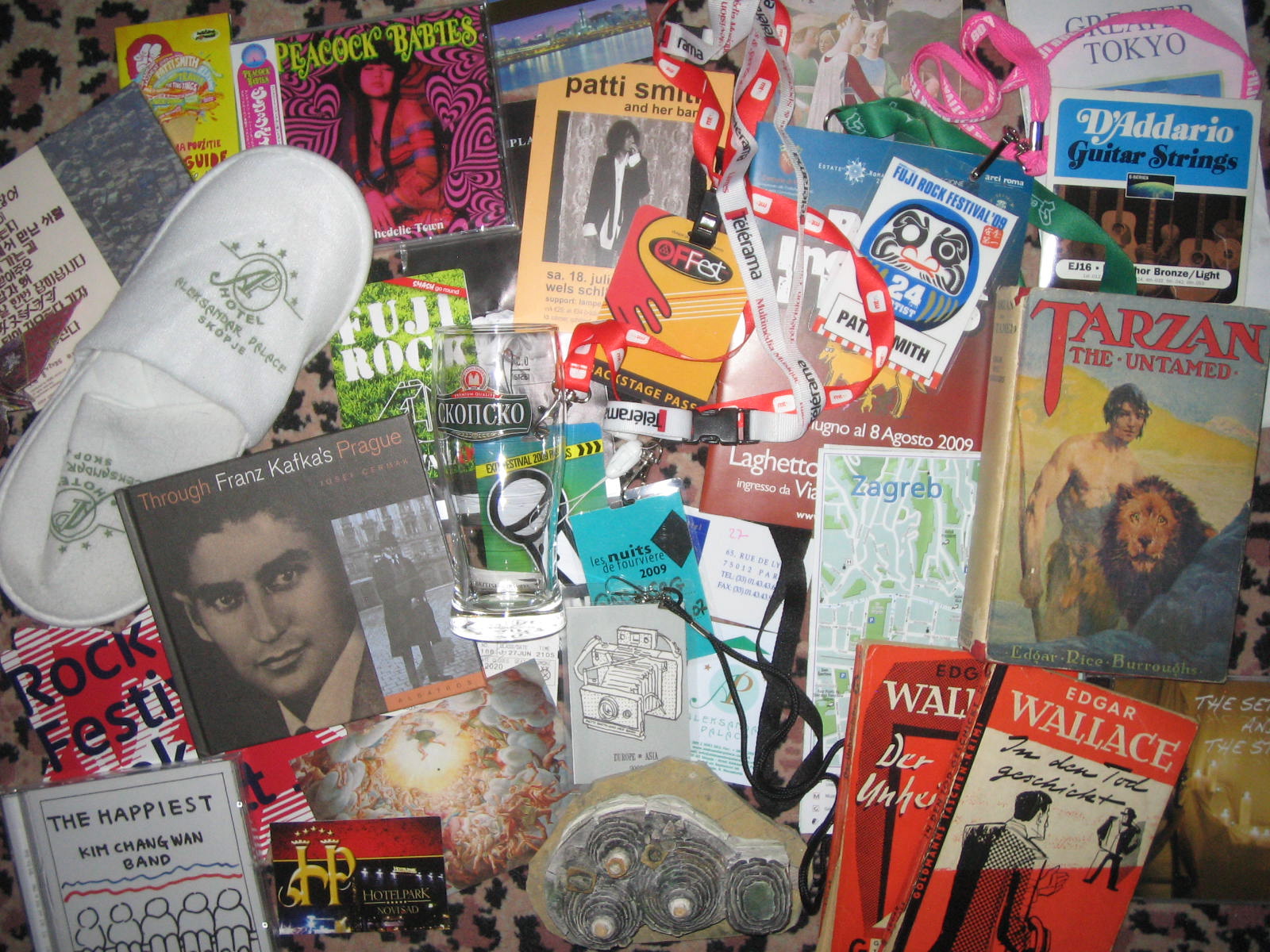
July 29, 2009 / HOME
Where the heart is.
Turning up Creedence's "Looking Out My Back Door".....
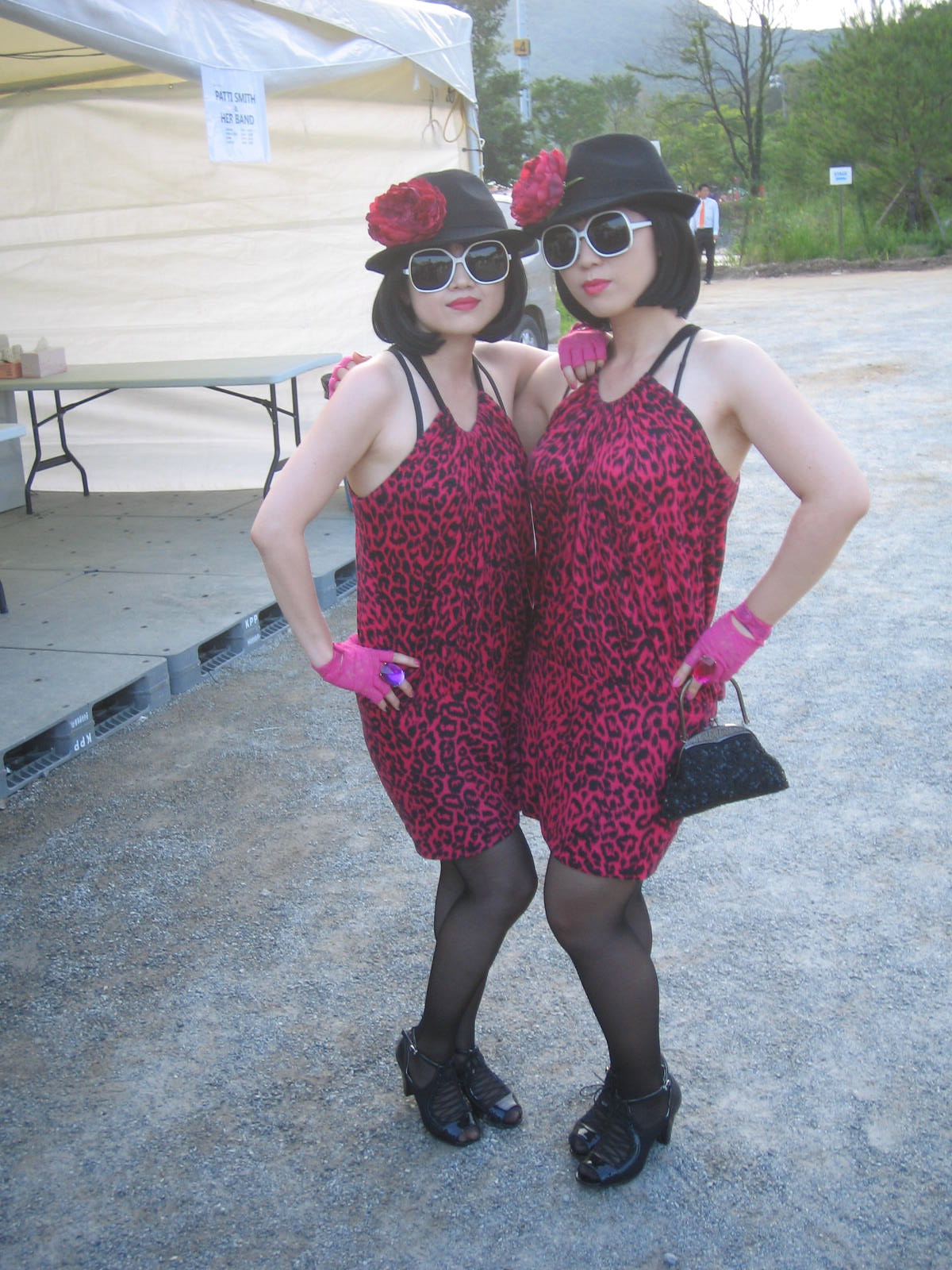
July 26, 2009 / INCHEON, KOREA
Twelve hours of journeying, bus to plane to bus, arrives us in Seoul late on Saturday night, not much time to explore a city that sprawls for miles in any direction, and of which I know very little. In fact, it occurs to me I have never eaten Korean cuisine, but given the tip-off that their spicy barbecue is the way to go, I set off from our towering hotel in search of a friendly establishment. About six blocks away I get to an actual neighborhood, find a welcoming haven, sit at a table with a broiling fire-pit in the middle, and, with the help of a waitress who understands I know not what to do, start a-grilling and a-tasting and a-tingling. Happy carnivore am I!
The next day is to be our final show of this go-round. The Jisan Valley Rock Festival is about an hour from Seoul in Incheon, not far from the borderline that separates South and North in this once war-torn and still global hotspot. There are two alternating stages, and alongside many local groups, there is the same rotating cast of international characters as Fujirock, spread over three days. Oasis headlines our night, and others featured are Jimmy Eat World, Fall Out Boy, and Basement Jaxx. The mood seems ebullient at each stage, local heroes excitedly cheered, and I watch a rapturous reception greet Chang Ki Ha and the Faces, complete with female back-up duo and chanting hooks that make me want to sing along even if I don't know a word of Korean.
Our set begins on a disconcerting note, as my amplifier blows at the first chord, and a second, hastily set up, also fails to put out full power. But the third proves the charm, and since the crowd makes you feel you can do no wrong, by the time I get a working sound they're in full cheer, clapping along (in time no less!) and joining us on the choruses and letting us know they're with us all the way. It can't help but rouse one's performance, and during "Peaceable Kingdom," a song that has especial meaning in this particular setting, I take a personal moment to look around and appreciate the journey on which rock and roll has taken me, an around-the-world odyssey that keeps on circumnavigating, amazingly enough.
Hot and sweaty and slightly enflamed, we leave the stage, where Tony and I are greeted by the spicy barbeque of the twin singing girls of Chang Ki Ha. Jay Dee and I will make a bee-line for another grill-'em and fill-'em when we get back to Seoul. You never know when we'll be back.
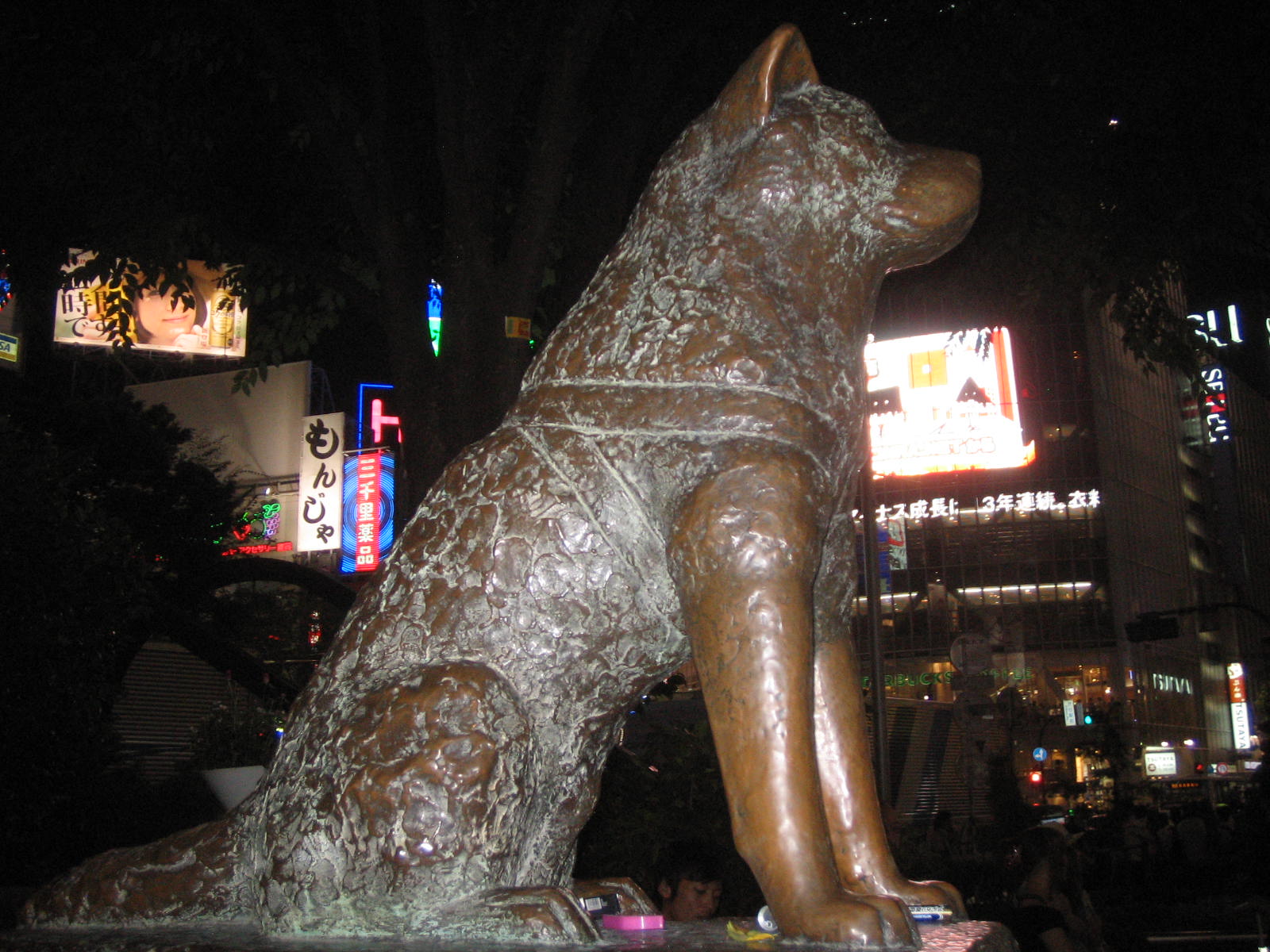
July 24, 2009 / NAEBA, JAPAN
We auspiciously land in Japan just as a full solar eclipse begins over Asia. The cloud cover means the sun's cosmic moonshadow is felt rather than seen, and mixing with the drenching Tokyo humidity and jet lag that comes with having lost a day somewhere along the journey, I do feel on the other side of Alice's looking glass.
Our hotel is near the American Embassy, in a neighborhood that seems more office structures than tourist attractions. A short walk down a hill leads to me what I'm craving, though, the traditional workingman's lunch of rice with beef curry sauce, a cheap and filling favored staple that I pick out of the food pictured on the wall, hoping for the best. I then call my friend Gaku Torii, a music journalist who I've known since 1989, when I made my first trip here; and a well-versed punk and garage-rock fan who seems to know everything about everyone.
He tells me he's now managing a club in the Shibuya district called Aoi-Heya, or the Blue Room. It's owned by a woman named Masako Togawa, a crime novelist and singer in the chanson mode who made her reputation in the 1950s, and whose VIP room - decorated with Edith Piaf posters - was once frequented by none other than the great and controversial writer Yukio Mishima. How could I resist? We agree to meet outside Shibuya Station by the statue of the dog Hachi-koh, reputedly so devoted that when his master died, Hachi-koh refused to be fed by anyone else and expired by his side. Accompanied by a mournful koto melody, no doubt. Since the overwhelm of Shibuya makes Times Square look positively provincial, I wait for him there.
I'm expecting garage punk in the Johnny Thunders mode, but the Blue Room is having a cabaret night this evening, with be-gowned female singers crooning Kurt Weill standards, adding to my overall sense of surreality. Another old friend, Marc Zermati from Paris, joins us, in town as I am for the Fujirock festival. In the seventies he ran Open Market, championing and promoting concerts by bands like the Police (when they were the backing group for Warhol chanteuse Cherry Vanilla), Generation X, and other punk purveyors, including moiself. Later we go to Gas Panic, a basement hip-hop club off the main thoroughfare where the music seems taken off the soundtrack from The Wire. I finally find my way back to the metro and the Ginza Line, get off at what I think is my stop, realize I don't know which direction my hotel is, and proceed to get well lost. In Translation.
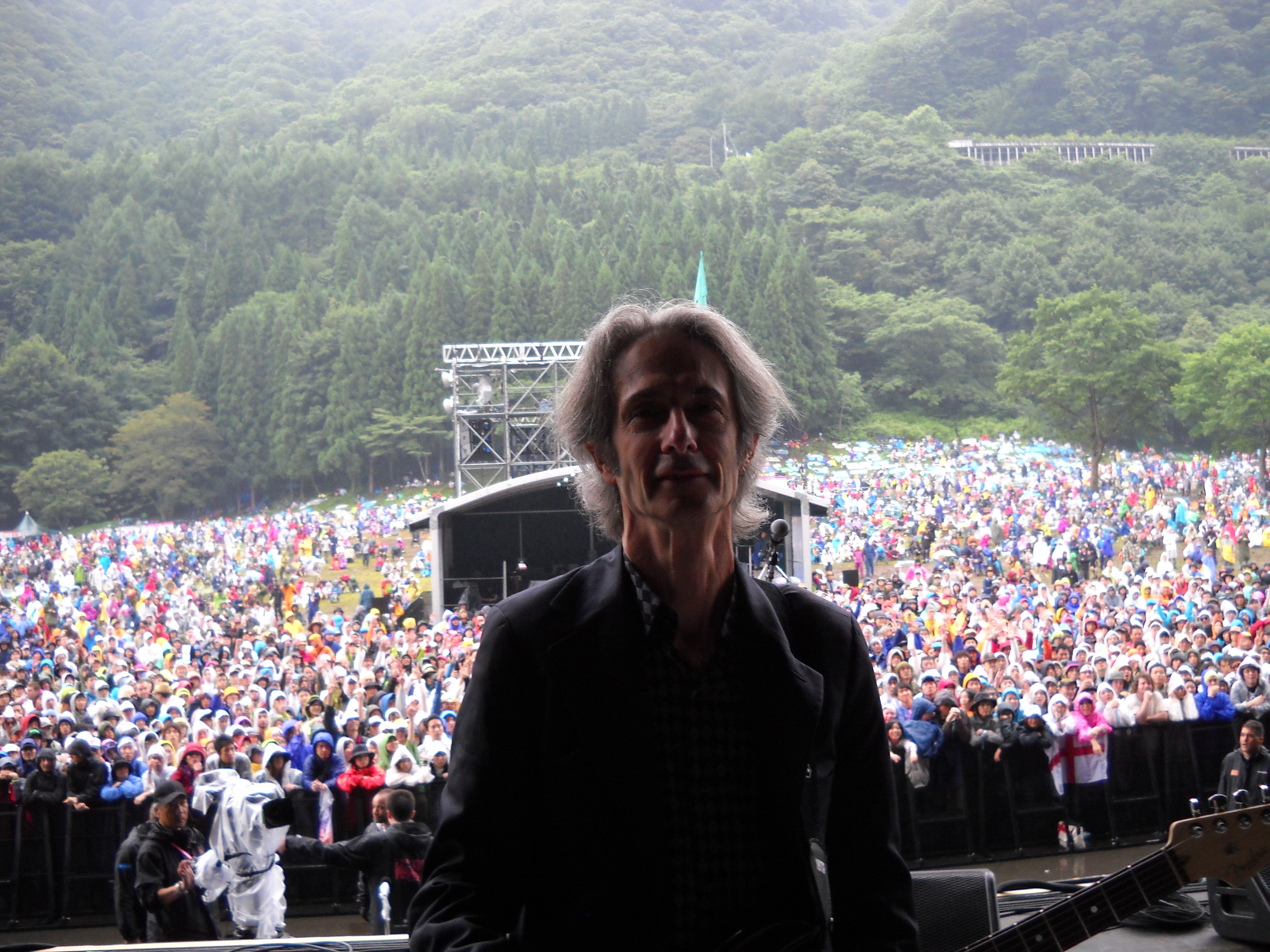
The Fujirock Festival is a four hour bus ride from Tokyo, a world away from urban overkill, in the mountains. It's our third time doing the festival, a true smattering of global talent assembled by promoter Masa, and I look forward to wandering its far reaches. But the rain that has been held in check by the gathering atmospheric pressure starts to seep through as we ascend the heights. It stays dry for our set, but as I set out to explore the festival grounds, the mud starts to rise above my ankles. I head back to the artist's catering area, where, relaxing after their regular shows, I get to watch a few unexpected performances by some steel guitar favorites: Jeff Lang, from Australia, on the lap steel, swiping the bar and combining Hawaiian, the blues, and Indian modes; and Robert Randolph of the Family Band, who is literally rolling on the floor with laughter cutting up with his musicians.
Around midnight I venture out, the rain having diminished to a drizzle. Guitarist Wilko Johnson, once of the seventies' pub-rock band Dr. Feelgood, is playing in the nearby Crystal Tent, and I haven't seen him in, well, thirty years or more. He puts on a dazzling show, clawing at his Telecaster and breaking into the semi-deranged zig-zag strut that is his stage trademark, his tone clean and piercing, his rhythm section steaming along with each blueswailing excursion. He plays without a pick, and when I visit backstage and mention this, he shows me his right hand, the bloody string slice on his thumb, and we share the type-O brotherhood of the guitarist's secret handshake.
July 20, 2009 / FRANKFURT, GERMANY
There's laundry hanging in my room after a much-needed wash in the sink, and the television alternates between a black and white Arabic movie musical and the German motorcycle Grand Prix. The latter is my favorite thrill sport, only broadcast in America on the odd cable channel, so even if the announcer is raising his voice in Deutsch, it's a treat for me to root along with my hero Valentino Rossi as he goes for his 101st win. Which he does in typical fashion, slithering around corners at an impossible lean angle, avoiding the dreaded high-side, lifting the front wheel off the ground when he crosses the finish line, accompanied by the raucous sounds of a Gay Pride celebration a couple of blocks from the hotel. A day off, not much to do, and I intend to do much of it.
It's our last Euro stop, in a city that I learned of as a young'n reading Johanna Spyri's Heidi. Little of Heidi's Frankfurt seems to remain, with postcards of how the bombed-out city looked in the aftermath of World War II on sale at the local souvenir stand; but with the booming sounds of techno-disco echoing and same-sex couples strolling happily amidst bratwurst-and-beer tents, this is a Germany far removed from its past. We are playing the Jahrhunderthalle, on the outskirts of the city, a seated venue in which the lights seem to black out the audience from us, and a dry stage where the instruments sound separate from each other. My amp - I've been renting Fender DeVille's on this tour, and have found them to be generally consistent - is being extremely recalcitrant, at times overbearing, at others lost in sludge, an uphill battle. But the rare inclusion of "Radio Ethiopia" in our set seems to gather our collective and improvisational energies, and when the crowd floods down to the stage lip after "Dancing Barefoot," the night mood-swings dramatically.
On the long flight the next day to Tokyo, ten plus hours, I watch Anvil: The Story of Anvil, a documentary about a heavy metal band from Canada continually trying to re-light the Olympic flame of its apex a quarter century before. I had heard of the movie, thought it was a mock-umentary in the vein of This Is Spinal Tap, but instead found it to be a sympathetic and moving tale of living the rock dream as it refuses to die. The members of Anvil struggle with their day jobs (Lips, the lead singer, delivers meals to schools - shades of Mickey Rourke in The Wrestler), undertake a grueling five week tour of the Euro-metallic provinces for which they ultimately make no money - there's Zagreb! - and in the end, live for those moments on stage that bring them back to why they picked up their instruments in the first place.
The lottery that is rock and roll. Sometimes your number comes up, and sometimes you just keep on playing. I can relate to this ever renewing commitment and sacrifice and dedication that comes with being in a band, and getting a chance to perform one's music the world over, and the gratitude I feel whenever I walk to the stage to see what the amp will sound like that night.
July 18, 2009 / WELS, AUSTRIA
The wet weather that has been trailing us - word comes that Graz flooded yesterday - finally catches up. It is chill and raining steadily in Wels when we pull in after an overnight drive, and we all catch some sleep and rest. I awake to find 2009 EastEnders episodes on the BBC channel of the telly, my favorite English soap, though in America we're only up to 2003 or so. The plot lines are "similar," this one sleeping with that one who fancies the other next one, though the cast of characters has evolved. I'm happy to see (spoiler alert!) old faces like Phil, Ian, Gary, and surprisingly, Janine, and some of the new families that have moved into Albert Square; and, of course, lift an operatic pint at ye olde Queen Vic.
The gods of weather smile upon the Alter Schlachtof, a large club of twenty four years standing that has moved their show outdoors for the occasion. The rain ceases in time for soundtrack and show, even if the temperature remains dropped. The venue reminds me very much of the Arena in Vienna, one of our favorite haunts; and though it's cold, especially compared to what we've been used to, the warmth of the crowd gives off its own reflective heat.
As we get back on the bus for another nine hour haul, the rain starts again. Into the night, into the bunk, into sleep.
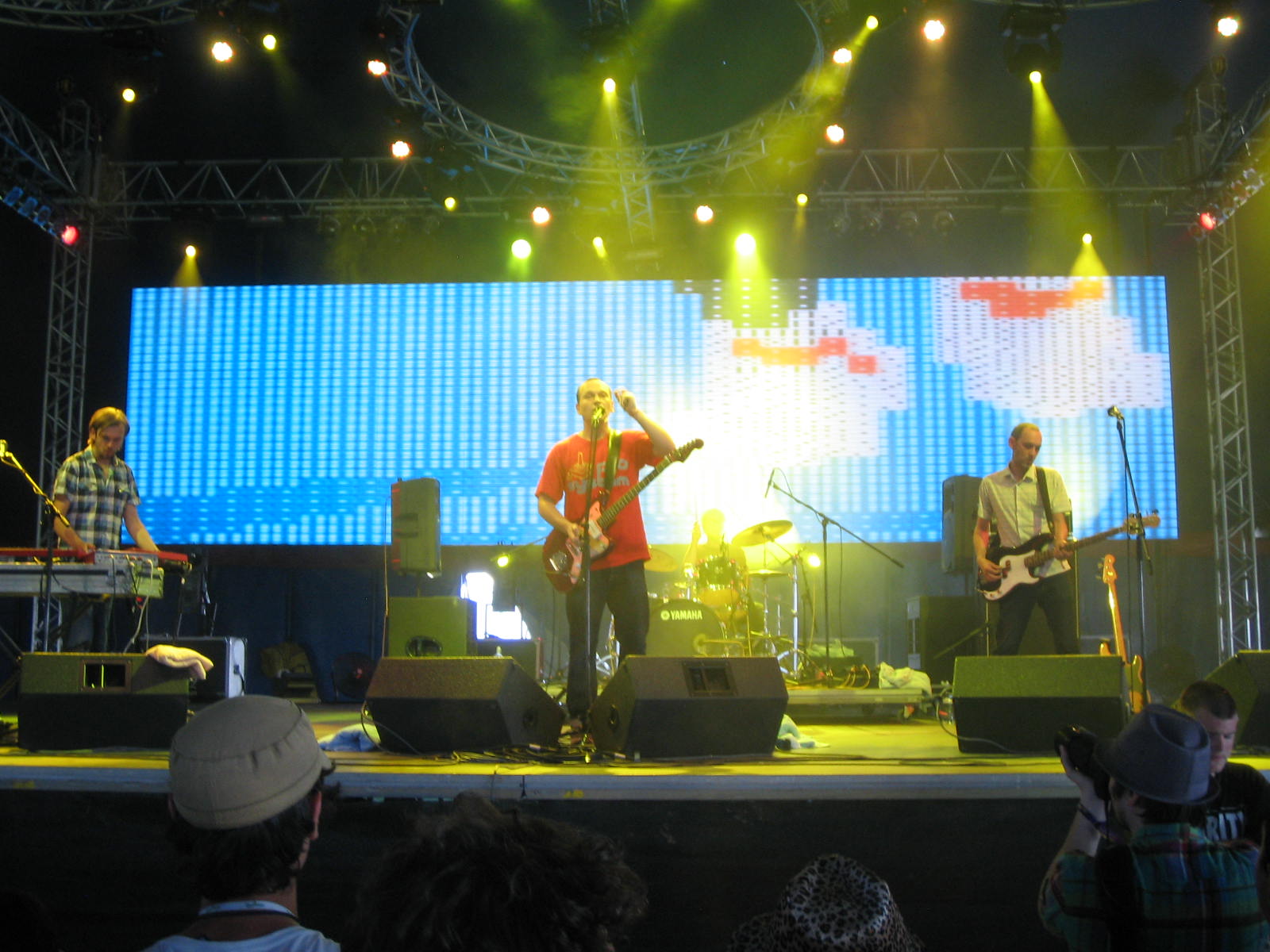
July 17, 2009 / TRENCIN, SLOVAKIA
"Pohoda" means "the state of cool," and in the "new nation, old country" that is Slovakia, that counts for more than mere entertainment. It is hard for me to imagine what decades of Soviet occupation meant for this country, though the rapturous ovation given Marta Kubisova on the Arena stage of a festival located on a former military airport on the outskirts of Trencin is an indication. Not your usual hard rockin' fare, from 1965 to 1970 she was the leading Czechoslovak pop singer until banned from public performance for twenty years. An entire generation was forced to take their music underground, and the nineties signaled an eruption of creative energy long suppressed.
Walking around the festival in the hot summer afternoon before our set, there is a sense of youth and positive energy. A puppet show tent is set up for children, ecological booths abound, and a tent city surrounds the several stages. By a synchronous coincidence, the only band I know at Pohoda, the mysteriously appellated Fujiya and Miyagi, managed by my friend Martine, is on show when I get out of the van, and I hurry over to their tent, slither my way to the front of the stage, and give David, Steve, and Matt the devil's horn salute. They've just added a drummer to their synth-bass-guitar lineup, hardening their sound, and the considerable crowd dances along.
Local Slovakian talent abounds. Billy Barman & Orchester is just that, a bouncy guitar band with an eight piece string-and-horn section. Obviously the crowd knows their work because they delightedly sing along, just like over on our Main Stage, where the act before us, Richard Muller from Bratislavia, hardly has to do any of his own vocals, the crowd echoing all his lyrics, 40,000 strong.
And when it's our turn, and "People Have The Power" is hoisted aloft, the words take on ever more resonance. The Pohoda Festival has fought hard for their right to sing, and we salute them.
July 16, 2009 / PRAGUE, CZECH REPUBLIC
I raise my glass. More Slivovitz! The waitress gives me a refill of the classic plum brandy that my grandfather Ben's musician "cronies" used to sit around and kvell over, smooth and soothing even with its kick of grain alcohol, accompanied by a small glass of Pilsener Urquell, here the local brew, my Czech variant on the classic Pennsyltucky shot-and-a-beer "VFW." Accompanied by marinated chicken wings in hot garlic sauce. Yum. I'm in a restaurant called the Koala at an aftershow dinner with our promoter and our booking agent Andy, flown in from London, feeling increasingly warm and cuddly.
We arrived in Prague in the pouring rain, actually the first we've seen on this trip, though by afternoon the sun illuminated this astoundingly beautiful city. We never came here in the seventies because Ivan, my guitar compatriot in the PSG, was a refugee from the Communist takeover in 1968. Now it appears as if the country - or at least this bustling city - is a major tourist stopover, with every third person seeming to carry a map and a digital camera. I'm happy to join their throngs during our subsequent day off, on walkabout with Patti, stopping at the ornate clock tower, the Franz Kafka sites (he lived for a time just off the main square), the numerous churches, and of course, antiquariat book shops. My score for the day has an Edgar theme: two tattered Edgar Wallace mystery paperbacks in German with exceptionally expressionistic covers (no, I don't read Deutsch, and only know Wallace as a name, though he wrote 175 novels! as well as the preliminary screenplay of King Kong); and a 1920s English hardcover edition of Edgar Rice Burroughs' Tarzan The Untamed complete with dust jacket and J. Allen St. John illustrations.
Oh, yes...a kitty cat followed me home from a local musical instrument shop. Her name is Margarita. Can I keep her? Pleeeaaase?
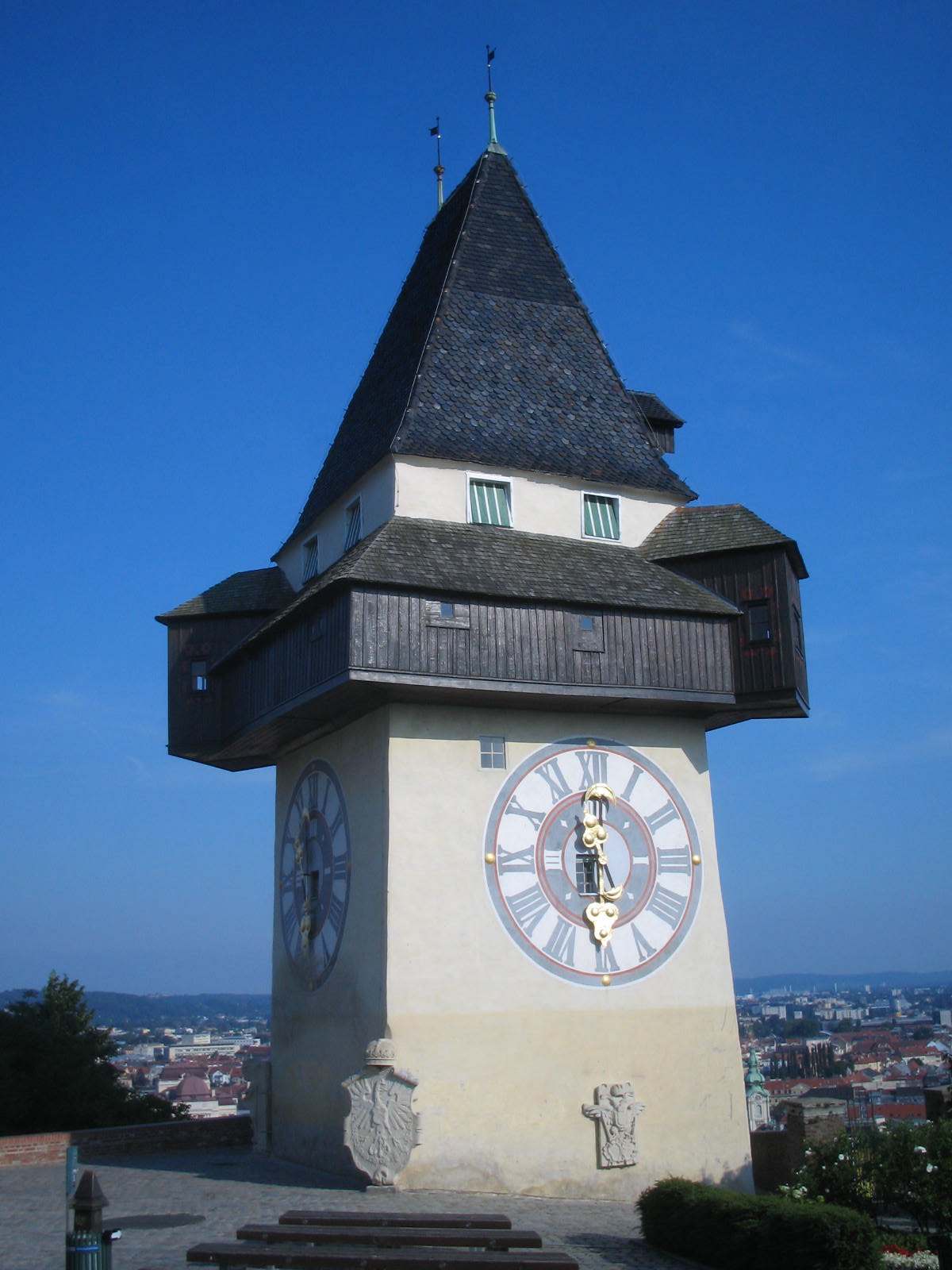
July 14, 2009 / GRAZ, AUSTRIA
I take a walk with Tom V. to look for a schallplatten shop. Graz is a smallish city with a fast-moving river running in front of our hotel, and a seedy erotische street in back. The best of both worlds. At In-Out Records (we do not make this up) we find a large vinyl assortment, including a live album from 1979 by San Francisco's punk standard-bearers the Avengers that attracts me; but with far too many discs awaiting listening at home, and the prospect of carrying a 12-inch record unscathed through the next four countries, I opt to browse more than purchase, the equivalent of "I like to watch." And the elusive Sensitive Touch album of Nicky Roberts and his Magic Guitar, which is our musical obsession of the day, is nowhere to be found.
The show is high on a hill overlooking Graz, and I'm told that we played here in 2003 at the same venue. I have no memory of it, and think I might've remembered the giant clock tower which stands guard over the city. There is a sense of experimentation in the air, and "Are You Experienced" has distinctly Stockhausenesque overtones, courtesy of Tom and his own Magic Guitar.
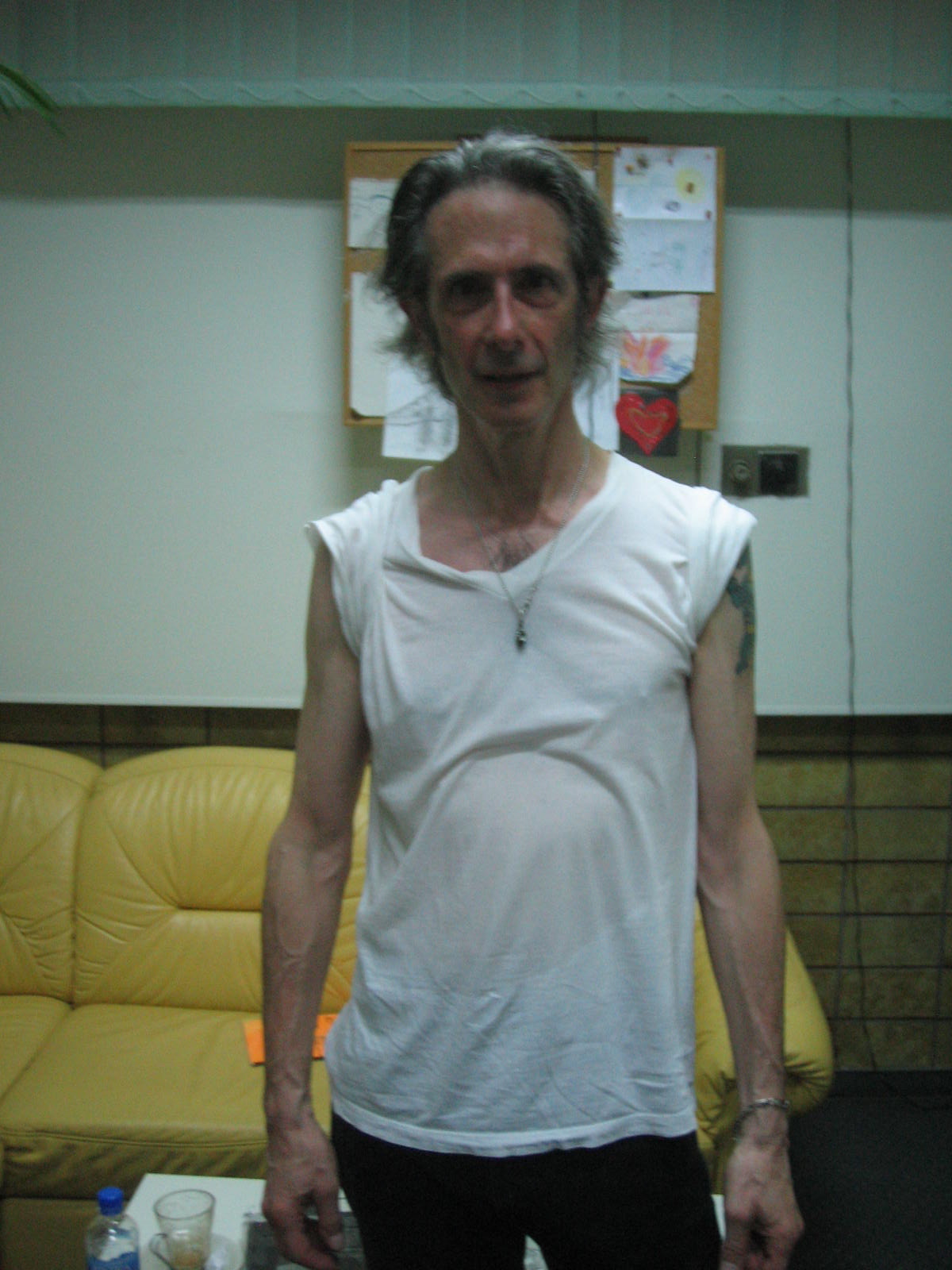
July 13, 2009 / ZAGREB, CROATIA
A day off is a wonderful thing, especially after five shows and the constant in-motion of the past week, and Zagreb on a Sunday seems to be particularly amenable to downshifting. Our hotel is the Esplanade, built in 1925 and located near the train station, one of the stopovers of the famed Orient Express. Best of all, my luggage has made its way from Rome, and I am reunited with socks and guitar.
Croatia, like its Balkan neighbors, is in a shadowland between achieving long sought independence and hopes for joining the EU. While there are pluses for the country in becoming an official part of the Euro block - the ease of a common currency, border regulations and citizenships that might make travel easier - our promoter tells us at dinner that there are surely downsides, especially since - in a fashion reminiscent of America's House of Representatives - they would only have four votes to, say, England's 50 in the European parliament. Still, in this city where outdoor cafes seem the mode of leisure on a perfect summer Sunday, and green space abounds amidst flea and flower markets, I sit in a park near enough to a church where I can hear the sound of the organ, and for a brief moment, catch my breath and revel in the immediacy of unwind.
The next night's show is a sweat box, an over-capacity audience packed into every conceivable corner of Tvornica Kulture, spilling out into the halls of the auditorium, temperatures well into what the Celsius might describe as the mid-forties. Jay Dee calls it one of our top three sauna performances, on a par with New Orleans in 1978 and the Elysee Montmarte in Paris in 2002, though I remember a particularly steamy schvitz in New York at Hurrah's in August of 1979. I like the let-it-loose drenching humidity, however, and with the crowd howling away, reach inside and find my inner animal.

JULY 11, 2009 / NOVI SAD, SERBIA
The Exit Festival was begun in 2000 as a spontaneous student uprising against the government of Slobodan Milosevic, hoping to serve as a rallying point to "exit" out of ten years "of madness," as the festival booklet points out. From madness to insanity, it seems. Located in the ancient stone fortress of Petrovaradin, built by the Czechs in the 13th century, it has grown to encompass all forms of music on a hydra-headed variety of stages, close to four hundred acts spread over four days, and a true paean to musical freedom of choice.
After our well-received set, flanked by a glorious sunset, I take the couple of hours I have left before our bus embarks for an overnight jaunt to roam the festival grounds, sampling the musics on offer, a somewhat random way to particle collide with an unexpected epiphany. As I'm leaving our stage, Kraftwerk begins their melding of Man and Machine, the dehumanizing underlying theme of their highly influential music that set new standards of sequencing. While video screens and robotic presentation make for a spectacular extravaganza, and I do enjoy "Trans Europe Express" on the replicant dance floor, there seems to be little chance of performance surprise. I like the hit-or-miss, the chances taken, the reach and grasp.
I head toward the Explosive Stage, where the metal bands rule. Earlier in the day I'd caught Monument from Bosnia-Herzegovina, though the BIH acronym next to their name denoting country of origin might also stand for Burn In Hell, the opposite of Rest in Peace, and a metaphor this brand of Death Metal loves to embrace. When I return at night, I'm on time for Serbia's homegrown Amon Din, who instantly bottom out my right eardrum with a bass frequency positively subhuman. The schedule is running behind so I miss Swedish purveyors Sabaton, whom I'd hoped to see, since the Scandinavian brand of this metallic is the most depraved. Instead, I hop over to the Fusion Stage where the Stalingrad Cowgirls from Finland show out to be spunky black-eyeliner rockers in the Joan Jett mode; pay a quick visit to the reggae stage (Black Ark Crew); and then witness the strange apparition of the Silent Disco, where dancers wear headphones as they groove to whatever it is they may be listening. I can't hear, partially because of Amon Din, and because the blended sound of all this music converging makes for the greatest Din of all.
July 10, 2009 / SKOPJE, MACEDONIA
The joys of traveling. Yesterday, after a four aftershow drive in the night from Sogliano Al Rubicone to a Rome airport hotel, getting two hours sleep, going through the rigamarole of getting on the plane and arriving in Thessaoniki, Greece, where the rest of the Her Band will be meeting us for the electric portion of the tour, our luggage is nowhere to be found. Nor is it on the next flight, as promised, though we spend six hours in this Grecian airport awaiting. Finally, about nine, we set off for Macedonia, without Collings guitar and any other clothing but what I have on. I will grow to love this grey t-shirt, I'm sure.
It's good be reunited with the band on a bus, a familiarity that is all the more intimate for our enclosure. Along with the stalwart rhythm section of Tony Shanahan and Jay Dee Daugherty, we are joined this trip by the irrepressible Tom Verlaine, and our noble crew of Emery (front of house sound), Darryl (monitors), Laurence (right stage tech) and Futz (left stage tech and tour manager). Family.
After a lengthy border crossing from Greece into Macedonia, we leave the EU for a republic that - like the others of the next few countries we will now enter - were once grouped under the post World War II heading of Yugoslavia, and previous to that subject to whatever regimes held sway in the regime. Skopje has a distinct Ottoman flavor, and when we are taken to the old town, there is a Turkish air of bazaar. Or is that bizarre?
There is some concern that with Santana in town, booked by a rival promoter, our attendance will suffer, but as the instantaneous you-are-there of the ubiquitous Tube shows, the place is full and rockin'. As usual, I am amazed and gratified that our music travels to such distant and exotic climes, that the crowd sings and hollers the words of our foreign lingual, and that those three chords (E, D and A for those who care to play along) crosses borders without need of strip-search, visa, or passport.
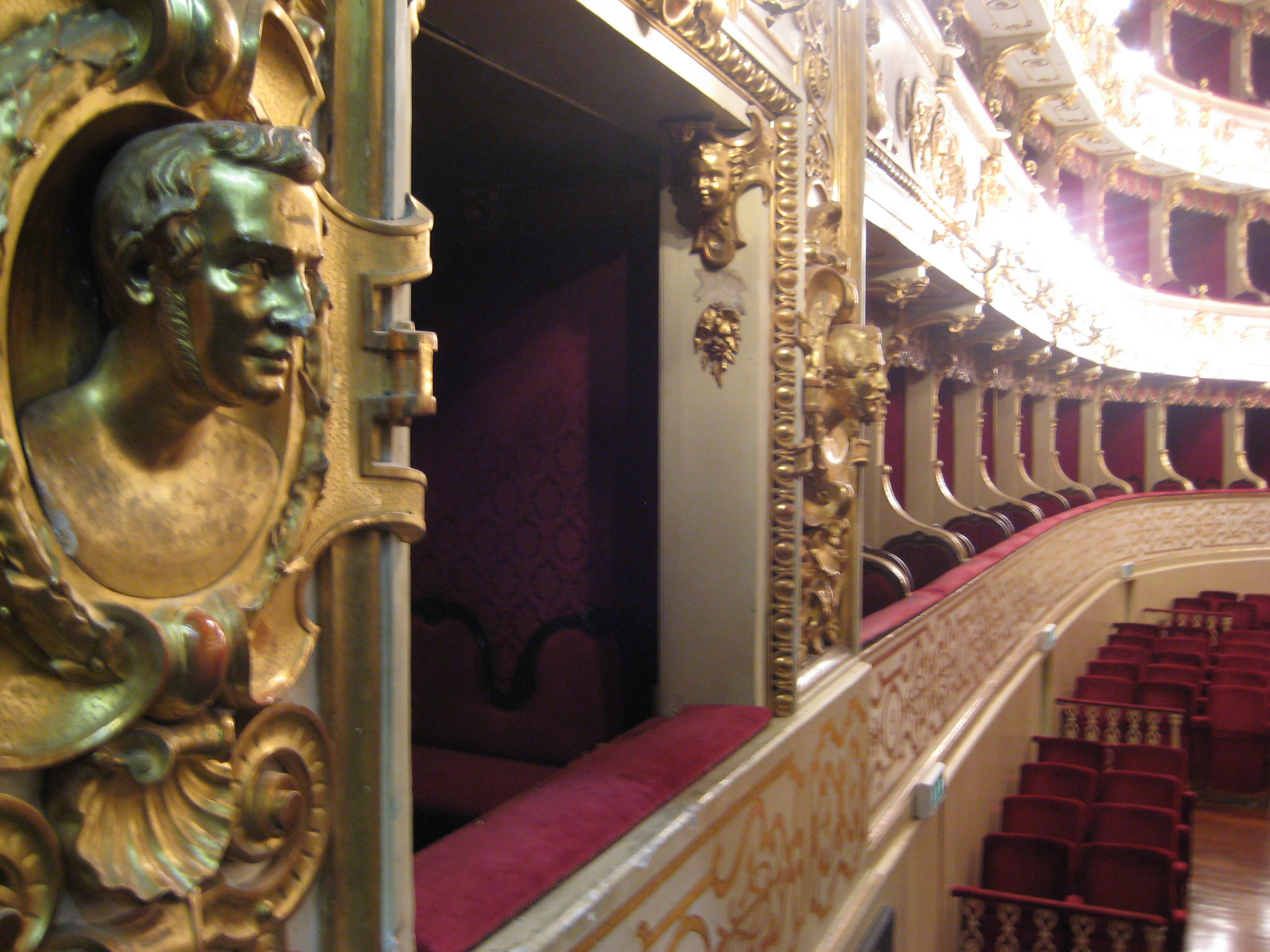
July 7 - 8, 2009 PARMA / SOGLIANO AL RUBICONE
The duel Parmas of ham and cheese live up to their name, as does the beautiful Duomo we come on unawares, with celestial frescoes by Corregio. That all has not been as peaceful as it now seems in this northern Italian town is shown by the evidence of World War II bombing on the facade of the legislative building in which our stage is set up in a square courtyard; but next door at an opera house with bas-reliefs of famous composers and poets, the immortality of Italian appreciation for their culturati is once again affirmed.
And so for us as well. On the following day after Parma, Patti travels to Florence to announce a conceived-and-confirmed thirtieth anniversary concert to commemorate the Patti Smith Group's final show, which took place on September 10, 1979. That original moment in time was a much-storied event, resounding throughout a country which had seen little international rock and roll up till then, as evidenced by the 70,000 plus music fans that packed the soccer stadium that day, a moment I will always treasure and remember. Now, three decades later, we will be performing in a piazza where stands Dante's statue, where there is a church in which Michelangelo and Galileo found their final resting place. History will be served.
I travel with the rest of our acoustic band - Jesse Smith and Mike Campbell and accompanying Del Flor - by van to a beautiful town in the hills near the Adriatic. The town square is named after Giacomo Matteotti, a noted fighter against fascism who was murdered in 1924, one more resonance of the past as it echoes into the future, much like we can hear the sound ricocheting off the surrounding walls. After the show, we catch our breath in the dressing room, located in a children's school, and trace our travels on a giant map of Italy, amazed at where we've been, knowing the journey is hardly over.
July 6, 2009 / ROMA
In college, I thought briefly of majoring in Roman History, having a fairly rumpled and obsessed Rutgers classics professor (Dr. Lenaghan) and an excellent scholar of Byzantine history (Dr. Peter Charanis) as mentor. Though I never could've embraced the Greek and Latin needed to continue my studies, and the inescapable fact that my "minor" at school, playing in bands (The Zoo!) eventually became the best vocational education I could've received, I've always had a fascination with the Empire as it transformed our cultural historiography. In Rome, turning a corner to be confronted with the archeological rubble of two millennia past, whether it be Trajan's magnificent column, or the pagan and Christian mixage that is the Pantheon, one feels the weight of centuries and centurions.
St. Peter's in the Vatican, though I am of Jesus' original religious persuasion and hardly the rock upon which his church is edificed, is awe-inspiring, even to me who has visited on other occasions. To come upon the Pieta unawares and see Michelangelo's glory in all its three sculpted dimensions, or to hear a pipe organ echoing within its magnificent space of the basilica, is to feel the magnificence of the art the essence of the Christ inspires, in a setting of overwhelming grandiosity. I am most moved, however, by the simple tomb of John Paul I, in the basement under St. Peter's, the modest pope who became the symbol of our album, Wave, and whose spirit seems to me to embody the true essence of Christianity, even if his reign only lasted thirty three days.
Our show is in a park, under a night sky lit by a full moon. Backstage we are visited by Roberto Saviano, the journalist whose expose of the "other" Mafia in Naples, the Camorra, in his groundbreaking book Gomorrah, has endangered him to where he must continually be accompanied by a police escort. We dedicate "Wing" to his courage and desire to still stand defiant, remaining free.
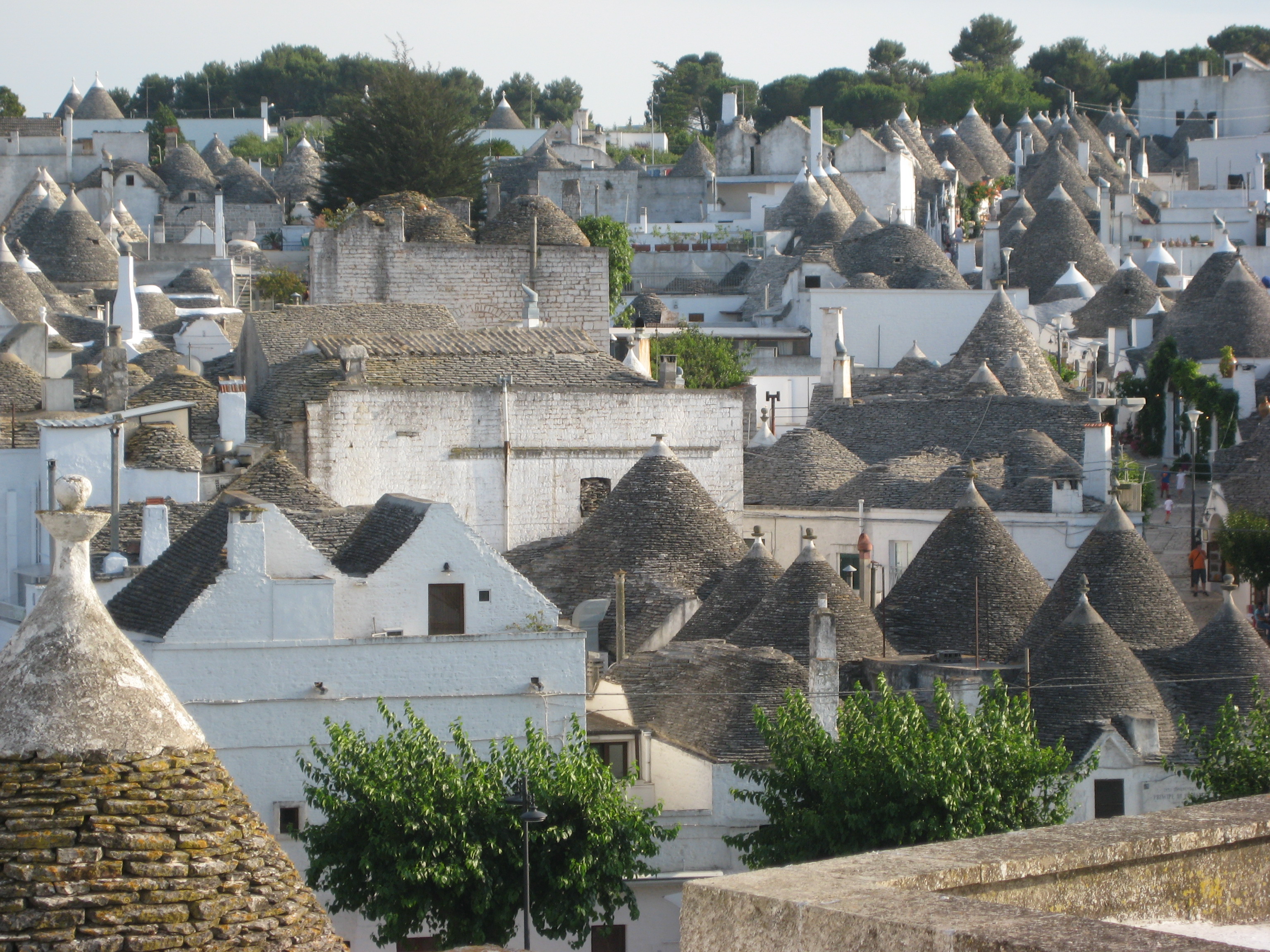
July 4, 2009 / ALBEROBELLO
Traveling east across Italia to the top of the boot-heel, Alberobello is in sun-drenched country with abundant olive trees and oil to match, with a town square that looks like an Antonioni movie, and distinctive houses with cone-shaped stone roofs known as Trulli. One local legend has it that these cupola constructs originated from the eastern Mediterranean on a route favored by traders and seafarers, so fashioned as to be quickly collapsed should the taxman come around, and easily rebuilt. Wherever their coming-from, looking at this town in Puglia on Independence Day is as far from hot dogs and fireworks as might be.
After the show, we wander the town square in search of the perfect gelato, surrounded by concert-goers who follow like the children of Hamlin. When we get our cones (mine is strachitella, made from a fresh and light cream that seems just delivered from the cow), I note that it is topped with a small second cone. Truly.
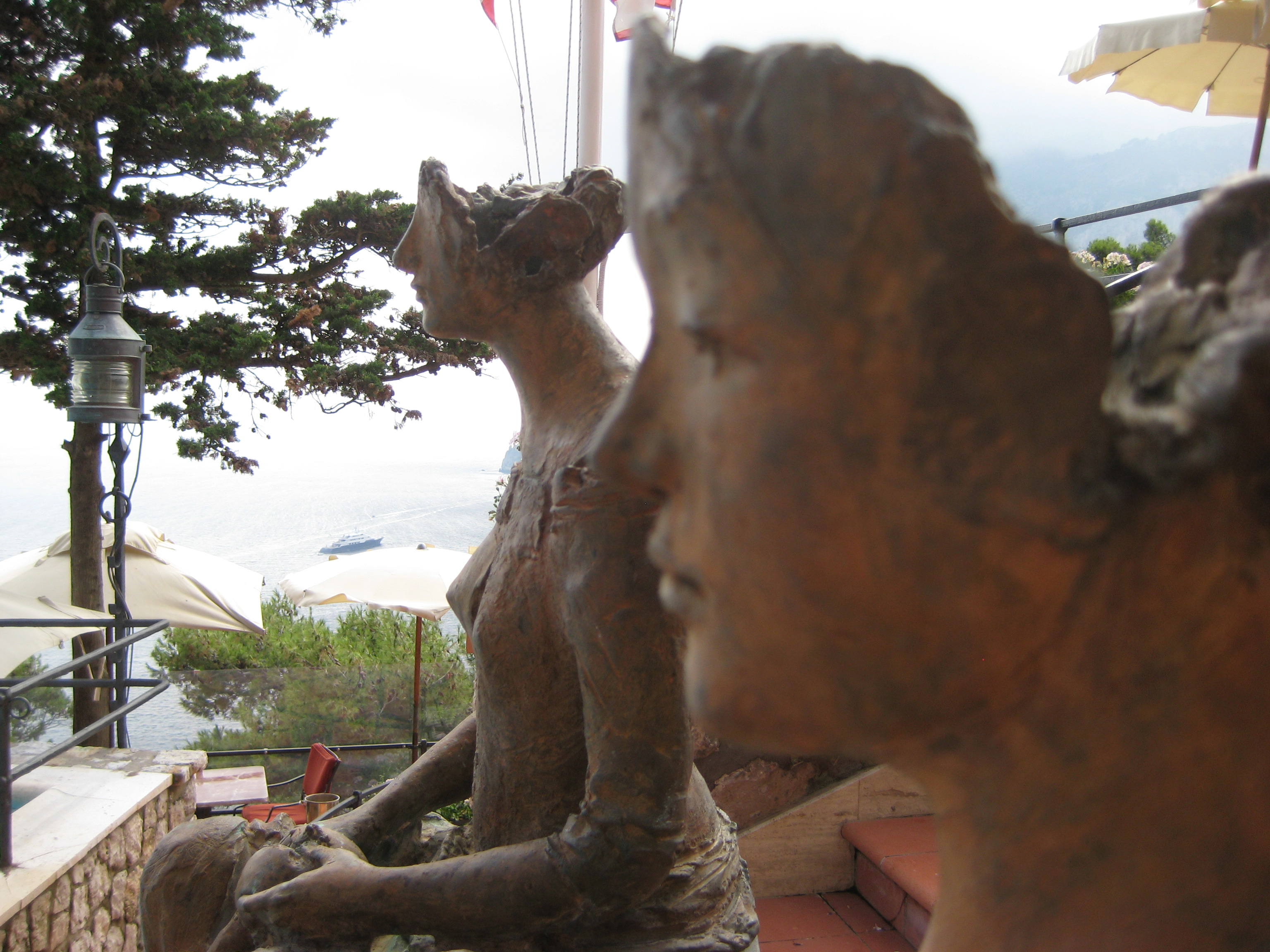
July 3, 2009 / CAPRI
Ah, Mediterraneo... To swim in the sea, to stub one's toe on the rocks, mingling one's blood with the sweet salt of the water, and then to climb the rocks to sleep in the lulling shade, or feel the sun on unforgiving skin, as one chooses.
Capri, a hydrofoil's jaunt from Naples, is a breathtakingly beautiful isle, home of expensive designer stores, winding romantique lanes and Those Pants, and surely a respite from the road. The occasion is a literary festival devoted to the seven deadly sins, with each writer assigned a different venal. Patti's evening is devoted to the disguised angel of Lust, more question-and-answer than song, and there is not much for her accompanying musicians to do but enjoy the fabled locale where the waters of the Blue Grotto reflect all shades of translucence, and the emperor Tiberius spent the later years of his life in sybaritic pleasure, at least according to Suetonious, who may or may not be believed.
We dine in a restaurant supposedly frequented by Graham Greene. I sit across from George Saunders, whose work I am not familiar with though will investigate since our discussion ranges from the trickiness of literary "autobiography" a la Waylon to Gogol's residence in Rome. Next to me is an impish David Sedaris, my daughter Anna's favorite author, who - with his companion Hugh - reveals he is a fan of the Shams, the East Village femme trio I produced in the early 90s, and discourses on Spokane's marmet population. Tete a tete.

July 1, 2009 / AREZZO
For a sense of temporal awe, there is little to compare with playing venues in Europe during the summer. Stages are set up in ancient fortresses and castles, in town squares that have seen centuries of generations gather, and as tonight's show will, in the shadows of grand cathedrals.
Arezzo is in Italia, about a half hour from Florence in the Tuscan hills. Born in nearby Sansepolcro, Piero della Francesca understood this landscape well, and you can see in his frescoes and panel paintings his geographic surroundings as backdrop to his scenes of revelation and divine illumination. The town and its narrow medieval streets contain two repositories of Francesca's fifteenth century art. The Basilica of San Francesco houses Piero's magnificent Legend of the True Cross, its sumptuous colors and amazing battle scenes contrasting with the modest church in which it resides; and the magnificent Duomo a few short blocks away paradoxically contains a simple unaffected depiction of St. Mary Magdalene, all too human in her direct gaze, hidden away behind a column.
Standing on stage, gazing up at the Cathedral, singing the resurrection hymn of "Ghost Dance" and the anthem of "Gloria" as the crowd follows along in their Horses hymnal, is to realize the blessings of true faith and the baptismal font that is rock and roll.

June 30, 2009 / LYON
It was the Beatific generation that provided my barely adolescent self with a rite-of-passage, gifting me a way of seeing the zen world and the ecstatic universe surrounding, a way of aligning poetry and the avant-en-garde with a bohemian lifestyle and a sense of inner consciousness that I can say truly changed my being. Reading Kerouac's On The Road, Ginsberg's Howl, Burrough's Naked Lunch, Corso and Snyder and Ferlinghetti and their flights of confrontational musical language and phantasmagoric worlds placed me within a cultural continuum that I embraced, and have been lucky enough to continue to live within, idealistically and inspirationally.
Tonight, in this city split by two rivers, the Seine and the Rhone, we are performing a tribute show to Allen Ginsberg with Philip Glass. The roots of this celebration go back to the first Tibet House benefit I participated in at Carnegie Hall, which Philip curated with Allen. I had known the great poet peripherally, been introduced at a literary fete in the seventies, and had seen him intermittently around our shared neighborhood of New York's lower east side. One night in the eighties, letting my dog run free down the ghostly streets of lower Broadway after midnight, I came upon him at a telephone booth. He seemed revved up, somewhat agitated, and we spoke of nothing much, but it remains my fond memory of his human approachability.
At the Tibet House show, Allen drafted me to play bass behind his epic "Ballad of the Skeletons" urging me to get ever wilder as the poem reached its crescendo. In the audience was Danny Goldberg, helming Mercury Records at the time, and he suggested to Allen that he record a single of the work. So it was that I found myself producing Allen in 1997, accompanied by Marc Ribot and David Mansfield on guitars, and via the miracle of transatlantic technology, sending the tapes to England where Paul McCartney added drums and organ. Me, playing bass to Paul's drumming; you could not invent such a scenario, nor could I have ever imagined sitting in a control room with Allen, comparing line-by-line readings and dropping in the occasional vocal tweak.
At that session he taught the assembled musicians the Buddhist Walk, hands folded one atop the other, carefully and deliberately stepping to follow the curvature of the earth. Space and time. Now, within the ruins of an old Roman amphitheatre constructed by the emperor Claudius in the first century a.d., Patti reads Allen's poetry as well as her own, and Philip swirls and arpeggiates his piano to shade and highlight each imagistic line and phrase. They ride with Allen through the cruise control of "Wichita Vortex Sutra" and the notice-must-be-paid of "On Cremation," which Allen wrote in commemoration of his spiritual teacher. At the end I join them for "Footnote to Howl," to commemorate our spiritual teacher, to light a candle and continue his dance.
June 28, 2009 / PARIS
The songs on the sound system are familiar - Screamin' Jay Hawkins doing "I Put A Spell On You," Sam and Dave's "Soul Man" with those great Steve Cropper licks, "Let's Twist Again" and the immortal "Louie Louie"; but the surroundings are not.
I'm at a bar on the Rue de Lappe, in the 11th arrondissement of Paris, just a few short steps from the Place de la Bastille. Not twenty four hours ago, as the jet lag flies, I was having a beer (Yuengling) at a joint on Bleecker Street, riding out a summer rain storm and readying to get in a car to go to Newark airport. Now I'm inside the dark confines of the incongruously named Que Pasa?, drinking a Leffe and thinking about going to have a tagine at an Moroccan restaurant around the corner. The street, more narrow alley than thoroughfare, has been around for centuries, with an old Parisian feel haunted by memories of dance halls where "apaches" and "gigolettes" once roamed, where such as Francis Carco and Marlene Dietrich partied on into the night. Hakim, the oud player with Rachid Taha, brought me here a couple of years ago. Even though the locals say it's not what Paris used to be, it's close enough for me.
The acoustic part of our tour starts in a couple of days, in Lyon, but right now the only daze I seem to be partaking of is the need for body-clock adjustment and the unwind from the frenzy of getting ready to get out of town for a month. My Collings guitar is still somewhere in transit from London. The next month holds the promise of ain't-it-stranger countries (the tour sheet takes us through Macedonia and Serbia and much of the former Yugoslavia, through Austria and Slovakia and Frankfort to festivals in Japan and Korea). But at the moment, I'm content to be at the starting gate, the present tense of being on the road, neither there nor here, but in transit. Today.
The newspapers are full of Michael Jackson tribute and speculation, but strangely, it's the same-day passing of Sky Saxon of the Seeds that touches me the most. Especially after performing "Pushin' Too Hard" on our 2007 go-round, seeing the galvanizing effect it had on our audience, not to mention my garage-rockin' self, who bought said single at a department store in New Brunswick when my hair wasn't much shorter than Sky's, I was a true Seedling. I am so glad that I got to see them at the Knitting Factory a few years ago, close to the original lineup with Jan Savage on guitar playing That Solo. On me, on meeee....