Produced By Lenny
| |
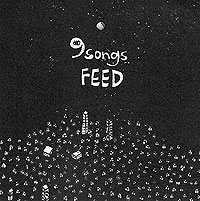 |
| FEED |
| 9 Songs |
| (Polystar Japan; 2001) |
| Arriving in New York from Tokyo, Feed's music bridged the worlds of here and there, avoiding the highly-stylized genres of each. They broke up within moments after this album was released, too strange for J Pop, too tuneful for alter-native, on the verge of taking the next step that would never come. |
| |
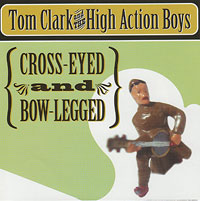 |
| TOM CLARK AND THE HIGH ACTION BOYS |
| Cross Eyed and Bowlegged |
| (Blacksmith; 2001) |
| "Drink Too Much," "Runaway Shuffle," "Lights On," "Katie's Gone," "She Had A Good Heart." Tom is the goodest guy I know, a true friend whose marathon live performances are filled with great original songs and a boundless energy for rock and country's heritage. These days we perform together as the Tillary Two, catch us if you can. |
| |
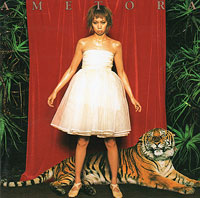 |
| UA |
| Ametora |
| (Speedstar / Victor Japan; 1998) |
| "Lovers" UA had just had a hit with "Because The Night" when we met in Japan during Patti's first tour there in the mid-nineties. She rewrote the English lyrics to my unrecorded song "Splitting In Two," for an album she took around the world, a different producer for each track. She told me, as we were mixing, that she wanted "Lovers" to sound like we were sitting around a campfire. |
| |
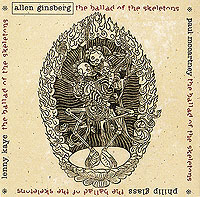 |
| ALLEN GINSBERG |
| "Ballad of the Skeletons" / "Amazing Grace" |
| (Mercury / Mouth Almighty; 1996) |
| To play bass to Paul McCartney's drumming: now there's something to marvel about, and I do, though we didn't record at the same time, separated transatlantically by the miracle of modern technology. I performed the song/poem with Allen at Carnegie Hall for a Tibet House benefit, and the wilder it got, the more he urged me on. He then gathered some of New York's finest – guitarist Marc Ribot and keyboardist Phillip Glass, among others – for an avant supersession. It was at this recording that he taught me to walk the Buddhist path, taking care to follow the curvature of the planet. |
| |
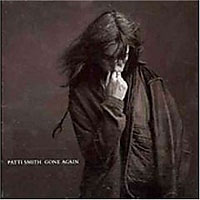 |
| PATTI SMITH |
| Gone Again |
| (Arista; 1996) * |
| *co-produced with Malcolm Burn "When Doves Cry" (Arista; 2002) "Hey Joe (Version)" / "Piss Factory" (Mer; 1974) To step outside the inner circle of the band and take up production, especially in a group in which all your comperes are trusted friends and producers in their own right, is an honored responsibility. We all have strengths and duties. Sometimes the only thing that's needed is someone to direct traffic and provide a sense of place and performance, to liaison with the record company, to encourage and have courage. |
| |
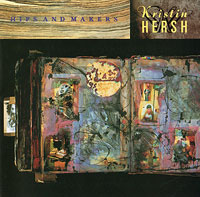 |
| KRISTIN HERSH |
| Hips and Makers |
| (Sire US/ 4AD UK; 1994) |
| Kristin was living outside Newport, Rhode Island, when we made this record, her first solo outside the framework of Throwing Muses. The studio was located within a horse stable once owned by the Vanderbilts. If we opened the back window of the control room, we looked out at a jumping corral, where young equestrians practiced their leaps and bounds. Engineer Phill Brown was from England, and had worked on one of my favorite albums of all time, Talk Talk's Spirit of Eden. |
| |
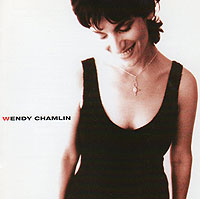 |
| WENDY CHAMLIN |
| Wendy Chamlin |
| (BMG Germany; 1993)"Johnny's Having a Breakdown," "Back In Town," "I Made A Mistake," "Darker Part of Suzanne." |
| Sweet Wendy, in the vocal booth late at night, opening her emotions to the song, peeking in like you would a door, deciding whether to cross the threshold, closing her eyes, entering. |
| |
| THE LUNACHICKS |
| "C.I.L.L." / "Plugg" |
| (Vital Music; 1992) |
| The hard-corest of New York's punque queens. |
| |
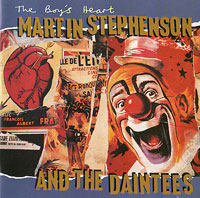 |
| MARTIN STEPHENSON AND THE DAINTEES |
| The Boy's Heart |
| (Kitchenware UK; 1992) |
| Recorded in Newcastle, England, during the winter Kevin Keegan dropped down by helicopter onto the soccer pitch to lead the Magpies to victory (commemorated in my song, "Sport of Love"). Martin ate shrimp vindaloo almost every night, and displayed the innocent quicksilver twinkle of the truly blessed. My favorite recall is tuning the radio in "Sunday Halo." |
| |
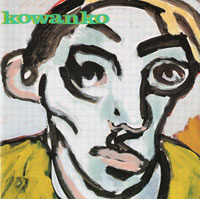 |
| CHRIS KOWANKO |
| Kowanko |
| (Morgan Creek / SBK 1992)"Grey Crayon" EP (contains non-album cut "Will You Come To?") |
| To walk down a street with Chris was to witness the artist's eye. He would pick up a children's book for sale by a vendor, and show me a picture of a crocodile, and I would see the reptile anew. On the last day of our recording, we worked twenty hours straight, not only putting a string section on four songs (including the divine "Modern Daze,") but also redoing a complete vocal, dropping in a drum track, and adding a variety of percussions, keyboards and guitar parts, finishing at six in the morning. You always use as much time and money as you are gifted. |
| |
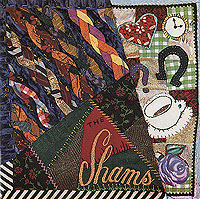 |
| THE SHAMS |
| Quilt |
| (Matador; 1991) |
| Three girls from the lower east side: Amanda, Sue and Amy. Our very own Boswell Sisters. |
| |
| ROBIN HOLCOMB |
| Robin Holcomb |
| (Elektra Musician; 1990) |
| "Hand Me Down All Stories"* *co-produced with Wayne Horvitz I mostly came along as fan for this one track from Robin's debut album (all her records, a strange combination of Appalachian and postmodern, are magical – please seek out), helping to arrange the drum track and getting out of the way. |
| |
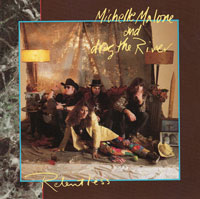 |
| MICHELLE MALONE & DRAG THE RIVER |
| Relentless |
| (Arista; 1990) |
| Michelle was a rip-roarer, that's for sure. The first night I met her in Atlanta was an all-nighter, and when we moved to Memphis for the actual recording, on Beale Street no less, the whoo-hah kept on spiraling. The sound you hear in "Black Cloud Song" is the unmistakable bounce of a vintage Martin guitar hitting the floor. |
| |
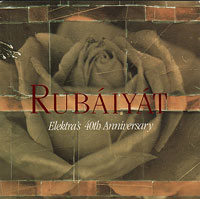 |
| VARIOUS ARTISTS |
| Rubaiyat: Elektra 40th Anniversary |
| (Elektra; 1990) |
| 10,000 MANIACS: "These Days" THE BEAUTIFUL SOUTH: "Love Wars" To celebrate Elektra's ruby (hence the title) anniversary, then-president Bob Krasnow asked me to assemble Elektra's then-roster doing songs from the company's storied history. I was hands-on for one of the final 10,000 Maniacs tracks to feature Natalie Merchant, and discovering the Womack Brothers fantastic "Love Wars," guided The Beautiful South in their version. |
| |
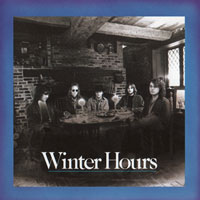 |
| WINTER HOURS |
| Winter Hours |
| (Chrysalis; 1989) |
| Appropriately recorded during a snowy January/ February in Woodstock, this was a band ahead of its alt-rock time. You can still visit Michael Carlucci, one of the group's guitar players, at his record store, Subterranean, on Cornelia Street in New York's Greenwich Village. |
| |
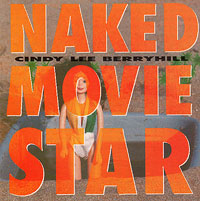 |
| CINDY LEE BERRYHILL |
| Naked Movie Star |
| (Rhino; 1988) |
| Cindy was part of the anti-folk movement, and we both decided that we didn't want to make a folk-rock album. Having our initial converse in a coffee shop where a fifties' jazz record was spinning, we opted to approach the disc like a jazz improvisation, recruiting players like Charlie Persip, Bob Lenox, and Paul Dugan, recording live, including vocals. On the longest track, "Yipee," where I accompanied Cindy freeform under the moniker of Jones Beach, the tape ran out after seven minutes, so we spliced on another reel and did it again, alongside the old take, without listening to what we'd already done. The guitars were then panned left and right, interacting randomly and with their own sense of purpose. |
| |
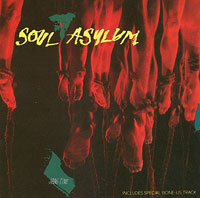 |
| SOUL ASYLUM |
| Hang Time |
| (A&M; 1988 ) |
| *co-produced with Ed Stasium Minneapolis' finest rehearsed at top volume in a room the size of a closet, and when they got into the studio proper for their major label debut, pushed the compressors even harder. We had to retune Karl's bass every change of chord. I've always believed that Soul Asylum have never gotten proper credit for founding the grunge ethos that the Seattle bands took to the top, though I once had a dream that Frank Sinatra was singing their later hit, "Runaway Train." |
| |
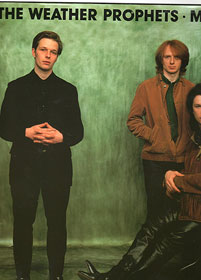 |
| WEATHER PROPHETS |
| Mayflower |
| (WEA UK; 1987) |
| Whenever I'm asked my favorite production (though all are one's children, as they day they are born), I have a special fondness for "Naked As The Day," from this London band's album. It was a see-how-you-get-along single that moved toward the epic, and lent itself so well to my personal expression that I still play it in my solo set. The album, with Pete Astor's color-coded lyrics and singsong melodics, never was released in the US, or on CD for that matter. |
| |
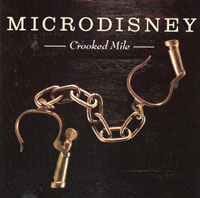 |
| MICRODISNEY |
| Crooked Mile |
| (Virgin; 1986) |
| A group of many contrasts, leaders Cathal Coughlin and Sean O'Hagan performed the unlikely feat of blending angry dissonances (Cathal) with Brian Wilson/Steely Dan chords and harmonics (Sean) accompanied by a sense of absurdist humor. We recorded in North London, in a British studio where the control room was above the recording room (a la the early Beatles). On the afternoon B.J. Cole put his achingly lovely pedal steel guitar on "See To Your Children," my father passed into the great beyond, a poignancy that seemed elegiac and thus always recalled. |
| |
 |
| JAMES |
| "Chain Male" EP (Sire; 1986) |
| Stutter (Sire; 1986) |
| It was a cold winter February in Liverpool when I recorded this Manchester-based band, the only American in town. Gil Norton was the engineer (later to go on to producing fame with the Pixies and the Triffids), and many hours were spent over the aesthetic dilemmas of overdubbing, making a record vs. live documentation, and the use of female vocals on "Really Hard." The bass line on "So Many Ways" is classically circular, and owes something to the breathing techniques of Rahsaan Roland Kirk. |
| |
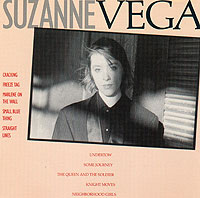 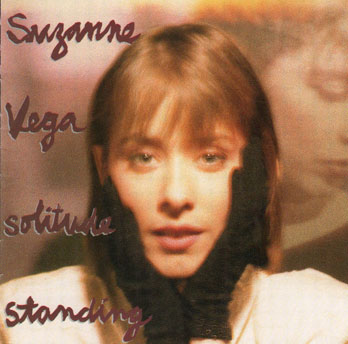 |
| SUZANNE VEGA |
| Suzanne Vega (A&M; 1985)* |
| Solitude Standing (A&M; 1987)* |
| *co-produced with Steve Addabbo I was deep in my folk phase, inspired by compiling Bleecker and MacDougal and O Love Is Teasin' for Elektra, when Nancy Jeffries, A&R; at A&M;, asked me to see Suzanne at the Speakeasy on MacDougal St., a seeming world away from the thriving East Village rock scene, at a time when "folk" music was anathema at most major companies. My first suggestion to Suzanne was that her intimacy might best be served by strings and flutes, a la Nico's Chelsea Girls album. She told me she hated strings and flutes, though she loved Lou Reed. Along with Steve, our brief was to keep her uniqueness without moving it toward the conventional. When adding instruments, especially drums, we opted toward the percussive and the atmospheric, the unusual and unexpected. Her spare debut and more band-oriented second album spoke to a cultural yearning for the real and true in a time of larger-than-life cartoon heroes. When "Luka" began rising in the charts, and we found ourselves sitting in the front row of the Grammys awaiting the results for "Record Of The Year," we knew the true meaning of unusual and unexpected, not to mention unpredictable. |
| |
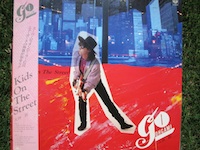 |
| GO OHGAMI |
| Kids On The Street |
| (Columbia Japan; 1984)* |
| *co-produced with Richard Robinson A Japanese guitarist, Go came to New York to record with the Connection backing him – Paul, David, and C.P. Many of the guitar tones were enhanced by the Boss Metal Zone pedal Go brought with him, not to mention his love of American rock and roll. |
| |
| THE KINGPINS |
| The Kingpins |
| (Hoo-Ha EP; 1982) |
| The rockabilly revival in full swing, dog house bass and echoplexed guitar, rolled up sleeves and tattoos and well-greased hair. In lieu of payment, the Kingpins graciously consented to move my record collection up three flights of stairs when I moved to the Bowery from West End Avenue. |
| |
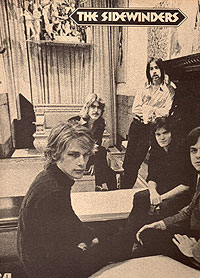 |
| THE SIDEWINDERS |
| The Sidewinders |
| (RCA; 1972) |
| Andy Paley – still a dear foot-foot – loved the classic hit single, whose romantic virtues seemed to need regenerating in a time of overblown prog-rock. Thus we sing ronday-ronday-ronday-ronday "Rendezvous" and the classic "Slip Away" matched with Yardbirds' guitar embellishments, courtesy of Eric Rosenfeld. |
| |
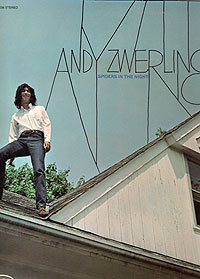 |
| ANDY ZWERLING |
| Spiders In The Night |
| (Kama Sutra; 1971)* |
| *co-produced with Richard Robinson The soul of the Long Island Expressway, as expressed in the same upstairs Bell Sound Studios that hosted the Rolling Stones and the Flaming Groovies, in all its nostalgia for a vanishing childhood. Features the only known vocal appearance on record of Lisa Robinson. |